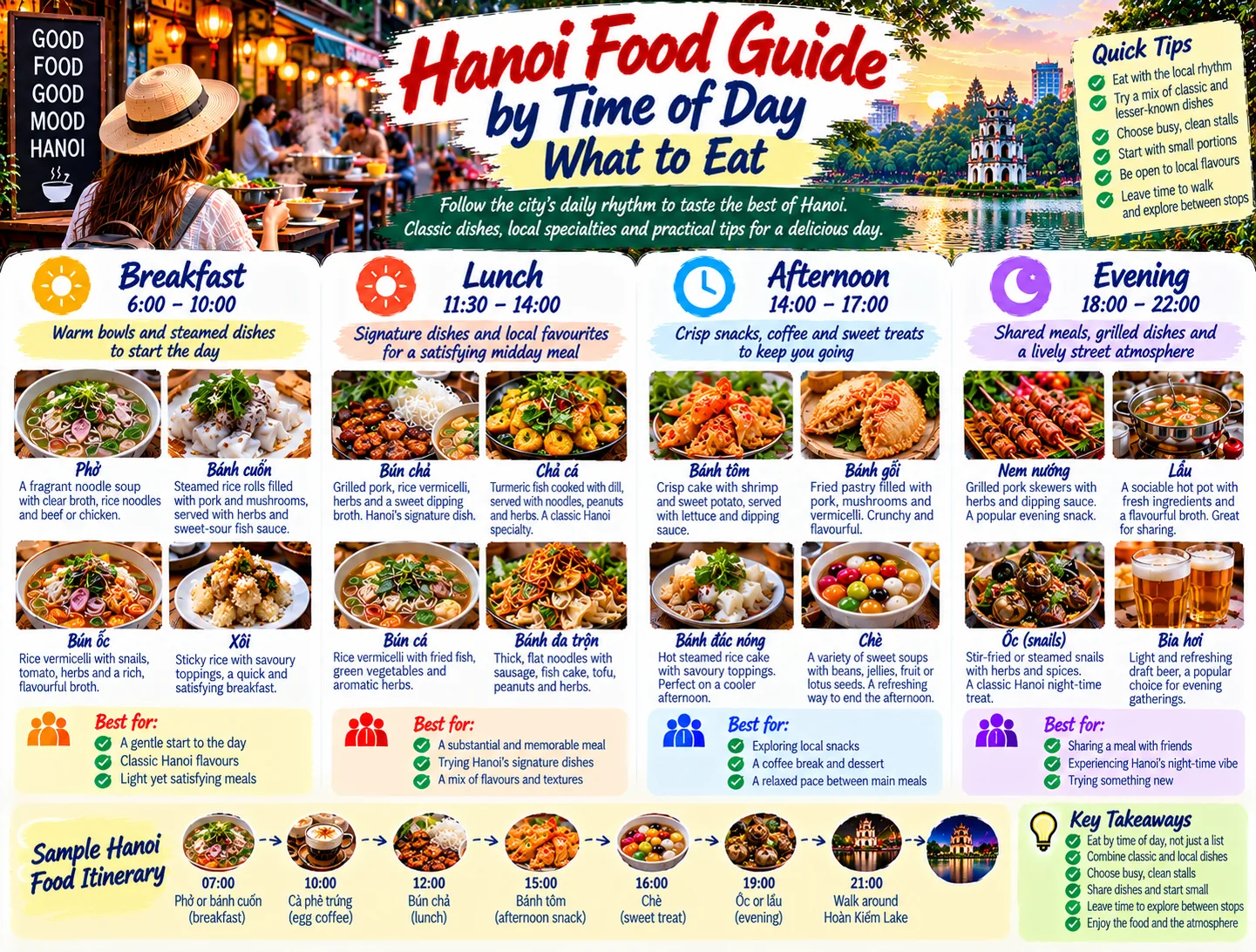
Hanoi is easier to eat when you plan by rhythm rather than by a rigid list of restaurants. Breakfast has its own noodle soups and steamed rice rolls, lunch brings charcoal-grilled dishes and quick bowls, while the evening is ideal for sharing, wandering, and trying something less familiar. This Hanoi food guide by time of day helps first-time visitors decide what to eat, where a dish fits naturally, and how to build a satisfying day without repeating the same meal.
Start with the right Hanoi food plan
The most useful way to approach Hanoi food is to combine a familiar landmark dish with one less obvious local specialty. Pho, bun cha, and banh mi are good anchors, but the city’s food identity is broader than its best-known trio. The official Vietnam Tourism guide describes Hanoi street food as a mix of classic bowls, snacks, noodles, desserts, and dishes that may be harder to find outside the capital. That gives you permission to alternate between comfort and curiosity.
Think in four questions before you leave your hotel:
Do you want a light, quick breakfast or a filling bowl?
Would you rather sit at a small table, eat from a street stall, or join a guided walk?
Can everyone in your group manage fish sauce, fermented shrimp paste, herbs, or seafood?
Which meal should be your one destination dish, and which meals can stay flexible?
This approach works better than chasing a supposedly definitive “best” list. It also complements our practical Hanoi food itinerary for first-time eaters, which is useful when you want a broader day-by-day structure.
What to eat for a Hanoi breakfast
Pho for a classic start
Pho is one of the clearest answers to what to eat in Hanoi for breakfast. Vietnam Tourism notes that pho is eaten at breakfast, lunch, and dinner, so you do not need to force it into the morning. Still, a hot bowl early in the day gives you the full contrast of clear broth, rice noodles, herbs, and sliced beef or chicken before you have filled up on snacks.
Order simply the first time. Notice the broth, the texture of the noodles, and how the herbs change each mouthful. If you are sensitive to strong flavours, taste the soup before adding anything. A pho breakfast is also a useful low-pressure introduction to local eating: you can watch how other diners handle the bowl and follow the pace of the room.
Banh cuon when you want something lighter
Banh cuon, steamed rice rolls filled with ingredients such as minced pork and mushroom, is another strong Hanoi breakfast choice. Vietnam Tourism presents it as a popular morning dish: soft, quick to eat, and usually served with herbs, fried shallots, sausage, and a sweet-sour fish sauce. Choose it when you want a delicate meal rather than a large soup.
Breakfast stalls can be busy, so keep your order uncomplicated and be ready to eat at the pace of the people around you. If a dish arrives with herbs or sauce separately, try a little at a time. That small habit lets you understand the balance instead of turning the meal into a test of tolerance.
Make lunch your main Hanoi food experience
Bun cha for the city’s signature midday meal
Lunch is the natural moment for bun cha. The dish combines grilled pork, rice vermicelli, fresh vegetables, herbs, and a warm sweet-sour broth. The official Hanoi food references describe it as a capital-city lunch staple, and the format rewards a relaxed meal: add noodles and greens to the bowl as you go, then adjust the balance to your taste.
Bun cha is especially good for visitors who want a recognisable dish that still feels interactive. The smoky pork, cool herbs, noodles, and dipping broth each play a different role. Eat a small portion together first rather than mixing everything at once. You will understand the dish more clearly and can decide whether you want more chilli, herbs, or pickles.
Cha ca when you want a longer sit-down meal
Cha ca is a better choice when lunch is the centrepiece of the day. The fish is cooked with turmeric and dill, then served with rice vermicelli, peanuts, herbs, and a fermented shrimp paste that may be offered alongside the meal. Vietnam Tourism connects the dish with Hanoi’s Old Quarter and describes its long association with the city.
Because the flavour profile is more distinctive, cha ca suits adventurous eaters and groups who enjoy sharing. Ask about alternatives if someone cannot eat fish or fermented seafood. Do not assume that every version will suit an allergy or dietary restriction; a direct question to the restaurant is the safest way to clarify ingredients and possible cross-contact.
For more help deciding between a street stall, family-style eatery, or formal restaurant, read how to choose restaurants in Hanoi before you go. The aim is not to rank every venue, but to match the setting to the meal you actually want.
Use the afternoon for Hanoi snacks and coffee
Try a snack with texture
Afternoon is when a Hanoi food plan can become more playful. Banh tom, the crisp shrimp cake associated with West Lake, offers fried batter, sweet potato, and shrimp with lettuce and dipping sauce. Banh goi, a fried pastry with a savoury filling, is another option when you want something portable and crunchy. These are not merely substitutes for a full meal; they show how Hanoi builds contrast through texture, herbs, and sauces.
If you are walking, share one snack before ordering several. Fried dishes can be filling, and leaving room makes it easier to continue exploring. Banh duc nong, a hot steamed rice cake with savoury toppings, is better suited to a cooler afternoon or anyone craving something soft and comforting.
Pair the pause with Hanoi coffee
Coffee belongs in the afternoon itinerary, but it should not crowd out the food experience. Choose a short café pause between meals, especially if you are walking through the Old Quarter. Egg coffee is famous, yet Hanoi’s coffee culture also includes strong iced coffee and slower café rituals. Our Hanoi coffee culture guide can help you make the drink itself part of the plan instead of treating it as a quick caffeine stop.
For a first visit, order one drink, sit for a while, and observe how the café works. If you are sensitive to caffeine or dairy, ask what is in the drink before ordering. A measured pause is more enjoyable than trying to combine coffee, dessert, and another large meal in one stop.
Plan dinner around sharing and discovery
Choose a dish the group can build together
Dinner is the best time to move beyond a single bowl. Hot pot, grilled dishes, or a table of smaller plates allow different appetites to meet. Vietnam Tourism describes hot pot as a communal meal built around a bubbling pot with vegetables, meat, and seafood. It can work well for groups, but ask about the broth and ingredients before ordering if anyone has an allergy or follows a special diet.
Another option is to choose two or three dishes with different profiles: one noodle or rice dish, one vegetable side, and one snack or grilled item. This gives the table variety without creating an unmanageable order. If you are eating at a small local establishment, point to the dish or use a translated name, then confirm the key ingredient before it arrives.
Explore Hanoi’s wider street-food vocabulary
Once you have tried pho and bun cha, look for dishes such as bun oc, bun ca, eel glass noodles, or che. The official street-food guide lists these among Hanoi’s more varied offerings. They are useful choices when you want your second or third meal to answer a more specific question: Do you like a sour broth? A fish-based soup? A sweet dessert soup? A richer, herbal noodle dish?
Our practical Hanoi street food guide covers ordering and dish discovery in more detail. For dinner, the main skill is pacing. Choose one unfamiliar item, keep one familiar item on the table, and stop before everyone is too full to enjoy the next walk.
Match your food route to a Hanoi neighbourhood
A time-of-day plan becomes easier when each meal has a sensible walking zone. The Old Quarter is convenient for combining food, cafés, and an evening stroll, but convenience does not mean every street offers the same style of eating. West Lake is a useful direction when you want shrimp cakes, cafés, or a slower break. Other neighbourhoods may be better for a specific restaurant or class, so choose the dish first and the route second rather than crossing the city for a vague promise of “the best food.”
Markets can add colour and variety, but they reward flexible expectations. Go when you are ready to browse, share, and decide on the spot. The site’s food markets and night markets guide is a helpful next step if you want to build an evening around browsing instead of a single reservation.
A simple one-day route
Morning: pho or banh cuon, followed by a short walk.
Midday: bun cha or cha ca as the main meal.
Afternoon: one snack and a coffee, with time to rest.
Evening: a shared meal, hot pot, or two unfamiliar dishes.
This sequence is intentionally flexible. If breakfast is late, move pho to lunch. If the weather is hot, choose smaller portions and more pauses. If you are travelling with children or cautious eaters, keep sauces on the side where possible and let each person add herbs gradually.
How to order with confidence
Good Hanoi food planning is less about perfect pronunciation than about clear questions. Have the dish name written down, show the group size, and confirm whether the serving is individual or shared. If you avoid meat, fish, eggs, dairy, peanuts, or seafood, say so before the order is prepared. Vegetarian guests can also consult our vegetarian and special diets guide, while remembering that ingredient and cross-contact practices vary by kitchen.
Observe the stall before sitting down. A busy place may indicate a fast turnover, but it is not a guarantee that every dish suits you. Look for the style of service, the seating arrangement, and whether the menu is easy to understand. When in doubt, order one portion first. You can always add another dish after you know the flavour and portion size.
Keep cash and small notes available as a practical precaution, but do not assume every venue accepts the same payment method. If a dish includes an unfamiliar condiment, taste a small amount first. These small decisions make the meal calmer and leave more attention for the food itself.
Build a better Hanoi food itinerary
The best Hanoi food guide is not a checklist that leaves you exhausted. Give each meal a job: breakfast for a gentle introduction, lunch for a signature dish, afternoon for texture and coffee, and dinner for sharing. Leave space between stops so you can notice neighbourhoods, return to a favourite, or change plans when a stall is closed or crowded.
Most importantly, do not measure success by the number of dishes photographed. A thoughtful day might include only four meals and one dessert, but each choice will have a reason. You will know what you liked, what you would order again, and which local flavour deserves a slower second try.
Conclusion: let the day shape what you eat
Hanoi rewards visitors who eat with the clock, the weather, and their own appetite in mind. Start with pho or banh cuon, make lunch your anchor, use the afternoon for snacks and coffee, and let dinner open the door to sharing and discovery. With that framework, a Hanoi food guide becomes more than a list of famous dishes: it becomes a practical way to understand the city one meal at a time.
JOIN THE CONVERSATION
Comments (0)
No comments yet. Be the first to share a thought.