Dong Xuan Market is one of Hanoi’s most useful places to understand how food, trade, and neighbourhood life meet. It is not only a sightseeing stop: it is a large covered market in the Old Quarter, with wholesale activity, everyday goods, fresh ingredients, and food stalls that reward curious visitors. This Dong Xuan Market food guide focuses on how to explore it comfortably, what kinds of Hanoi market food to look for, and how to turn a busy visit into a thoughtful tasting route.
Why visit Dong Xuan Market for food?
Dong Xuan Market sits in Hanoi’s Hoan Kiem district and has a long commercial history. The market’s present-day identity is broad rather than specialised: clothing, household goods, ingredients, and prepared foods share the same environment. That mix is exactly what makes it valuable for travellers who want to see food as part of daily city life rather than as a separate attraction.
The official Vietnam Tourism guide describes Hanoi as a city known for street food, Old Quarter streets, and a strong local food culture. A market visit adds another layer. You can notice what is sold for home cooking, how ingredients are grouped, how shoppers move through narrow aisles, and how a quick bowl or snack fits into a working day. Treat the market as a place to observe first and eat second.
- Choose it when you want market atmosphere alongside food.
- Expect variety rather than a neatly curated food hall.
- Allow time to walk, pause, and compare before ordering.
- Visit respectfully: traders are working, not performing for visitors.
What kind of food can you find?
Dong Xuan is best approached as a food landscape. Depending on the area and the time of your visit, you may see fresh produce, herbs, noodles, dried goods, sweets, drinks, and ready-to-eat dishes. The exact selection can change, so use the market’s visible activity as your guide instead of arriving with a rigid checklist.
Fresh ingredients and market clues
Look for the ingredients that appear repeatedly: bundles of herbs, leafy vegetables, rice products, noodles, mushrooms, spices, dried seafood, and sauces. Even when you do not buy anything, these details help explain the flavours found in Hanoi dishes. Fresh herbs and sharp, fragrant condiments are not decorative extras; they are part of how many Vietnamese meals are balanced at the table.
Prepared snacks and quick meals
For eating on the spot, watch for foods that are easy to serve in small portions. Hanoi’s official food guide highlights dishes such as bánh cuốn, bún ốc, bún cá, bánh tôm, bánh gối, bánh đúc nóng, and chè. Not every stall will offer every dish, and a market is not a guarantee of a particular vendor. Use the guide as a flavour map, then choose what looks fresh, busy, and manageable for your appetite.
Foods worth looking for on a first visit
A good first visit balances familiar flavours with one or two dishes that are new to you. Start with a small order when possible, especially if you plan to continue eating elsewhere in the Old Quarter.
- Bánh cuốn: Soft steamed rice rolls are often paired with herbs, fried shallots, and a sweet-sour dipping sauce. Notice the contrast between the delicate wrapper and the savoury filling.
- Bún ốc: Snail noodle soup is a classic Hanoi comfort food. Its broth may have tomato, vinegar, and pepper notes, making it brighter and sharper than a plain noodle soup.
- Bún cá: Fried fish, rice vermicelli, greens, and herbs create a satisfying lunch-style bowl. Dill and other aromatics can give it a distinctive northern character.
- Bánh tôm: Hanoi shrimp cakes combine crisp batter, sweet potato, prawns, and dipping sauce. Share one portion if you want to keep room for savoury noodles or dessert.
- Bánh gối: This pillow-shaped fried pastry is a practical snack for a walking route. It is rich, so pair it with something fresh or herbal rather than ordering several fried dishes at once.
- Bánh đúc nóng: A warm rice cake with savoury toppings can be especially appealing on a cool day. Its soft texture makes it a slower, spoon-by-spoon snack.
- Chè: Finish with a sweet soup or layered dessert if you want a gentler ending. Ingredients can include beans, jelly, glutinous rice elements, fruit, syrup, and coconut.
These are not a required tasting list. The better goal is to choose one bowl, one snack, and one drink or dessert that fit your timing. Hanoi’s food culture is generous, but a market crawl becomes less enjoyable when every stop is treated like a full meal.
How to build a simple Dong Xuan Market food route
1. Begin with one complete walk-through
Before ordering, walk through the parts of the market that are open to visitors. Notice where food is being prepared, where people are shopping for ingredients, and where a stall has enough space for customers to sit or stand without blocking traffic. This first circuit helps you avoid choosing the first visible option simply because you are hungry.
2. Pick a savoury anchor
Choose one main bowl or substantial snack as your anchor. Bún ốc, bún cá, or bánh cuốn can give the visit a clear centre. If a dish is unfamiliar, watch how local customers eat it and ask for a small serving when that is possible. Keep sauces and herbs nearby so you can adjust the balance gradually.
3. Add one portable bite
After the main dish, choose something small such as bánh gối or bánh tôm. This keeps the route flexible and lets you compare textures instead of repeating the same kind of noodle bowl. Share where practical, and leave space for a later coffee or dessert stop outside the market.
4. End with a reset
A market can be warm, crowded, and stimulating. Finish with water, a sweet dish, or a quiet pause at the edge of the area. A short reset makes it easier to continue exploring Hanoi without turning the whole afternoon into a rushed eating challenge.
When to go and how long to stay
Market conditions vary with trading activity, weather, day of the week, and the individual stall. Rather than promising a fixed schedule, plan around your preferred atmosphere. A daytime visit can be useful for seeing the market as a working commercial place and for noticing fresh ingredients. An evening route may feel more social and may connect naturally with the wider Old Quarter and pedestrian-market atmosphere.
For a first visit, allow roughly one to two hours as an editorial planning estimate: enough time for an unhurried walk and a few tastes, without assuming you will inspect every aisle. Add more time if you want to shop, photograph details with permission, or continue into nearby streets. Check locally before travelling for current access arrangements and any temporary changes.
Ordering and market manners
Confidence matters less than clarity and patience. Pointing at a visible dish, showing the number of portions, and confirming the total before eating can make a simple order easier. Useful phrases include “một phần” for one portion and “không cay” for not spicy, but gestures and a calm tone also help when there is a language gap.
- Ask what a dish contains if you have allergies or dietary restrictions.
- Do not assume a vegetable-looking dish is vegetarian; broths, sauces, and toppings may contain animal ingredients.
- Keep bags and phones close without spreading belongings across a small seat or counter.
- Ask before photographing a vendor, shopper, or close-up preparation scene.
- Keep the walkway clear and follow the stall’s seating or queuing pattern.
- Carry small notes where practical, but confirm payment rather than guessing.
- If a stall is busy, wait your turn or choose another option instead of pressing for attention.
Good market etiquette is part of the food experience. You are entering a place where people buy ingredients, work long hours, and eat quickly between tasks. A respectful visitor observes, orders simply, and leaves room for the market to function.
Dietary needs and choosing with care
Visitors with vegetarian, vegan, allergy, or religious dietary needs should be especially direct. The Vietnamese word “chay” is commonly associated with vegetarian food, but the safest approach is still to ask about broth, fish sauce, oyster sauce, lard, eggs, and shared cooking surfaces. At a busy market, staff may not be able to answer detailed questions, so choose a dish only when the ingredients are clear.
For allergies, carry a translated note and keep the request short. If communication remains uncertain, select a simpler item with visible ingredients or eat at a venue where the menu and preparation process can be explained more carefully. A market visit can still be enjoyable without making it the only meal of the day.
How Dong Xuan fits into a wider Hanoi food day
Dong Xuan works best as one chapter in a flexible Old Quarter route. You might begin with a light breakfast, explore the market, pause for coffee, and then choose a later meal based on appetite rather than trying to finish every famous Hanoi dish in one circuit. The official Hanoi destination guide links the Old Quarter, weekend night markets, and local flavours as parts of the same city experience, so use the market to connect food with walking and observation.
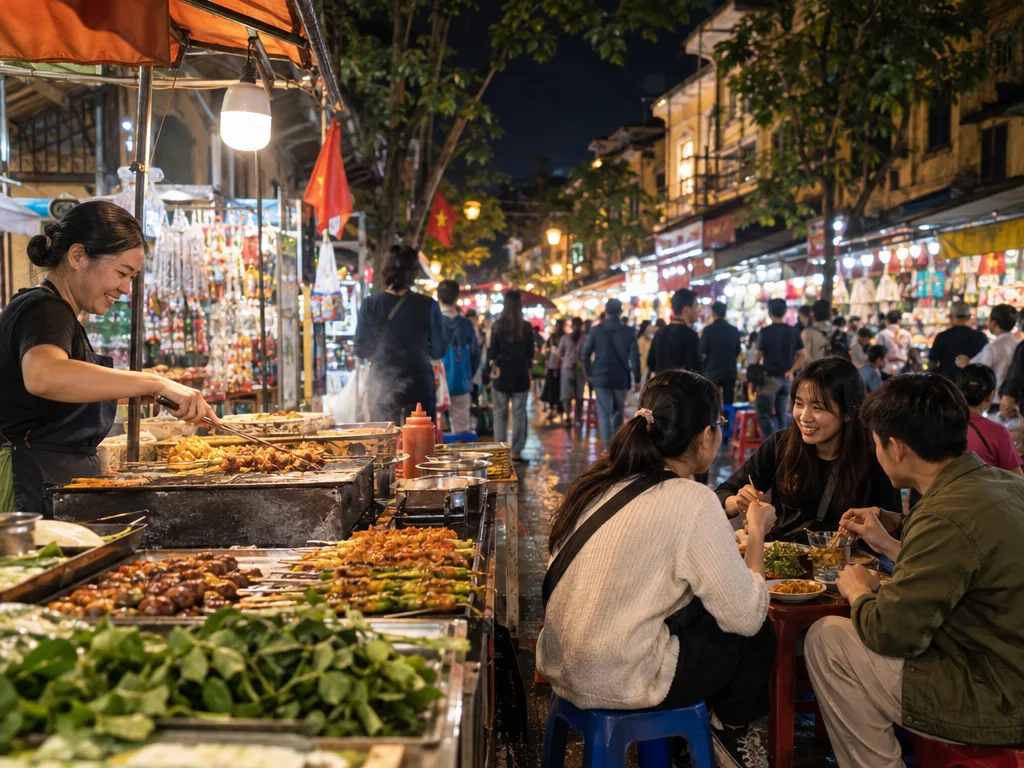
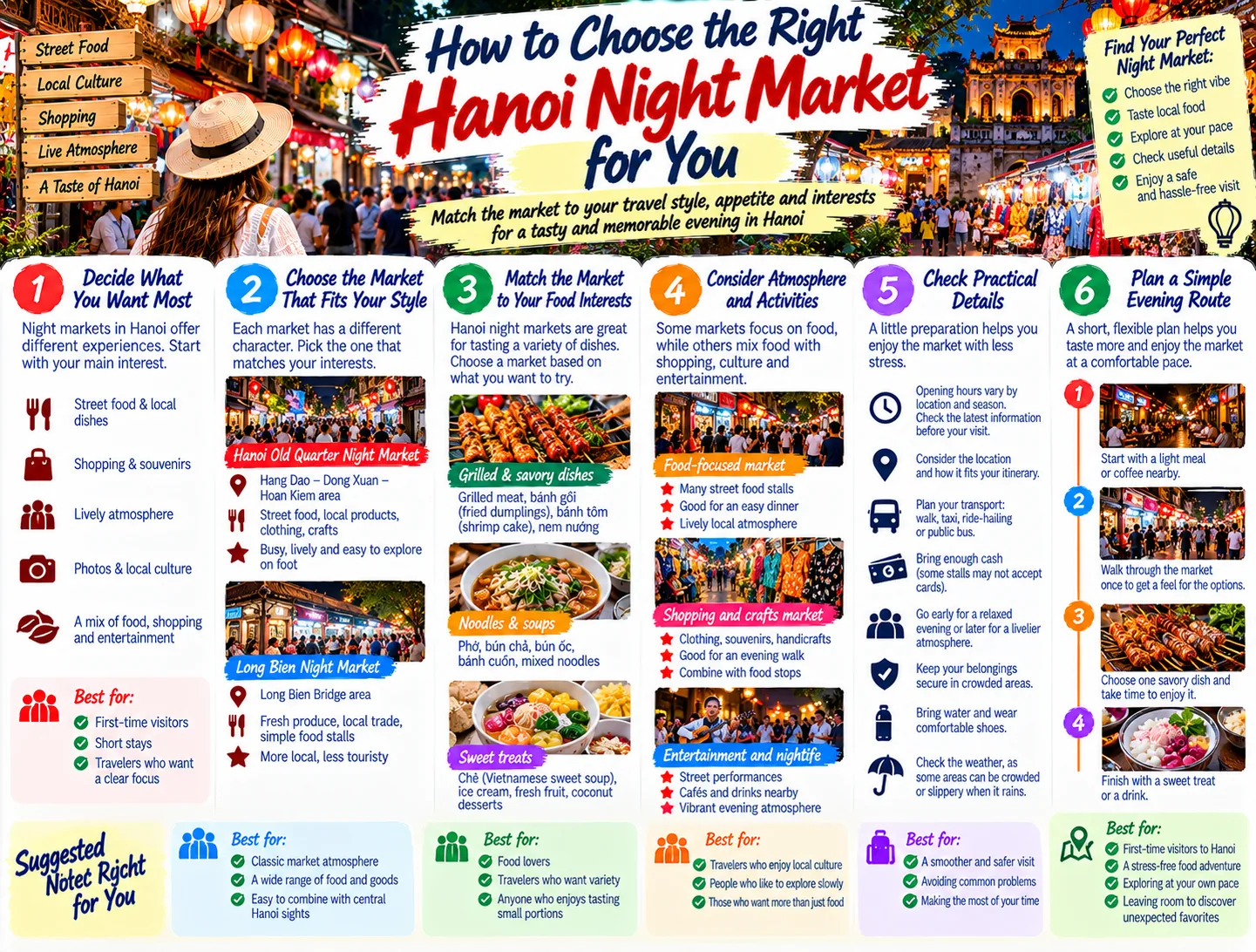
If you are planning a night-market evening, decide whether you want the market’s commercial atmosphere, a dedicated street-food crawl, or a blend of both. These experiences overlap, but they are not identical. Dong Xuan can give you a stronger sense of everyday trade; a night-market route may put more emphasis on strolling, browsing, and small bites. Choose one main purpose for the visit, then let the rest happen naturally.
A practical first-visit checklist
- Bring comfortable shoes and keep your route flexible.
- Eat a small amount before arriving if you dislike ordering while rushed.
- Walk once before choosing a stall.
- Order one savoury anchor, then add only what you still want.
- Ask about ingredients before accepting sauces or toppings.
- Keep valuables secure and avoid blocking working areas.
- Confirm access, stall availability, and local conditions on the day.
- Leave with curiosity, not a demand to turn every market into a photo stop.
Final thoughts
The best Dong Xuan Market food experience is not a race through a list of dishes. It is a chance to notice how Hanoi shops, cooks, snacks, and shares space. Start with one clear appetite, choose a busy and understandable stall, taste slowly, and allow the market’s rhythm to shape the rest of your route. That approach gives you something more useful than a checklist: a grounded introduction to Hanoi food markets and the everyday life around them.
JOIN THE CONVERSATION
Comments (0)
No comments yet. Be the first to share a thought.