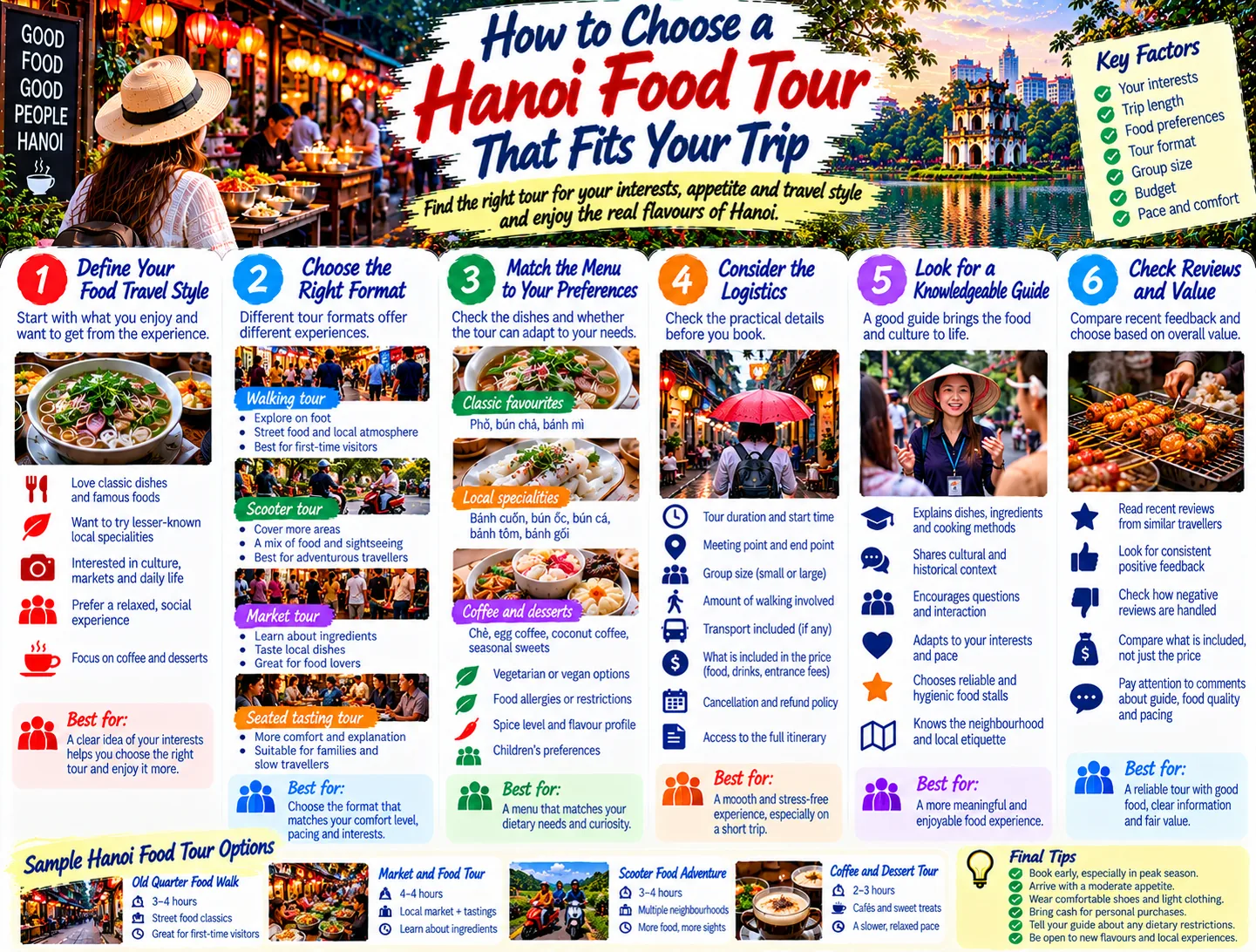
Hanoi food tours are easiest to enjoy when you treat them as a guided introduction to the city rather than a race to collect dishes. A good walk gives you context, small portions, local ordering confidence, and enough flexibility to notice how breakfast, lunch, snacks, coffee, and dessert fit into daily life. This practical guide explains how to choose a Hanoi food tour, what to eat, which questions to ask, and how to plan the experience around your appetite, interests, and pace.
What a Hanoi food tour should help you discover
The main value of a Hanoi food tour is not simply access to famous dishes. It is interpretation. A guide can explain why the same ingredient appears differently at breakfast and dinner, how a dish is assembled at the table, and which flavours are meant to be balanced together. Hanoi’s food is strongly regional, and official tourism guidance describes the capital as a place where many dishes are especially associated with northern traditions.
Look for an itinerary that combines recognisable classics with one or two less familiar tastes. Phở and bún chả are useful starting points, but they should not be the whole experience. Bánh cuốn, bún ốc, bún cá, bánh tôm, chè, or a seasonal snack can show a broader picture of the city. The official guide to traditional Vietnamese dishes in Hanoi is a useful companion if you want to preview the culinary vocabulary before you book.
Choose discovery over a checklist
Ask whether the tour is designed around a neighbourhood, a meal period, or a particular theme. A compact Old Quarter walk may suit a first visit, while a longer neighbourhood route can be better for travellers who have already tried the headline dishes. The most useful tours leave room for conversation: you should be able to ask what is in a bowl, how to use the herbs, and why locals eat the dish at that time of day.
How to choose the right Hanoi food tour
Start with the format. Walking tours are best when you want street-level atmosphere and several small tastings. Seated tasting tours are more comfortable if you prefer a slower rhythm or want to focus on detailed explanations. Scooter or vehicle-based experiences can cover more ground, but check exactly how much walking and getting on or off is involved before you commit.
For first-time visitors: choose a short, central route with a guide who explains ordering and local etiquette.
For returning visitors: look for regional specialities, market produce, coffee, or a district outside the standard sightseeing loop.
For families: prioritise shorter stops, flexible portions, and a clear plan for children’s preferences.
For vegetarians or cautious eaters: confirm substitutions in advance rather than assuming every stop can adapt.
For serious food travellers: choose a tour with fewer stops and more explanation, including how ingredients and techniques shape flavour.
Read the inclusions carefully. “Food tasting” can mean a full meal, several shared bites, or small samples. Also check the meeting point, expected duration, walking conditions, and whether drinks are included. You can compare the decision points in this first-time Hanoi food tour guide, then use the Hanoi Street Food category for more dish-specific planning.
What to eat on a Hanoi food tour
A well-balanced Hanoi food tour usually moves through contrasting textures and temperatures rather than serving five versions of the same noodle bowl. Think of the route as a progression: a gentle opening, a savoury centre, something grilled or fried, and a sweet or aromatic finish.
Start with a breakfast-style dish
Bánh cuốn is a strong introduction because it is light, soft, and assembled with herbs, fried shallots, and a dipping sauce. The rice rolls may contain minced pork and mushrooms, although fillings vary. Phở is another classic starting point. Vietnam’s official tourism site describes Hanoi phở as a dish commonly enjoyed across the day, with rice noodles, broth, meat, and aromatics. Ask your guide how to taste the broth first and when to add herbs or condiments.
Make room for Hanoi’s signature lunch
Bún chả is especially associated with Hanoi. Grilled pork, rice vermicelli, fresh vegetables, and a warm dipping broth arrive separately so that each diner can combine them. It is a good tour dish because the eating method is part of the experience. A guide can show you how much noodle, herb, and pork to add at once without turning the bowl into a soggy mixture.
Add one unfamiliar stop
Choose at least one dish you would probably overlook alone. Bún ốc brings rice vermicelli together with snail and a tangy broth. Bún cá uses fried fish, noodles, greens, and herbs. Bánh tôm, associated with the West Lake area, combines battered sweet potato and shrimp. These are not just “exotic” detours; they reveal the range of Hanoi’s everyday food beyond the internationally famous trio of phở, bún chả, and bánh mì.
Finish with coffee or dessert
Chè can provide a colourful, sweet ending, while coffee gives the group time to slow down and compare favourites. If coffee is included, ask whether the stop is intended for a quick drink or a longer explanation of local café habits. The site’s Hanoi Coffee Culture category offers more background for extending the conversation beyond the tour.
How to prepare before you go
Arrive hungry, but not starved. Several small tastings add up quickly, and eating too little beforehand can make spicy, rich, or unfamiliar foods harder to enjoy. Wear comfortable shoes and clothing that works for a warm evening, a busy pavement, or a sudden change of weather. Bring water, but leave enough room for the food and drinks included in the itinerary.
Tell the operator about allergies, dietary restrictions, pregnancy, medical concerns, or foods you avoid. Be specific about ingredients rather than saying only “I do not eat meat,” because broths, sauces, garnishes, and shared cooking surfaces may matter. If a tour cannot confirm an adjustment, decide whether you are comfortable joining for the cultural experience while skipping particular tastings.
Prepare a small set of useful questions
What are the main ingredients in this dish?
Is the sauce mixed in, dipped separately, or added a little at a time?
Which herbs are meant to be eaten, and should they be torn or left whole?
Is this normally a breakfast, lunch, snack, or late-night food?
What should I try next if I enjoy this flavour?
These questions make the tour more interactive and help you recreate the experience later. They also reduce the pressure to pretend that you understand every unfamiliar bowl immediately.
What the walking experience is really like
Hanoi food tours often combine eating with navigation through lively streets. You may pause beside a small shop, sit on a low stool, share a table with other guests, or cross a busy road between stops. That atmosphere is part of the appeal, but it also means the experience is less controlled than a restaurant meal.
Keep your expectations practical. A street-side stop may be memorable because it is quick, informal, and focused on one specialty. It may not offer a long menu, private seating, or a quiet dining room. Follow your guide’s instructions around traffic and where to stand, and keep bags close in crowded areas. If mobility is a concern, ask about stairs, pavement quality, seating height, and the distance between tastings before booking.
Use your phone to note dish names as you go, but do not let photography replace tasting. A short description beside each dish will be more useful later than a gallery of unlabelled bowls. If you find a favourite stop, ask for the name and neighbourhood so you can decide whether to return independently.
How to make the tour fit your wider food itinerary
Schedule the tour early in your stay if you want it to act as a culinary orientation. You will learn which flavours you enjoy, how portions work, and which dishes deserve a second attempt. Leave breathing room around it: a food tour is more enjoyable when you are not rushing to another reservation or trying to fit a heavy dinner immediately afterward.
Use the experience to shape the following days. After learning the basics, you might explore a market, book a cooking class, or revisit one dish in a quieter restaurant. The practical Hanoi food itinerary for first-time eaters can help place the tour within a wider plan, while the local restaurant guide is useful when you want a sit-down meal after the street-food stops.
Consider timing by appetite rather than by trend. A morning tour can highlight breakfast foods and a gentler café stop. An afternoon route may suit snacks, sweets, and coffee. An evening tour can feel more social, with grilled foods, shared dishes, and busier streets. The best choice depends on when you naturally eat and how much walking you want to combine with the meal.
Questions to ask before booking
A few direct questions can reveal whether a tour is a good match:
How many tastings are included, and are they full portions or samples?
How long is the walking portion, and what type of seating is expected?
Can the itinerary handle allergies or vegetarian requirements?
Does the route focus on one neighbourhood or travel between districts?
What happens if rain, heat, or a vendor’s closure changes the route?
Is the guide leading the group in English, and how much time is reserved for explanations?
Look for clear answers rather than exaggerated promises. A dependable description explains the style of the experience, the likely food categories, and the practical demands. It does not need to claim that one route represents every aspect of Hanoi cuisine.
Think about the guide’s role as well. A thoughtful host should translate, not perform. They can explain the difference between a dipping sauce and a soup base, point out herbs that are optional, and tell you when a dish is normally eaten without turning the meal into a lecture. If you are travelling with friends, agree on a sharing approach before the first stop. Ordering one portion for everyone to taste is often more comfortable than asking each person to finish a full serving, especially when the itinerary includes several fried or rich dishes.
It is also worth separating “local” from “hidden.” A busy, visible stall can be popular because it consistently makes one dish well. A quiet lane is not automatically more authentic, and a photogenic stop is not automatically better. Judge the tour by the clarity of its itinerary, the guide’s knowledge, and whether the food is presented in a way that helps you understand it. This keeps the experience grounded in eating well rather than chasing a secret-location promise.
Conclusion: choose a tour that leaves you curious
The best Hanoi food tour gives you more than a list of dishes. It helps you understand how people order, share, season, and move through the city’s food culture. Choose an itinerary that matches your pace, ask about dietary and mobility needs, and leave room for one unfamiliar taste. You should finish comfortably full, better informed, and curious enough to continue exploring Hanoi on your own.
JOIN THE CONVERSATION
Comments (0)
No comments yet. Be the first to share a thought.