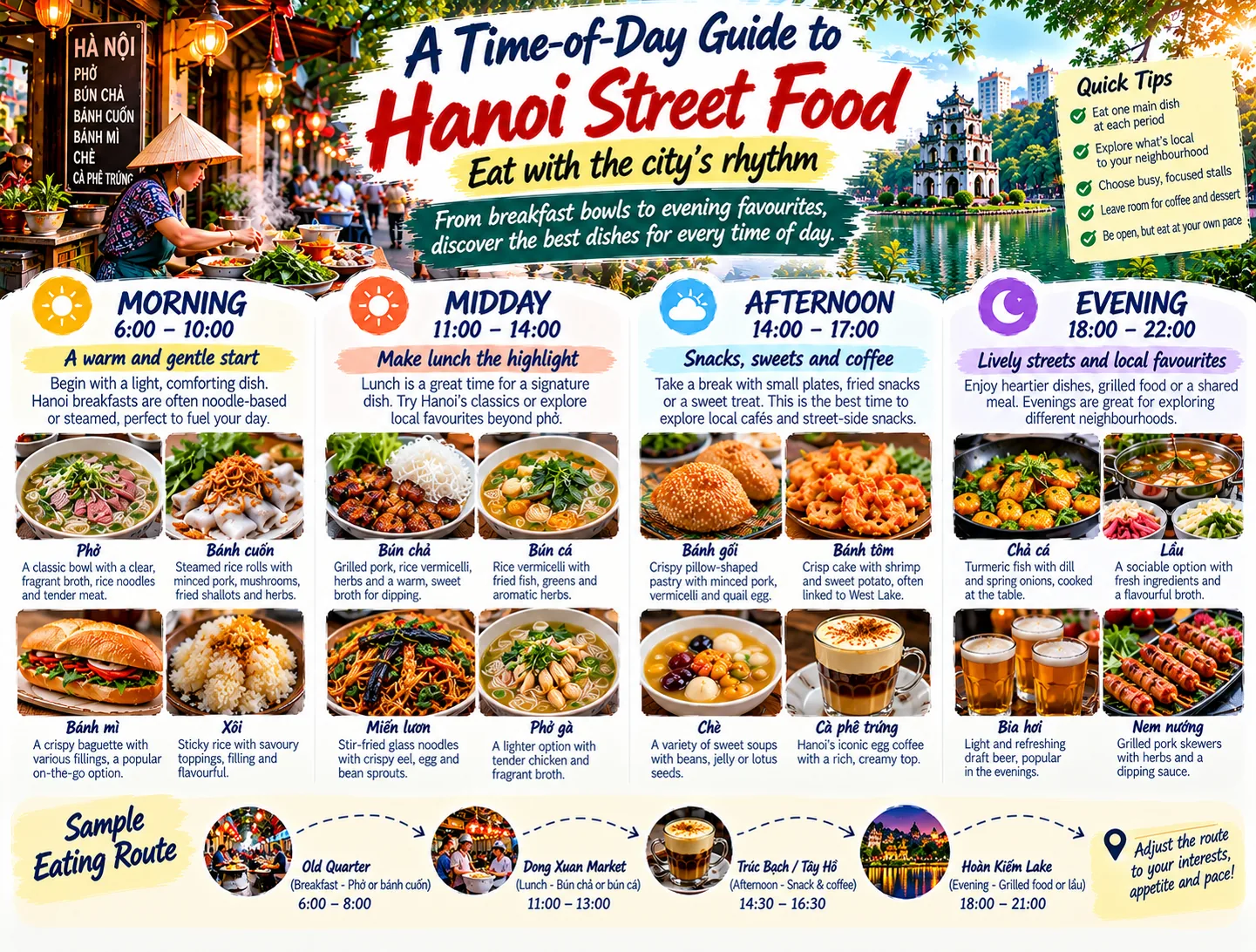
Hanoi street food is easiest to enjoy when you stop treating it as a checklist and start following the city’s daily rhythm. Breakfast is light and noodle-focused, lunch is often the moment for a signature bowl, afternoons suit crisp snacks, and dinner rewards a slower table shared with friends. This time-of-day approach helps first-time visitors taste more variety without ordering every famous dish at once. It also leaves room for coffee, dessert, pauses, and the small practical decisions that make a street meal comfortable.
Why a time-of-day plan works for Hanoi street food
Hanoi’s food culture is broad enough that a single “best dishes” list can become overwhelming. The official Vietnam Tourism guide describes street food as a city-wide experience and highlights far more than the familiar trio of phở, bún chả, and bánh mì. Its longer list includes steamed rice rolls, snail noodles, fish noodle soup, shrimp cakes, pillow-shaped pastries, herbal chicken noodles, hot rice cake, and chè. That range is useful, but the order in which you try dishes matters just as much as the names.
A rhythm-based plan gives you a simple rule: choose one substantial dish at each main eating period, then add one snack or sweet only when you still feel curious. You can adapt the sequence to appetite, weather, and dietary needs. It also makes your route more flexible: instead of crossing the city for a single dish, you can explore the neighborhood you are already in and treat each stop as a small decision.
For a broader primer before you begin, pair this guide with The Practical Guide to Hanoi Street Food. Then use the Hanoi Food Guides category for itinerary ideas that can sit around your food stops.
Start with a gentle breakfast
Choose a bowl or a steamed dish
Breakfast is the best time to begin with something warm, aromatic, and relatively focused. Phở is the obvious choice: the official tourism guide describes it as a noodle soup eaten for breakfast, lunch, or dinner, with a clear, deeply seasoned broth, rice noodles, meat, and green onions. If you want a dish that feels lighter and more hands-on, try bánh cuốn. These thin steamed rice rolls may be filled with minced pork and mushroom, then served with fried shallot, herbs, and a sweet-and-sour fish sauce.
Bánh cuốn is especially useful for cautious eaters because you can see the individual elements on the plate. Phở is a better choice when you want a complete bowl and a clear introduction to northern Vietnamese seasoning. Neither needs to be treated as a competition. Ask the server to explain the available meat or filling, then choose the version that fits your appetite.
Keep the first order simple
On your first morning, avoid ordering several large bowls simply because the menu is short. A practical breakfast order is one bowl or one plate per person, with herbs or condiments added gradually. Notice the balance of broth, noodles, protein, and fresh garnish before reaching for extra sauce. If you are sharing, one person can choose phở and another bánh cuốn, giving you a useful comparison without creating unnecessary waste.
Make lunch your signature dish
Try Hanoi’s classic lunch pairing
Lunch is a natural moment for bún chả, the capital’s grilled pork and rice vermicelli dish. The official tourism reference presents it as a Hanoi specialty made from grilled pork, a hot sweet broth, vermicelli, meatballs, and fresh or pickled vegetables served separately. The usual eating method is interactive: add noodles and greens to the broth so each bite combines smoky meat, herbs, acidity, and sweetness.
Do not confuse bún chả with a generic noodle soup. The broth is usually a dipping-style element rather than a large bowl of soup, and the texture comes from combining separate components. Take a small amount first. This lets you judge the seasoning and prevents the noodles from sitting in the broth longer than you prefer.
Consider bún cá when you want something different
If grilled pork is not appealing, bún cá offers another lunch direction. Vietnam Tourism describes it as rice vermicelli with fried fish, green vegetables, and aromatic herbs that can include cilantro and dill. It is a useful choice for travelers who want a soup-based meal but have already eaten phở, and it demonstrates how herbs can define a bowl as strongly as the main protein.
For help comparing lunch stops and local eating styles, see How to Choose Restaurants in Hanoi. The goal is not to find a single universally perfect stall. It is to choose a busy, clearly focused place where the dish you want appears to be the main event.
Use the afternoon for small, crisp bites
Explore fried snacks at a slower pace
Afternoon is when a snack-sized approach becomes most useful. Bánh gối is a pastry shaped like a pillow and filled with ingredients such as minced pork, black fungus, vermicelli, and quail egg. It belongs to the family of fried street snacks that can be ordered one at a time, making it easier to share and compare. Bánh tôm is another distinctive option: the official guide connects it with West Lake and describes a crisp cake made with sweet potato and shrimp, served with a sweet-and-sour sauce and papaya.
These foods are rich, so order them as a pause rather than a second lunch. If you are with two or three people, one portion to share is often enough to understand the texture. Eat the crisp item while it is fresh, and take your time with the dipping sauce instead of covering the whole bite immediately.
Know when to choose a warming bowl
On a cool or rainy day, bánh đúc nóng can be more satisfying than another fried snack. Vietnam Tourism describes it as a soft, hot rice cake with black fungus, meat, fried shallots, herbs, and a chili-garlic fish sauce. The dish is spoonable and comforting, but it is also filling, so treat it as the center of your afternoon stop.
Afternoon is also a good time to pause for Vietnamese coffee before continuing. Use the Hanoi Coffee Culture category for a separate look at drinks and café rituals, rather than trying to combine every food experience into one sitting.
Build a social dinner
Choose food that benefits from sharing
Dinner is the time to slow down and order for the table. Hot pot, or lẩu, works well for groups because vegetables, meat, and seafood can be cooked together in a bubbling pot. The official street-food guide presents it as a communal experience, which is the important point for visitors: dinner becomes less about one perfectly plated dish and more about choosing, cooking, dipping, and talking.
Another evening option is chả cá, Hanoi-style fish cooked with turmeric and dill. The official food reference explains that it is served with rice vermicelli, peanuts, and fermented shrimp paste. That combination is strongly flavored and may not suit everyone, so ask about the condiments before ordering if your group includes cautious eaters. You can taste a small amount first and add more sauce only if you enjoy it.
Balance richness with fresh sides
A good street-food dinner usually needs contrast. If the main dish is grilled or fried, include herbs, leafy vegetables, pickles, or a broth-based item where available. This is not a rule about authenticity; it is simply a way to keep the meal comfortable. Shared ordering also lets each person choose a different level of adventure: one familiar dish, one regional specialty, and one snack or vegetable side.
For a deeper explanation of why shared meals feel different from a sequence of individual plates, read The Stories Behind a Shared Vietnamese Meal. It provides useful cultural context without requiring you to turn dinner into a formal lesson.
Finish with chè, not another main course
Chè is a practical ending when you want something sweet but do not want a heavy dessert. The official Hanoi food guide describes it as a layered sweet soup that may include beans, glutinous rice balls, herbal jelly, syrup, and coconut. Because recipes and textures vary, ask what is in the bowl or cup before ordering. If you are sharing, one portion can be enough for everyone to sample.
Dessert also gives you a natural place to reflect on the day. Which broth did you prefer? Did you enjoy herbs, fermented flavors, or grilled smoke? Those answers can guide the next day’s choices more effectively than a ranking copied from a list. If you want to continue exploring by theme, browse Traditional Vietnamese Dishes for related background and dish ideas.
Simple ordering habits that make street food easier
Use observation before translation
Look at what nearby diners are eating, identify the main pot or grill, and notice whether the stall specializes in one dish. A focused menu is often easier for a first visit than a long list of unrelated items. Pointing to a visible bowl or plate is a practical backup when pronunciation feels difficult. You can also show the dish name written on your phone, then confirm the portion before it arrives.
Ask clear questions about ingredients
Travelers with allergies, religious dietary requirements, or strong dislikes should ask directly about meat, seafood, eggs, peanuts, and sauces. Do not assume that removing a visible topping removes every related ingredient from the preparation. If the answer is unclear, choose a simpler dish or eat at a place where communication is easier. The best street-food memory is one that leaves you comfortable enough to keep exploring.
Plan for flexibility
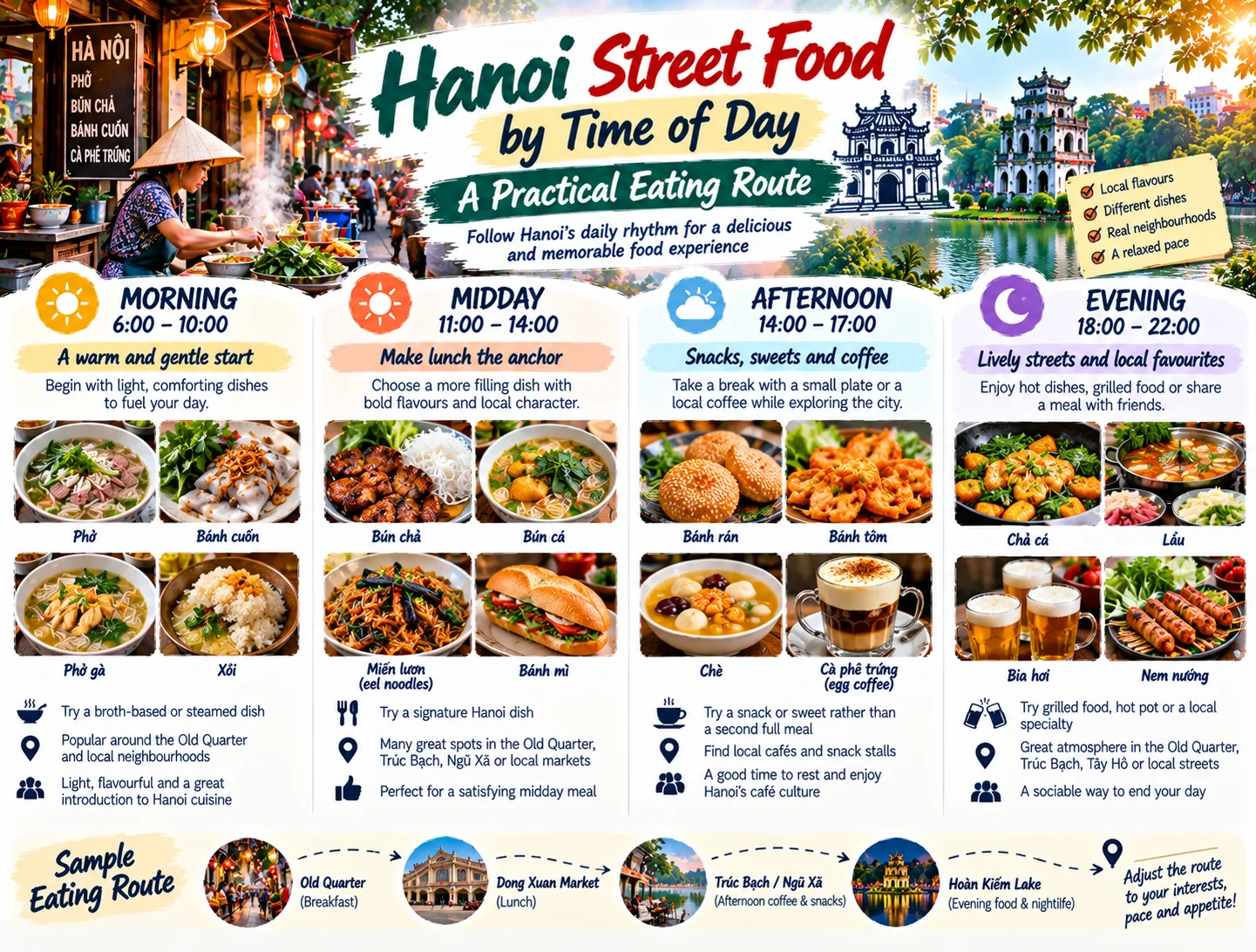
Street stalls change, queues vary, and a dish may be unavailable when you arrive. Treat your itinerary as a sequence of food types rather than a fixed list of businesses: a breakfast noodle, a lunch vermicelli dish, an afternoon snack, a shared dinner, and a sweet finish. That structure protects the experience from small changes while keeping your choices connected to Hanoi’s eating rhythm.
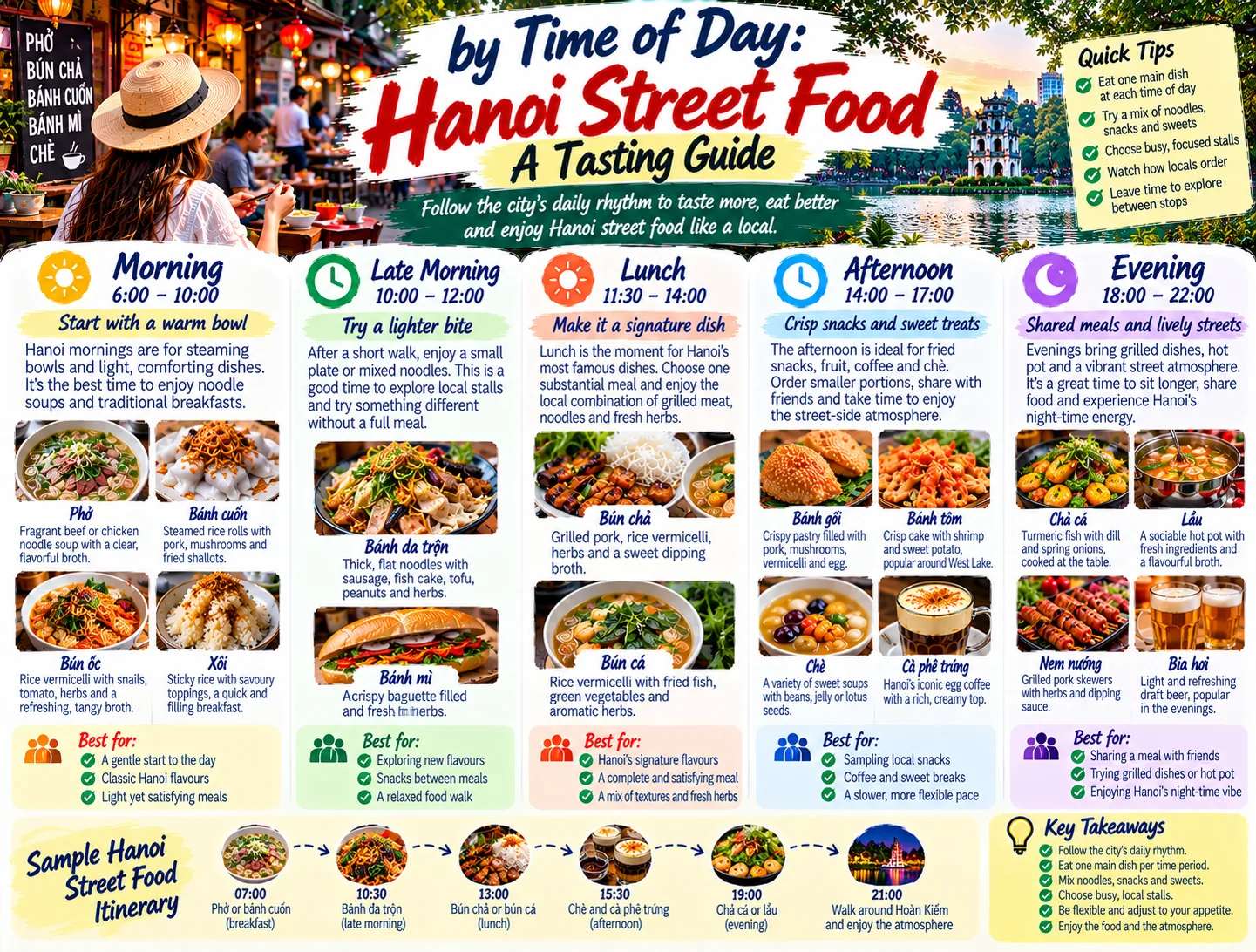
A one-day Hanoi street food sequence
Morning: phở or bánh cuốn, followed by a short walk and coffee.
Midday: bún chả or bún cá, with herbs and vegetables added gradually.
Afternoon: bánh gối, bánh tôm, or bánh đúc nóng depending on weather and appetite.
Evening: lẩu for a group or chả cá for a focused regional specialty.
After dinner: a shared chè and a note about what you want to taste next.
This sequence is deliberately flexible. You can skip a course, swap lunch and dinner, or turn one stop into a market walk. The point is to experience variety without rushing from one famous name to the next.
Conclusion: eat by rhythm, not by checklist
The most useful Hanoi street food plan is not the longest list. It is a gentle rhythm that matches breakfast, lunch, snacks, dinner, and dessert to the character of each dish. Start simply, order one clear specialty at a time, share richer foods, ask about ingredients, and leave room for surprises. With that approach, Hanoi’s street food becomes easier to understand—and much more enjoyable to taste.
JOIN THE CONVERSATION
Comments (0)
No comments yet. Be the first to share a thought.