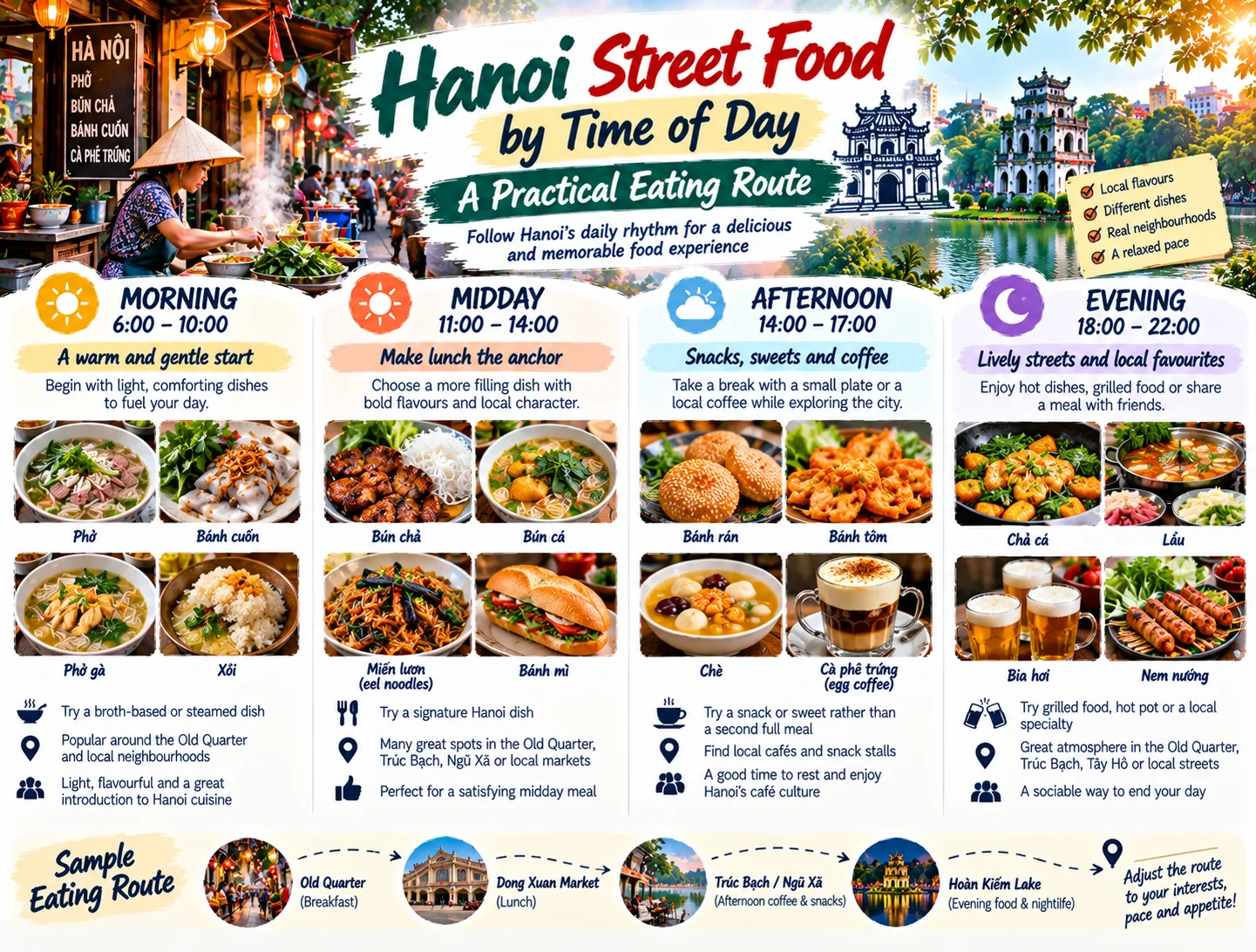
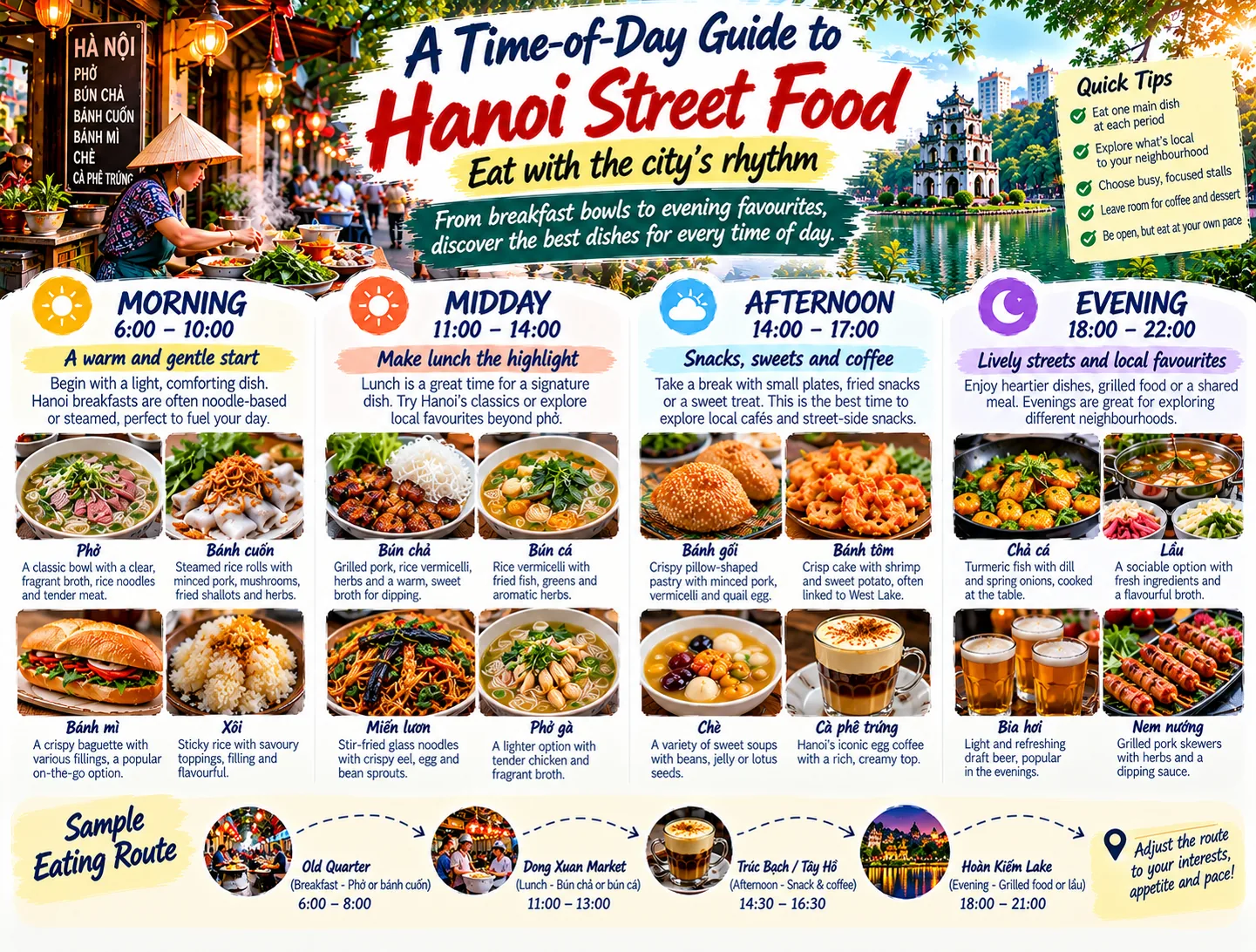
Hanoi street food is easiest to enjoy when you treat it as a sequence of small decisions rather than a checklist of famous dishes. One bowl may be a quick breakfast, a plate may be shared at a low roadside table, and a sweet or coffee stop may change the pace of the whole walk. The best experience comes from matching the food, time of day, neighbourhood, and your appetite.
This guide explains what to eat, how to build a realistic route, how to order without stress, and how to choose a busy, well-run stall. It is designed for first visits but leaves room for curiosity. For a broader introduction before you start, pair it with our first-timer’s food guide to Hanoi, then use the ideas below to make your street-food time more focused.
What makes Hanoi street food different?
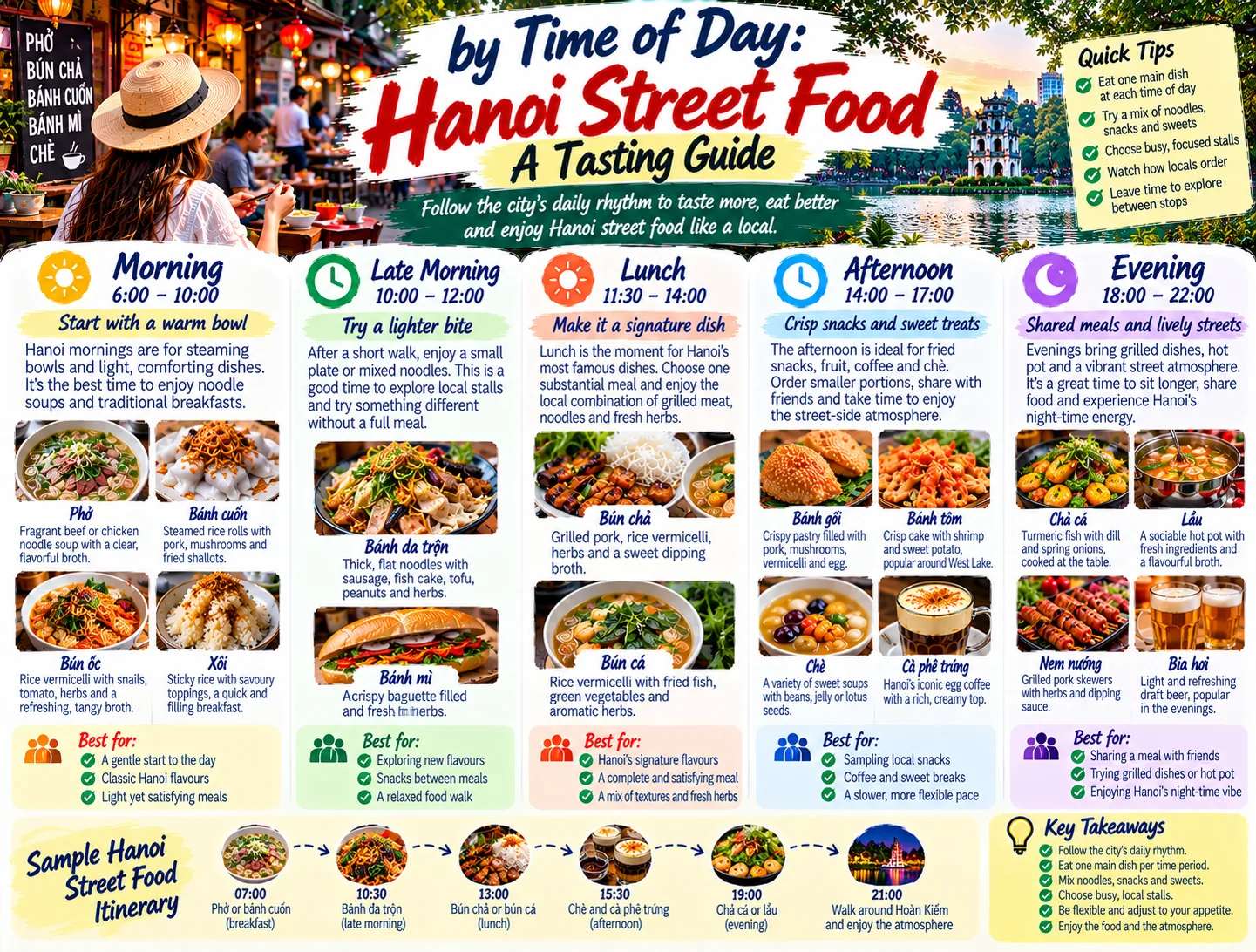
Hanoi’s food culture is shaped by repetition, freshness, and place. Many vendors specialise in one preparation and serve it during the part of the day when it makes most sense. A noodle soup may be associated with breakfast, grilled food may become more appealing later, and a compact snack can fill the gap between larger meals. This rhythm is why a long list of dishes is less useful than a flexible plan.
Street food also reflects the city’s social geography. In the Old Quarter, narrow streets bring together food stalls, family businesses, cafés, markets, and visitors. Elsewhere, the experience may feel more residential, with fewer signs and more reliance on observation. A good food walk notices both the dish and the setting: the stools, the shared condiments, the sound of a wok, and the way locals move through the meal.
Think of the primary goal as finding food that is hot, fresh, and suited to the moment. You do not need to eat everything in one outing. Two or three savoury stops plus a drink or dessert is usually more enjoyable than rushing through six full portions.
Signature Hanoi street-food dishes to look for
Phở and other noodle soups
Phở is the most recognisable starting point, but the useful question is not whether a bowl is “authentic.” Ask what style suits your appetite. A clear broth with rice noodles and herbs can be a gentle morning meal, while a richer or more intensely seasoned bowl may work better when you want a substantial lunch. Eat it soon after serving so the noodles keep their texture.
Hanoi’s street-food landscape includes other noodle soups worth trying. Bún dishes often combine rice vermicelli with herbs, meat, vegetables, and a balanced sauce or broth. Bún chả is especially associated with Hanoi: grilled pork, noodles, herbs, and dipping sauce arrive as separate elements, allowing you to compose each bite. Bánh đa or other regional noodle variations may appear depending on the neighbourhood and vendor.
Bún chả, grilled foods, and rice plates
Bún chả is a strong choice for travellers who want a meal that feels distinctly Hanoi rather than simply Vietnamese. Look for the small grill or the aroma of charcoal, then expect a plate built around grilled pork, vermicelli, herbs, and dipping sauce. The smoky meat is only one part of the experience; the herbs and sauce keep the meal bright.
Other grilled snacks can be ideal for sharing. Order one portion first if you are unsure about size, then add another item after you have seen how the stall serves it. Rice plates and sticky-rice dishes are practical when you need something filling and less brothy. They are also useful for travellers who prefer a meal that can be eaten at a slower pace.
Bánh mì, bánh cuốn, and small bites
Bánh mì is convenient for a walking day, but do not assume every shop makes the same sandwich. Fillings, pâté, pickles, herbs, chilli, and sauces vary. If you dislike heat or strong pâté, point to the ingredients you want less of before the vendor assembles it.
Bánh cuốn offers a softer, more delicate contrast: thin steamed rice rolls with savoury filling, herbs, and a dipping sauce. It is often a good breakfast or light meal. For snacks, watch for fried pastries, corn, sweet potatoes, fresh fruit, and other small items that can be shared. A varied street-food itinerary should include different textures, not only different names.
Where to eat: build your route by neighbourhood
The Old Quarter for a first food walk
The Old Quarter is the easiest place to begin because several food experiences can fit into one walk. Use a simple structure: choose one main dish, walk for twenty to thirty minutes, stop for a snack or drink, and finish with something sweet or another savoury dish. This keeps the route adaptable and reduces the temptation to cross the city for every recommendation.
Street names and stall locations can change, so save dish ideas rather than treating an online map as permanent. If a promising vendor is closed, look for the same visual signals nearby: a short focused menu, steady local customers, ingredients moving quickly, and food prepared in front of you.
Markets and the edges of the centre
Markets can be useful for seeing the ingredients behind Hanoi cooking and for finding compact snacks. They are busiest and most interesting when deliveries, preparation, and shopping are happening, but they may be crowded. Walk slowly, keep bags close, and avoid blocking a stall while deciding.
For a wider context, browse the site’s Food Markets & Night Markets category. It can help you compare a market-focused outing with a restaurant or café stop, rather than assuming every food experience should follow the same route.
Residential streets for a more local rhythm
Outside the most visited lanes, street food often feels less staged. You may see neighbours eating quickly before work or families sharing a meal. This is a good setting for observing local habits, but it requires more patience. Menus may be unspoken, portions may be less obvious, and English may be limited. A friendly greeting, a photo of the dish, or a simple “one” gesture can help.
How to choose a good street-food stall
No single visual cue guarantees quality, but several practical signs are useful when considered together:
- Food moves steadily, so ingredients are not sitting untouched for long periods.
- The cooking area looks organised and the vendor handles raw and cooked items carefully.
- There is a focused menu rather than a confusing list of unrelated dishes.
- Local customers return, especially at the meal time associated with that food.
- Condiments, herbs, and serving surfaces appear reasonably clean and replenished.
Do not judge a stall by decoration. A tiny operation can serve an excellent meal, while a polished-looking place may not be the right fit for your taste. Trust your comfort level. If the food looks lukewarm, the ingredients seem tired, or the preparation area makes you uneasy, choose another stop without making a scene.
Ordering street food in Hanoi with confidence
Keep the first order simple
Start with one portion per person or one dish to share. Watch how the vendor signals the choices: meat, noodles, herbs, chilli, or additional toppings. A smile and a pointing gesture usually go a long way. If you need a modification, ask before the bowl or plate is finished rather than trying to remove ingredients afterward.
Useful phrases are short: “một” means one, “hai” means two, “không cay” means not spicy, and “cảm ơn” means thank you. You can also show a saved photo, but confirm that the dish is actually available that day. Street vendors may specialise in a single item and close when it sells out.
Understand the table setup
Chopsticks, spoons, herbs, sauces, and small plates may be shared or placed within reach. Watch one nearby customer if you are unsure. Take only what you need, keep used napkins contained, and leave room for the vendor to serve others. Small plastic stools are part of the format, not a sign that you are missing a formal dining room.
Payment is often made at the end. Carry small notes when possible and confirm the amount calmly. Because menus and prices can change, ask the cost before ordering if it is not displayed. This is especially helpful when choosing add-ons or drinks.
Timing, pace, and a practical food-walk plan
Timing matters more than trying to find a mythical “best” street. Breakfast foods are easiest to find during the morning, while grilled dishes and evening snacks may become more visible later. Some vendors serve only one part of the day, so keep your plan broad enough to handle closures and sold-out dishes.
A reliable three-stop route looks like this:
- Begin with a light breakfast or noodle dish, giving yourself time to notice how it is served.
- Take a walking break and visit a market lane or café area for a snack or drink.
- Finish with bún chả, grilled food, a rice dish, or dessert according to your appetite.
Leave gaps between stops. Hanoi street food is more enjoyable when you can pause to look around, find a restroom, drink water, and change direction. If you want help turning dishes into a coherent route, our guide to planning a Hanoi food walk offers a useful companion approach.
Dietary needs, spice, and food comfort
Vegetarian travellers should ask clearly whether a dish contains meat, fish sauce, shrimp paste, or stock. “Vegetarian” does not always mean the same thing across kitchens, so explain the ingredients you avoid. The site’s Vegetarian & Special Diets category is a helpful next step for planning beyond a single street-food stop.
For spice, distinguish between fresh chilli, chilli sauce, and a dish that is already seasoned hot. Request less chilli when possible, but remember that some sauces are prepared in advance. If you have allergies, use a translated note and ask before ordering; do not rely only on removing a visible ingredient.
Choose hot, freshly cooked food when you can, wash your hands before eating, and carry water. These are simple habits that let you focus on the flavours without turning every meal into a risk calculation.
How to make the experience memorable
Notice one detail at every stop: the broth aroma, the crunch of pickles, the balance of herbs, or the way a vendor manages a busy queue. Ask yourself why the dish fits that time and place. You may find that a modest bowl eaten on a low stool becomes more memorable than a famous restaurant visit.
Hanoi street food is not a performance that requires perfect pronunciation or an encyclopaedic appetite. Approach it with curiosity, order modestly, observe first, and let the city guide your next stop. You will eat more comfortably and understand the food more deeply.
For another perspective on local eating habits, continue with our guide to finding a neighbourhood table in Hanoi. The best street-food memories usually come from combining a good dish with the right pace, setting, and sense of attention.
JOIN THE CONVERSATION
Comments (0)
No comments yet. Be the first to share a thought.