A Hanoi cooking class is more than a recipe lesson. It is a practical way to understand how the city shops, seasons, balances flavours, and gathers around food. The best classes combine hands-on cooking with context: a market visit, an explanation of herbs and sauces, and enough time to sit down and eat what you make. This guide explains how to choose a Hanoi cooking class, what a thoughtful session usually includes, which dishes are worth learning, and how to prepare for a rewarding workshop without relying on vague promises.
What makes a Hanoi cooking class worthwhile?
Hanoi’s food culture is built on contrast and proportion. A bowl or platter may bring together a rich broth, fresh herbs, acidity, sweetness, heat, and texture rather than one dominant flavour. The official Vietnam Tourism guide describes the city’s cuisine as a meeting point of Vietnamese traditions, Chinese influences, and French heritage, with ingredients flowing daily through wholesale and local produce markets. That makes a cooking class especially useful: you learn not only what goes into a dish, but why the ingredients are combined in that order.
Look for a class that teaches decisions you can repeat at home. A good instructor should explain how to taste broth, adjust a dipping sauce, handle herbs, and recognise when a component is ready. A polished demonstration is pleasant to watch, but a practical workshop gives you several chances to chop, mix, fry, simmer, assemble, and taste.
If you are comparing formats, start with our guide to choosing the best Hanoi cooking class. It covers the questions to ask about group size, teaching style, transport, menus, and inclusions before you book.
Choose the right class format for your trip
Market-to-table workshops
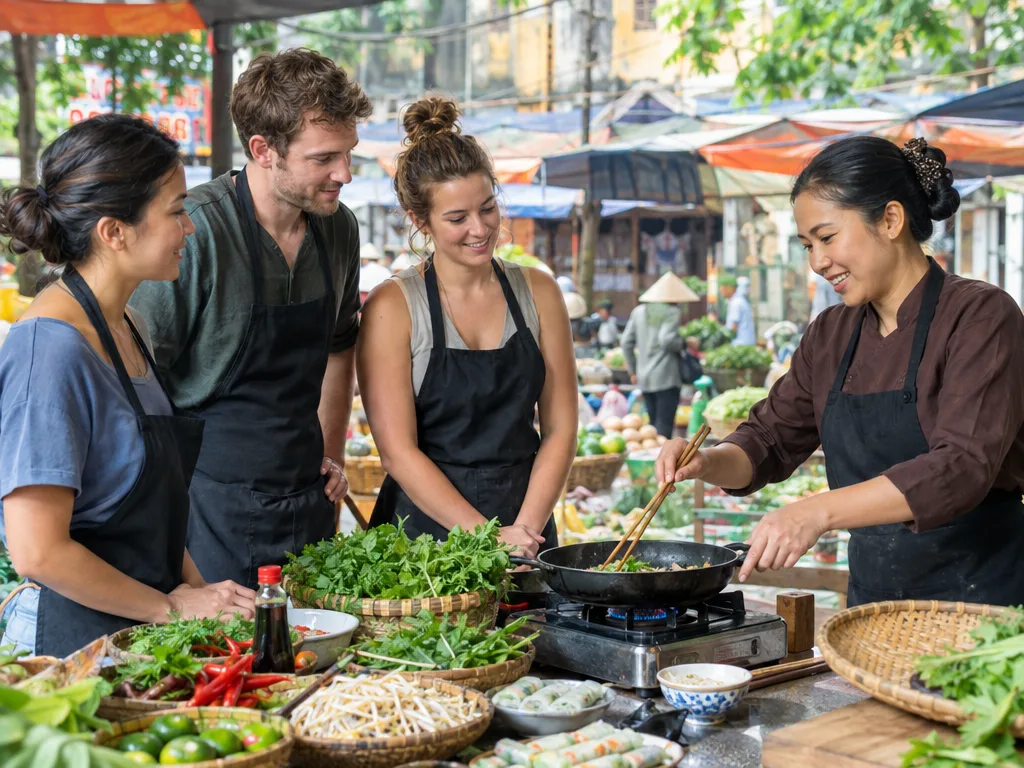
A market-to-table class usually begins with a walk through a local market or produce area, followed by a cooking session. This format is strongest for travellers who want to understand ingredients in their original setting. You may see bunches of herbs, vegetables, noodles, tofu, seafood, and seasonings before they appear on the chopping board. The market component also helps you connect a dish with the everyday rhythm of Hanoi rather than treating it as an isolated restaurant recipe.
Expect the market visit to be sensory rather than theatrical. Crowds, narrow aisles, wet floors, unfamiliar labels, and changing stock are part of the experience. Wear secure shoes, keep your belongings close, and follow the instructor’s lead when moving through busy spaces. Do not assume every market visit follows a fixed route or offers the same ingredients every day.
Home-style and small-group classes
Small-group workshops are often a good choice for first-time cooks because the instructor can correct technique and answer questions. They are particularly useful if you want to learn a family-style meal: several dishes prepared at the same time, then shared at one table. Ask whether the group cooks together or rotates through stations, and whether you will receive recipes after the class.
Private, family, and dietary-focused sessions
A private lesson can make sense for families, couples, photographers, or travellers with detailed dietary needs. Before paying, explain allergies, intolerances, religious restrictions, and whether you eat fish sauce, shrimp paste, eggs, meat, or dairy. “Vegetarian” can mean different things in different kitchens, so ask exactly what the instructor can replace and how shared utensils and cooking surfaces are handled. For broader planning, see the vegetarian and special diets section of this site.
Which dishes should you learn in Hanoi?
The most useful menu is not necessarily the longest one. Three or four well-explained dishes can teach more than ten rushed preparations. Try to choose a menu that includes different techniques: simmering, grilling or pan-frying, fresh assembly, and a sauce or dressing.
- Bún chả: useful for learning how grilled pork, rice noodles, herbs, and a diluted fish-sauce dressing work together. The official Vietnam Tourism dish guide presents it as a lunch dish assembled with noodles, herbs, and dipping sauce.
- Phở: valuable when the class focuses on broth, aromatics, noodles, and the timing of garnishes rather than promising a shortcut to a complex stock.
- Fresh rolls or herb-led salads: helpful for knife skills, texture, wrapping, and balancing sour, sweet, salty, and spicy notes without long cooking times.
- Chả cá: a memorable option if you want to understand marination, fresh dill, spring onions, and the drama of finishing a dish at the table.
- Vegetable, tofu, or mushroom dishes: ideal for learning how Vietnamese cooking builds depth through aromatics, stock, fermented seasonings, herbs, and texture rather than relying only on meat.
Hanoi’s iconic dishes are worth tasting beyond the classroom too. Our guide to traditional Vietnamese dishes in Hanoi can help you turn a lesson into a wider food itinerary, while the official tourism reference on must-try Hanoian dishes offers useful background on phở, bún chả, chả cá, bún đậu, and egg coffee.
How to judge a menu before booking
Look for balance, not novelty
A menu should feel connected to Hanoi and still be manageable in the available time. A class advertising a huge number of dishes may be demonstrating rather than teaching. Check whether the menu includes a main dish, a vegetable or herb component, a sauce, and a simple dessert or drink. If every item requires a separate long simmer, the session may be rushed.
Ask how ingredients are handled
Ask when ingredients are purchased, whether substitutions are possible, and what happens if a market does not have a particular item. A responsible operator should be able to explain the menu clearly without promising that every ingredient will be identical year-round. If you have an allergy, request a written confirmation of the dishes and substitutions before arrival.
Check what “hands-on” means
Some workshops let guests prepare nearly every component. Others use a chef-led demonstration with a few finishing tasks. Neither is automatically wrong, but they suit different expectations. If learning is your priority, ask how much time each guest spends cooking and whether the instructor demonstrates heat control, seasoning, and texture checks.
What to expect on the day
Most cooking classes have a simple rhythm: meet the instructor, travel or walk to the venue, discuss ingredients, prepare the menu, cook in stages, and eat together. Timing can change because of traffic, market conditions, weather, or the pace of the group. Arrive ready to participate rather than treating the class as a restaurant meal with entertainment around it.
Bring comfortable clothing that can tolerate splashes and food smells. Tie back long hair, remove dangling jewellery, and wear closed shoes if the operator recommends them. Keep your phone available for notes, but do not let photography replace participation. Write down unfamiliar Vietnamese words for herbs, sauces, or techniques while the explanation is fresh.
A strong instructor will encourage tasting throughout the process. Notice how the dish changes when you add acid, herbs, chilli, toasted aromatics, or a little more salt. Those small adjustments are often the most transferable lessons. You should leave understanding what to watch for, not just carrying a recipe card.
For a realistic preview of the experience, read what to expect from a Hanoi cooking class. It is useful if you are deciding between a short introductory workshop and a more immersive session.
Plan around markets, neighbourhoods, and meals
Location affects the feel of a class. A workshop near the Old Quarter may be convenient for visitors staying centrally and easy to combine with an evening walk. A class farther from the centre may offer a quieter kitchen, a residential setting, or a different market atmosphere. Do not choose on location alone: compare the actual teaching time, transport arrangement, and menu.
If the class includes a market visit, avoid scheduling it immediately after a long transfer or before a fixed appointment across town. Hanoi traffic can make short distances unpredictable, and a cooking lesson is more enjoyable when you are not watching the clock. You can build the rest of the day around food by exploring Hanoi’s food markets and night markets or by reading the site’s practical Hanoi street food guide for ideas after class.
Consider eating lightly beforehand, but do not arrive hungry enough to lose concentration. Tasting is part of the lesson, and the completed meal may be more substantial than expected. If you are travelling with children, confirm minimum ages, counter height, knife supervision, and whether the menu can be simplified.
Questions to ask before you book
- How many people are in the group, and does each guest have a cooking station?
- Is the market visit included, and is it a real shopping activity or only a short introduction?
- Which dishes are cooked from start to finish by guests?
- Can the menu accommodate allergies, vegetarian diets, or no-fish-sauce preferences?
- Are ingredients, transfers, drinks, recipes, and the finished meal included?
- What happens if rain, traffic, ingredient availability, or a venue issue changes the plan?
- Is the class suitable for children, older travellers, or guests with limited mobility?
Clear answers matter more than a long list of marketing adjectives. A trustworthy operator explains what is included, what may change, and what guests are expected to do.
How to turn the lesson into a lasting food memory
After the class, organise your notes by technique rather than only by recipe. Record the texture the instructor wanted, the order in which ingredients were added, and the signs that the dish was ready. Photograph your finished plate if you wish, but also write down the Vietnamese names of ingredients you want to recognise on your next market visit.
Then keep exploring. Try the same dish at a neighbourhood eatery and notice what changes: the sweetness of the sauce, the amount of herbs, the smokiness of grilled meat, or the balance of broth and noodles. Compare the classroom version with the wider food traditions described in Hanoi’s food culture and traditions. That comparison turns a one-day activity into a deeper understanding of the city.
Conclusion
The best Hanoi cooking class gives you three things: practical technique, cultural context, and confidence to taste more thoughtfully. Choose a format that matches your time and dietary needs, favour a focused menu over an overloaded one, and ask exactly how hands-on the session will be. With the right expectations, a workshop becomes more than a holiday activity—it becomes a useful way to read Hanoi through its markets, herbs, sauces, shared meals, and everyday cooking habits.
JOIN THE CONVERSATION
Comments (0)
No comments yet. Be the first to share a thought.