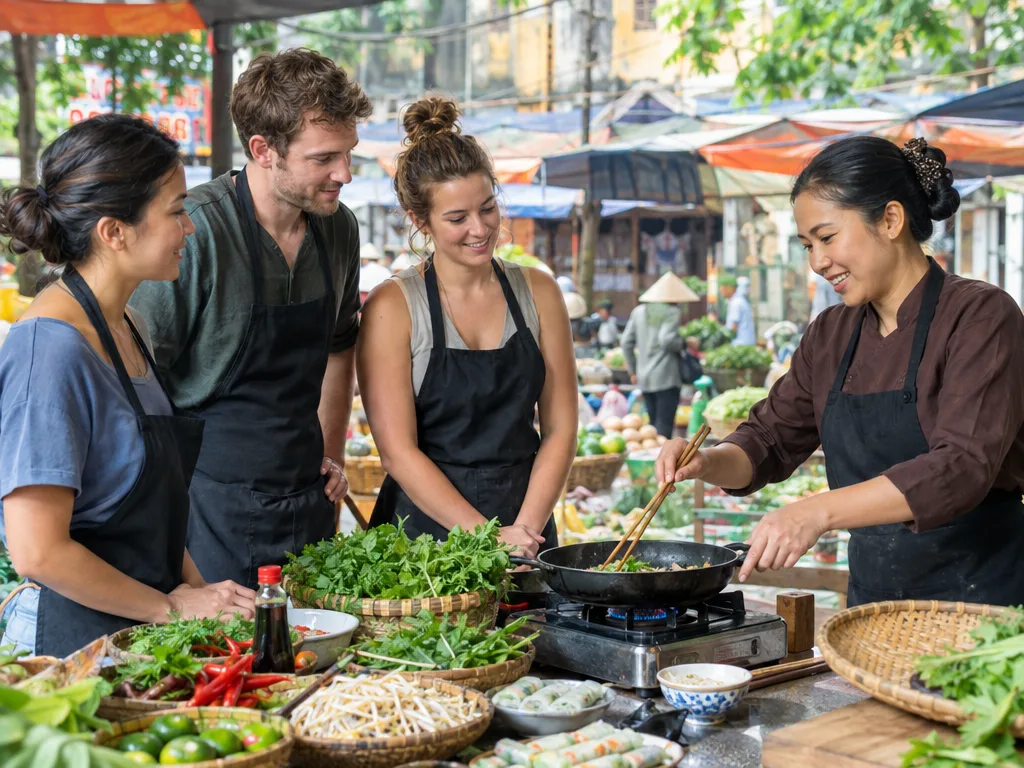
Wondering what you actually learn in a Hanoi cooking class? The most rewarding sessions do more than hand you a recipe. They show how Vietnamese cooks balance rice, herbs, dipping sauces, texture, heat, and freshness, then give you the confidence to repeat the meal at home. A typical Hanoi cooking class may combine a market or ingredient introduction with hands-on preparation of several small dishes, but the menu varies by teacher, season, group size, and dietary needs. Use this guide to understand the dishes, techniques, and questions worth checking before you book.
What a Hanoi cooking class menu usually includes
Most classes build a menu around contrast rather than one oversized main course. You might work with a noodle dish, a fresh herb plate, a savoury dipping sauce, a rice-paper or rice-flour preparation, and a cooked dish that demonstrates grilling, steaming, or quick stir-frying. That variety is part of the lesson: Vietnamese meals often feel complete because different textures and flavours arrive together.
Do not assume that every class teaches the same famous dishes. Some menus focus on northern comfort food; others borrow dishes from across Vietnam. A class may also replace pork or fish with tofu, mushrooms, chicken, or vegetables when a guest has dietary requirements. Ask for the current menu rather than choosing only by a dish photograph.
- Look for the number of dishes and whether sauces, herbs, and garnishes are prepared from scratch.
- Check whether you cook individually, in pairs, or as one shared group.
- Ask if the menu changes with seasonal produce or market availability.
- Confirm whether the class is demonstration-led, fully hands-on, or a mixture of both.
Hanoi dishes you may learn to prepare
Bún chả and the balance of a northern meal
Bún chả is one of the clearest examples of Hanoi cooking as a combination of separate elements. The dish brings together grilled pork, rice vermicelli, herbs, pickled vegetables, and a diluted dipping sauce. The cooking lesson is not simply “how to grill meat.” It is how to season a mixture, shape patties, control browning, make a sauce that is salty, sweet, sour, and lightly hot, and arrange fresh accompaniments so every bite can change.
Because bún chả is strongly associated with Hanoi, it is a natural menu choice for visitors who want a dish with a clear sense of place. A class may teach a simplified home version rather than reproduce one restaurant’s exact method. Pay attention to the order of work: pickles and sauce can be prepared while the meat rests, and herbs are usually handled shortly before serving so they stay lively.
Bánh cuốn and delicate rice batter
Bánh cuốn introduces a different kind of skill. The dish uses a thin steamed rice sheet, traditionally filled with seasoned pork and wood ear mushroom, then served with a dipping sauce and accompaniments. The challenge is the batter and the timing. A good instructor will explain how consistency affects the sheet, how to spread it thinly, and how to lift or roll it without tearing.
Visitors do not always make the full traditional version in a short class. Some workshops demonstrate the steaming method, while others adapt the filling or use a more accessible setup. Either way, bánh cuốn is useful because it teaches patience, gentle handling, and the importance of serving a light dish with enough fragrance and contrast.
Chả cá and cooking at the table
Chả cá is another Hanoi-associated dish that can make a memorable workshop menu. It centres on marinated fish cooked with aromatic ingredients and served with herbs, noodles, peanuts, and a pungent sauce. In a class, the valuable lesson is often the marinade and the final assembly: how turmeric, ginger or galangal, herbs, and sauce work together without burying the fish.
Some classes may present chả cá as a demonstration or tasting rather than a recipe guests cook from start to finish. That is not necessarily a weakness. Fish handling, heat control, and table-side finishing can require more attention than a short session allows. Ask whether you will marinate, cook, and plate the dish yourself.
Fresh herbs, sauces, and the market lesson
The most useful part of a Hanoi cooking class may be the ingredient lesson. Vietnamese cooking depends on small decisions: which herbs are fragrant, how firm a vegetable should be, how much lime changes a dipping sauce, and when a chilli adds aroma rather than only heat. A market visit can make those choices easier to understand because you see ingredients in their everyday setting instead of meeting them as anonymous items on a recipe card.
Not every class includes a market walk, and a market visit does not guarantee a better lesson. What matters is whether the teacher connects the shopping to the menu. Look for explanations of substitutions, freshness, storage, and how an ingredient is used. If a class visits a market, keep the experience respectful: follow the guide’s lead, avoid blocking stalls, and ask before photographing people or close-up displays.
The sauces that make dishes taste complete
Expect to spend time on nước chấm or other dipping sauces. A sauce can make the same noodle, herb, or grilled item taste entirely different. Classes commonly use fish sauce, sugar, lime or vinegar, garlic, chilli, stock, or water in changing proportions, but there is no single universal formula for every household or dish.
Learn the method instead of memorising one measurement. Taste after each adjustment, notice whether the sauce is meant to be poured, dipped, or mixed, and write down the local vocabulary used by your teacher. If you are vegetarian, ask how the class replaces fish sauce and whether the alternative is prepared separately.
Techniques worth learning beyond the recipes
A strong workshop leaves you with transferable skills. You should come away understanding how to prepare herbs without bruising them, slice ingredients for even cooking, balance a dipping sauce, and use high heat safely. You may also learn how to soak rice paper, work with rice batter, grill minced meat, steam delicate foods, or quickly stir-fry vegetables.
- Knife work: Vietnamese dishes often use small, even pieces so ingredients cook quickly and fit easily into a bite.
- Heat control: grilling, steaming, and stir-frying each ask for different timing and attention.
- Texture: crisp vegetables, soft noodles, tender meat, and fresh herbs should not collapse into one texture.
- Assembly: many dishes are built at the table, so garnish and sauce are part of the eating experience.
- Substitution: a good teacher can explain which changes preserve the character of a dish and which create a different dish.
How to choose a menu for your travel style
For first-time visitors
Choose a class with dishes you recognise plus one preparation that is new to you. Bún chả, bánh cuốn, spring rolls, or a northern noodle dish can provide a clear introduction, while a sauce or herb lesson adds the deeper context. A menu with too many unfamiliar techniques may feel rushed, especially if the session is short.
For confident home cooks
Look for a workshop that explains process rather than simply moving from one recipe to the next. Ask whether you will discuss broth, fermentation, grilling, batter, pickles, or regional differences. The best fit may be a smaller class where the teacher can correct knife angles, seasoning, and heat control.
For vegetarians and other dietary needs
Contact the organiser before booking. “Vegetarian” can mean different things, and a guest may need to avoid fish sauce, shrimp paste, eggs, dairy, meat stock, or shared cooking surfaces. Ask what substitutions are available, whether ingredients are prepared separately, and whether the menu remains interesting after the changes. The goal is not just to remove meat; it is to preserve texture, savoury depth, and the pleasure of assembling a complete meal.
Questions to ask before booking
Before you commit, ask for the current menu, the approximate class format, and what is included in the hands-on portion. Confirm whether the class is suitable for beginners, whether children can participate, and whether the teacher can accommodate allergies. If a market visit is advertised, ask whether it is a guided ingredient walk or simply a meeting point before transport to the kitchen.
It is also sensible to ask how the food is served. Some workshops end with everyone eating the dishes they made; others combine student dishes with teacher demonstrations or shared courses. Neither format is automatically better. Choose the one that matches your aim: learning repeatable techniques, enjoying a social meal, understanding local ingredients, or taking photographs and notes for later.
How long should a cooking class menu be?
A longer menu is not always a richer experience. If a workshop promises many dishes, check whether guests prepare each one or simply watch part of the process. Two or three dishes taught carefully can reveal more than a rushed sequence of recipes. Look for a sensible rhythm: ingredient orientation, preparation, cooking, tasting, and time for questions. A class that leaves room to repeat a technique is often more useful than one that races to a final group photograph.
Think about your travel day as well. Cooking requires attention, and a market visit followed by chopping, mixing, and eating can be tiring in hot weather. A morning session may suit travellers who want a substantial meal afterwards, while an afternoon class can become a relaxed evening activity. Treat these as planning considerations rather than fixed rules, and check the organiser’s actual schedule.
What to take home from the experience
Bring a small notebook or use your phone for short notes, but focus on decisions rather than copying every gram. Record the visual cue for a cooked ingredient, the smell that tells you a sauce is ready, and the substitutions your teacher recommends. Write down Vietnamese names when possible so you can recognise them later in a market or menu.
A Hanoi cooking class is most valuable when it changes how you eat after the session. You may remember the smoky edge of grilled pork, the softness of a rice sheet, or the sharp lift of lime and herbs. More importantly, you learn to see the relationships behind the meal: fresh ingredients, careful preparation, shared sauces, and a menu designed around balance. Choose a class whose dishes fit your interests, then arrive ready to taste, ask questions, and cook with attention.
Final takeaway
The best Hanoi cooking class menu is not necessarily the longest one. It is the menu that gives you a meaningful dish, a few reliable techniques, and enough explanation to understand why the food works. Whether you learn bún chả, bánh cuốn, chả cá, or a vegetarian adaptation, look for a workshop that connects ingredients to place and recipes to real cooking habits.
JOIN THE CONVERSATION
Comments (0)
No comments yet. Be the first to share a thought.