A Hanoi cooking class is more than a recipe lesson. It is a practical way to understand how a meal comes together: where ingredients are bought, why herbs are served fresh, how a broth is balanced, and how several small dishes share one table. The best class for you depends less on a glossy menu than on the kind of experience you want to have.
Some visitors want a market walk and a hands-on kitchen session. Others prefer a compact workshop, a family-friendly activity, or a focused introduction to Vietnamese dishes. This guide explains how to compare the options, what usually happens during a class, which questions to ask before booking, and how to make the experience useful after you return home.
What makes a Hanoi cooking class worthwhile?
A good Vietnamese cooking workshop connects three things: local context, clear instruction, and enough participation for you to learn by doing. You should leave knowing not only what you cooked, but also how the ingredients fit into everyday food culture.
Hanoi is a particularly rewarding setting because northern Vietnamese cooking often rewards balance and restraint. Fresh herbs, pickles, dipping sauces, aromatics, noodles, rice and broths each have a role. A class does not need to present a complete history of Vietnamese cuisine to be valuable. It should give you a few reliable ideas that you can recognise later in a street-food stall or neighbourhood restaurant.
Look for an experience that lets you handle ingredients, practise at least one technique, and sit down to eat what you helped prepare. A demonstration-only session may be entertaining, but it will not answer the practical questions most travellers have: how thin should the herbs be sliced, when should the heat be lowered, and how do you adjust a sauce without losing its character?
Choose the class format that fits your trip
Market visit and kitchen session
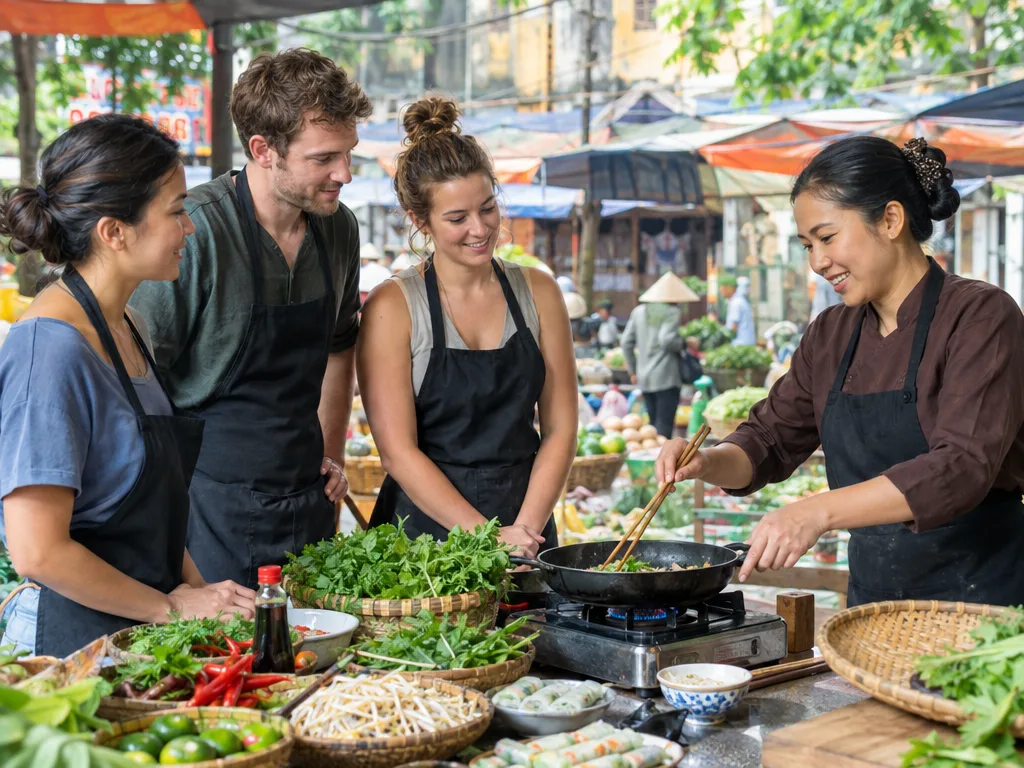
The market-to-table format is the most immersive choice. It normally begins with an introduction to ingredients before moving into a kitchen or teaching space. You may discuss seasonal produce, herbs, noodles, mushrooms, seafood, tofu or the small details that distinguish one type of fish sauce from another. The important point is not to memorise every ingredient. It is to see how cooks make decisions before the pan is hot.
This format suits travellers who want a story around the meal and who enjoy asking questions. It also makes a useful companion to a broader Hanoi street food guide, because you begin to recognise the ingredients behind familiar dishes.
Compact hands-on workshop
A shorter workshop can be a better fit for a busy itinerary, a late arrival, or a traveller who wants one clear cooking project. Check how much of the session is practical. “Hands-on” should mean that you prepare, season, shape or cook something yourself, not simply watch a chef work from a distance.
Private, small-group and family sessions
Private classes offer more room to adapt the pace and menu. Small groups can provide a friendly social atmosphere while still allowing questions. Families should ask whether children can safely participate in simple tasks such as washing herbs, mixing fillings or assembling rolls. The right class gives every participant a meaningful role instead of turning younger guests into spectators.
What dishes should you look for?
Do not choose only by the number of dishes listed. A long menu can mean rushed preparation, while a shorter menu can teach more useful techniques. Look for a combination of preparation styles: perhaps a fresh roll or salad, a cooked dish, a dipping sauce, and something that introduces a northern flavour profile.
It is also helpful when the menu includes elements that are familiar from Hanoi’s wider food scene. A class might explore herbs and rice paper, a noodle preparation, a savoury pancake, a broth, or a simple dessert. The exact dishes vary by instructor and season, so confirm the current menu rather than assuming a class includes a particular speciality.
Ask whether you will make the complete dish or only one component. Learning to assemble a finished plate is useful, but learning why a sauce needs acidity, sweetness, salt and heat in proportion is what makes the lesson transferable. If you already read about local specialities in this guide to traditional Vietnamese dishes in Hanoi, use it to identify the flavours you would most like to understand better.
How to compare classes before booking
Read the practical details, not just the menu
Before you commit, check the meeting point, total duration, group size, transport arrangements and what is included. A class that includes a market visit may involve more walking than a kitchen-only workshop. If the description is vague about the meeting point or the amount of participation, send a question before booking.
- How many dishes will the group prepare?
- Will the instructor demonstrate every step before participants try it?
- Is the market visit part of the scheduled experience or an optional extra?
- Are ingredients, drinking water and the shared meal included?
- Can the menu be adjusted for allergies, vegetarian diets or other restrictions?
- Is the class suitable for children or guests with limited mobility?
Check the teaching style
Some instructors are highly structured, with a printed recipe and measured steps. Others teach through conversation and observation. Neither style is automatically better. Beginners often appreciate a clear sequence, while confident home cooks may prefer more discussion about substitutions and technique.
Look for evidence that the instructor explains “why,” not only “what.” A useful class covers knife safety, heat control, texture, seasoning and timing. It should also leave room for questions about adapting a recipe outside Vietnam, where the herbs, noodles or sauces available at home may differ.
Think about language and communication
Clear communication matters more than a formal presentation. Confirm the language of instruction and whether recipe notes are provided. A short written summary is valuable because the meal will be memorable, but details such as the order of preparation are easy to forget after a full day of travel.
Dietary needs and accessibility questions
Vietnamese food offers many naturally vegetable-rich dishes, but vegetarian does not always mean vegan, and a dish that looks meat-free may use fish sauce, shrimp paste, stock or other animal ingredients. Tell the organiser about your needs when you enquire, not only when you arrive.
Be specific. “Vegetarian” may mean no meat but still allow eggs or fish sauce in some kitchens. “Vegan” requires a separate conversation about sauces, broths and garnishes. For allergies, name the ingredient clearly and ask how cross-contact is handled. If the class includes a market visit, ask whether the walking route and surfaces are suitable for your group.
Travellers who want to explore plant-based eating after the class can continue with this practical guide to vegetarian eating in Hanoi. The same principle applies to children, older travellers and anyone managing a health condition: a good experience begins with accurate information and realistic expectations.
What to expect on the day
Before the cooking begins
Arrive ready to listen and observe. The opening conversation may cover ingredients, the menu and basic safety. If there is a market component, treat it as part of the lesson rather than a shopping trip. Notice which items are treated as essentials, which are seasonal, and how the instructor chooses produce.
Wear comfortable clothes and secure long hair. Closed shoes are sensible if you will be moving around a busy kitchen. Avoid bringing a complicated schedule immediately afterwards; cooking sessions often feel relaxed, but chopping, assembling and eating can take longer than a quick restaurant meal.
During the practical session
Take notes on technique rather than trying to record every measurement. Watch the texture of a paste, the colour of aromatics as they cook, and the moment a sauce changes from sharp to balanced. Ask what can be prepared in advance and what must be finished just before serving. These are the details that help a recipe work at home.
Do not worry if your finished roll is uneven or your herbs are not cut like the instructor’s. The point is to build confidence. Taste as you go when the instructor says it is safe, compare the seasoning with your neighbours, and ask how the final dish would change with less chilli or a different protein.
At the shared meal
Eating together is part of the experience. Notice the order in which dishes are served, the sauces placed in the centre, and the way fresh herbs, pickles or greens change each bite. This is a chance to ask cultural questions respectfully: which dishes are everyday food, which are associated with celebrations, and how might a family serve them at home?
How to make the lesson useful after Hanoi
When you return home, start with one dish rather than attempting the entire menu. Recreate the preparation that felt most distinctive, then make a note of what is difficult to source. You may need to substitute herbs, use a different noodle, or adjust the amount of salt and acidity for local ingredients. Keep the original method as a reference, but treat it as a framework rather than a rigid formula.
Build a small pantry around the flavours you actually enjoyed. A few versatile sauces, rice products, dried noodles, aromatics and herbs can support many meals. If you cook for friends, serve the dishes together and explain the balance between fresh, cooked, salty, sour and sweet elements. That turns a holiday memory into a shared experience.
A class can also improve the way you eat out. After learning how a dish is assembled, you may notice more about texture and seasoning when visiting a local restaurant. For ideas on choosing a suitable place to continue your food journey, see how to choose restaurants in Hanoi. You can also browse the wider Food Culture & Traditions category for context around the rituals and stories behind shared meals.
A simple decision checklist
If you are comparing several Hanoi cooking classes, use this quick checklist:
- Choose the experience first: market visit, focused workshop, private lesson or family activity.
- Check the current menu and confirm how much of the cooking you will do yourself.
- Ask about allergies, vegetarian or vegan requirements, and cross-contact.
- Confirm meeting arrangements, walking demands, duration and language.
- Look for an instructor who explains technique, not just a sequence of actions.
- Choose a schedule that leaves enough time to enjoy the meal without rushing.
This approach keeps the decision practical. The “best” class is the one whose pace, menu and teaching style match your interests, not necessarily the one with the longest description.
Conclusion: choose a class that lets you participate
A Hanoi cooking class is most rewarding when it gives you a connection between ingredients, technique and everyday food culture. Compare the format carefully, ask direct questions about the menu and dietary needs, and choose a session with enough hands-on time to make the learning stick. Whether you visit a market, prepare a few northern dishes or share a table with other travellers, the experience should leave you more curious—and more confident—in Hanoi’s food.
JOIN THE CONVERSATION
Comments (0)
No comments yet. Be the first to share a thought.