A Hanoi cooking class is more than a recipe lesson. It is a practical way to understand why the capital’s food tastes balanced, fresh, aromatic and deeply tied to everyday life. The best class for you depends less on a polished kitchen than on the menu, the amount of hands-on work and the way the host explains local ingredients. This guide shows how to choose a Hanoi cooking class by menu and learning style, what dishes you may encounter, how to prepare for the session and how to turn the experience into a useful memory you can recreate at home.
Start with the menu, not the marketing
Search results often make cooking classes sound interchangeable, but the menu reveals what you will actually learn. A class built around pho, bun cha and spring rolls offers a familiar introduction, while a session featuring banh cuon, cha ca or Hanoi-style snacks can teach you more about the city’s regional character. Vietnam Tourism describes Hanoi food as distinctively northern and generally balanced, with subtle seasoning and an emphasis on tradition. That makes the menu an important clue: a good Hanoi cooking class should explain how ingredients work together, not simply provide a sequence of instructions.
Read the menu for three details:
- Variety: Look for a sensible mix of broth, noodles, herbs, vegetables or a snack rather than several dishes built on the same technique.
- Local relevance: Prefer dishes associated with Hanoi or northern Vietnamese cooking when your goal is to learn about the destination.
- Participation: Check whether the menu is prepared by the instructor or assembled by guests. “Cooking class” should mean you have meaningful tasks to perform.
For background before you book, compare the menu with this guide to traditional Vietnamese dishes to try in Hanoi. It can help you decide whether you want a classic first taste or a more unusual workshop.
Choose dishes that teach transferable skills
The strongest class leaves you with techniques you can reuse. A dish does not need to be complicated to be valuable. Ask what you will learn about balancing salty, sweet, sour and spicy notes; preparing herbs; handling rice noodles; building a broth; or combining cooked and fresh textures. These skills are more useful at home than memorising a restaurant-style presentation.
Rice rolls and batter work
Banh cuon is a good example of a dish that teaches precision. Vietnam Tourism describes it as a thin steamed rice roll commonly filled with meat, mushrooms or black fungus, then served with herbs and a sweet-and-sour fish sauce. If a class includes it, ask whether you will mix the batter, steam the sheets and roll them yourself. Those stages reveal how moisture, heat and timing affect a delicate dish.
Broth, noodles and seasoning
Pho or another noodle soup can teach mise en place, aromatic ingredients and the importance of tasting as you go. A class may not reproduce a long restaurant broth in a short session, so ask which elements are prepared in advance and which decisions you will make yourself. The useful lesson is often how the host adjusts seasoning and adds herbs, noodles and toppings at the end.
Grilling, frying and shared-table dishes
Bun cha, banh tom and cha ca introduce different heat-management skills. Vietnam Tourism’s Hanoi food references describe bun cha as grilled pork served with rice vermicelli, broth and fresh vegetables, while cha ca combines fish with turmeric and dill. These dishes show why a menu with contrasting techniques can be more educational than one containing several similar rolls.
Decide how much of the experience should happen outside the kitchen
Some visitors want a focused cooking lesson; others want the class to explain how Hanoi cooks shop, choose produce and eat together. Neither format is automatically better. The right choice depends on your schedule and your purpose.
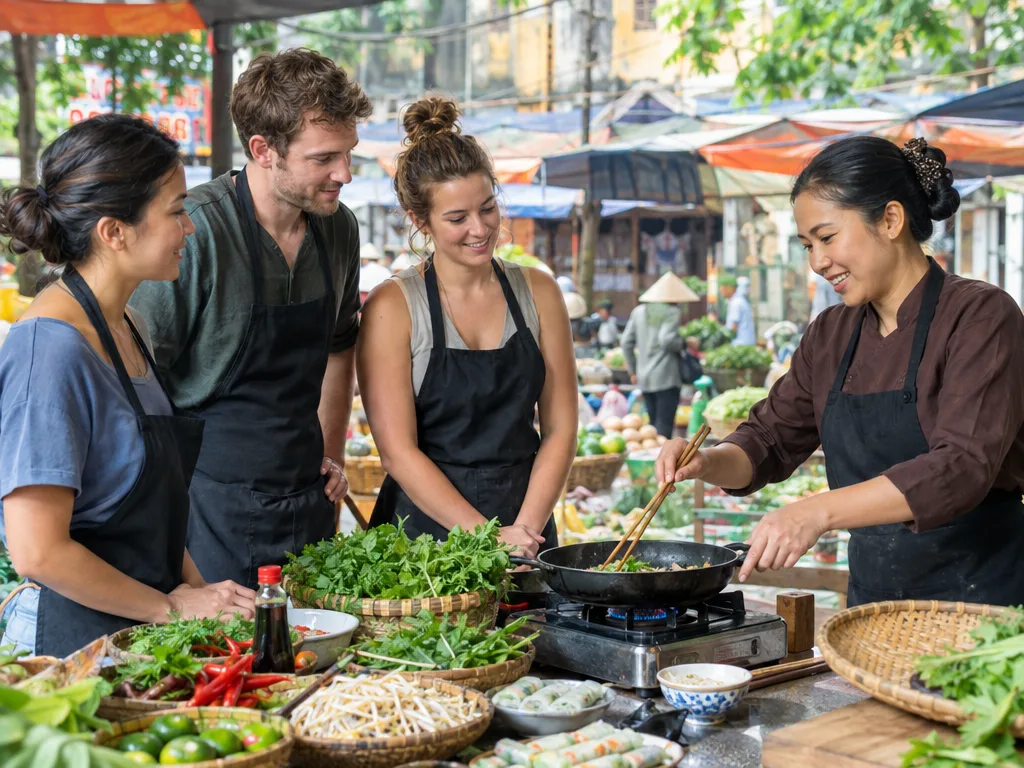
A market component can add context when it is genuinely interactive. Look for a description that explains what you will identify or discuss: herbs, noodles, vegetables, sauces, seasonal produce or unfamiliar ingredients. You should not assume that a market visit guarantees a particular market, route or opening time unless the organiser confirms those details directly. Treat it as a learning opportunity, not a promise of a fixed sightseeing stop.
If you mainly want to improve your cooking, a kitchen-focused workshop may give you more time with knives, pans and seasoning. If you are curious about food culture, choose a format that allows questions about family meals, street food and how dishes are served. The existing guide on what to expect from a Hanoi cooking class is a useful companion when comparing the atmosphere and structure of different sessions.
Match the class to your skill level
Beginners should not feel that they need professional knife skills. A well-run class explains the sequence, demonstrates safely and gives you manageable tasks. Before booking, check whether the session is designed for first-time cooks, whether the instructor demonstrates each technique and whether there is enough time for questions.
More experienced cooks may prefer a class that discusses why a method works. Ask whether you will learn substitutions, texture control, broth development or regional variations. A workshop can be worthwhile even if you already know how to stir-fry, provided the instructor gives cultural and technical detail rather than asking you to follow a fixed recipe silently.
For families, the practical questions are different. Confirm the minimum age, whether children cook or simply observe, and whether the menu contains steps that are safe and interesting for them. For couples or small groups, a compact class may encourage more conversation. For solo travellers, a shared session can be an easy way to meet other food-minded visitors, but check how much individual work each participant receives.
Check dietary needs before you pay
Vietnamese cooking uses a wide range of herbs, vegetables, noodles, seafood, meat, eggs, fish sauce and fermented ingredients. A dish can look vegetarian while containing fish sauce, shrimp paste or stock, so do not rely on the menu name alone. Tell the organiser about allergies, vegetarian or vegan requirements, coeliac disease, intolerances and religious restrictions before booking.
Ask specific questions:
- Can the class provide a genuinely vegetarian or vegan version rather than removing meat at the end?
- Which sauces, broths and pastes contain fish, shellfish, wheat, peanuts or other allergens?
- Will shared utensils or cooking surfaces be used?
- Can the instructor explain ingredient labels or demonstrate a safe substitution?
Flexibility varies by class, and a host may not be able to guarantee an allergen-free environment. If the answer is vague, choose a different workshop or treat the class as a demonstration rather than eating every finished dish. You can also read this practical guide to vegetarian eating in Hanoi before deciding what questions to ask.
Look for teaching, not just a meal
A cooking class should have a clear rhythm: introduction, demonstration, hands-on preparation, cooking, tasting and a chance to reflect. The host should explain unfamiliar ingredients in plain language and make room for questions. If the experience is mostly watching a chef cook while guests eat, it may be enjoyable, but it is closer to a food demonstration than a practical workshop.
Useful signs include individual workstations or clearly assigned tasks, recipes you can keep, a small enough group for feedback and a menu that fits the session length. You can ask how many people normally attend, how recipes are shared and whether the final meal is eaten together. A shared table is not merely a photo opportunity: it helps you see how sauces, herbs, noodles and cooked ingredients are combined in a Vietnamese meal.
Also consider language. An English-language class can still vary greatly in clarity. Look for evidence that the instructor explains technique, not only ingredient names. If you are unsure, ask whether demonstrations are repeated and whether written measurements or visual guides are provided.
Prepare for the session without overpacking
Wear comfortable clothes and shoes that you do not mind wearing in a warm kitchen. Choose sleeves that can be rolled up, tie back long hair and avoid loose jewellery. Bring a phone or notebook if you want to record ingredient names, but stay present during demonstrations. The most valuable details may be small: when to add herbs, how finely to slice an ingredient or how a host tastes a sauce before serving.
Eat lightly beforehand if the class includes a full meal, but do not arrive expecting to sample every dish safely if you have dietary restrictions. Let the organiser know about medication, allergies or mobility needs in advance. If you are joining a market visit, confirm meeting instructions and the amount of walking required rather than assuming the route.
Turn the recipes into a Hanoi food-learning plan
After class, use the experience to explore with more attention. A dish you learned to cook may taste different at a street stall because of the broth, charcoal, herbs or serving style. That difference is useful: it shows how a recipe changes across kitchens. Continue with the Traditional Vietnamese Dishes category for more dish-focused reading, or browse Food Culture & Traditions to understand the social meaning behind shared meals.
You can also compare your class menu with the city’s wider street-food vocabulary. The official Vietnam Tourism guide lists dishes such as banh cuon, bun oc, banh tom, banh goi and che alongside the better-known pho, bun cha and banh mi. You do not need to try everything. Instead, note which flavours, textures and techniques appeared in class, then look for one or two examples elsewhere in Hanoi.
Questions to ask before booking
- Which dishes will I cook from start to finish?
- How much of the preparation is done in advance?
- How many guests are usually in the group?
- Is a market visit included, and what does it involve?
- Can the menu accommodate my dietary needs or allergies?
- Will I receive recipes, ingredient notes or substitution advice?
- What should I wear, bring and expect in terms of walking?
Clear answers usually indicate a class that has thought carefully about the guest experience. They also help you avoid choosing based only on photographs or a long menu.
Conclusion: choose the lesson you will remember
The best Hanoi cooking class is not necessarily the longest, most expensive or most elaborate. It is the one whose menu matches your curiosity, whose teaching style matches your skill level and whose host makes local food understandable. Prioritise hands-on work, ask direct questions about ingredients and dietary needs, and choose dishes that teach techniques you can use again. You will leave with more than a meal: you will have a practical way to read Hanoi’s food culture.
JOIN THE CONVERSATION
Comments (0)
No comments yet. Be the first to share a thought.