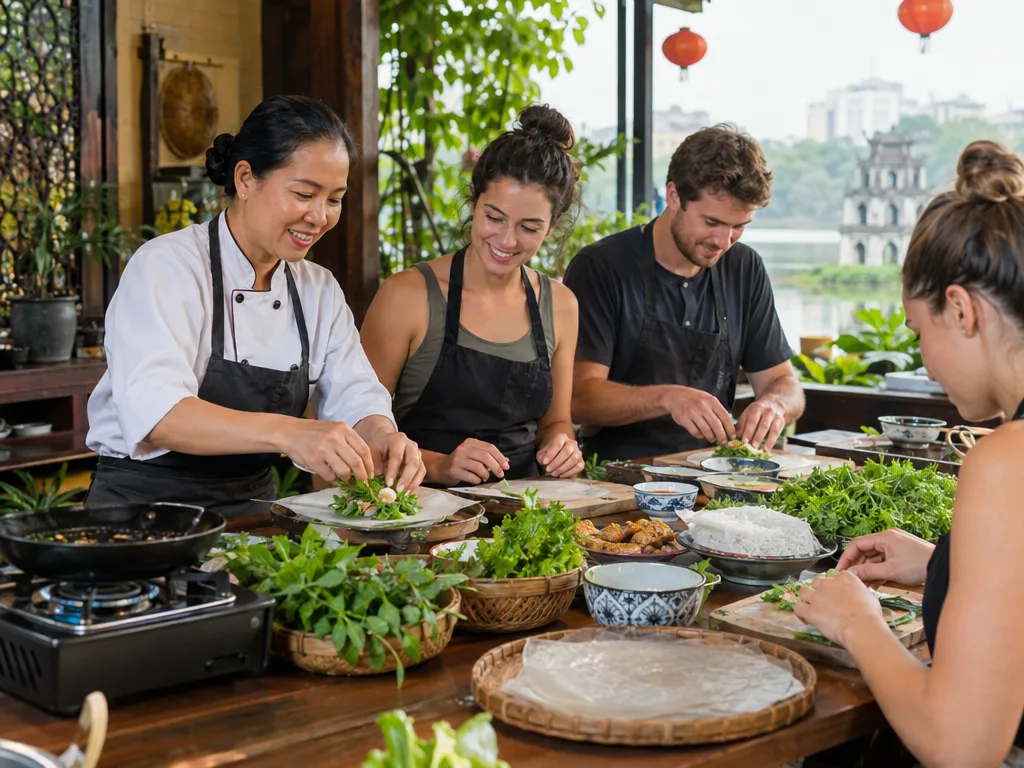
A Hanoi cooking class is more than a meal with a recipe attached. It is a practical way to understand how Vietnamese cooks balance fresh herbs, savoury sauces, texture, heat, and timing. Instead of simply tasting a bowl of phở or a plate of bún chả, you learn what happens before the food reaches the table: how ingredients are chosen, prepared, seasoned, shared, and adjusted.
Vietnamese cooking is often built around contrast rather than one dominant flavour. A dish may combine a warm protein, cool herbs, crisp vegetables, soft rice noodles, a salty-sweet dipping sauce, and a sharp note of lime or vinegar. The result can feel light while still being deeply savoury. In Hanoi, a class may also connect the kitchen with the market. A market visit can show you how cooks judge freshness, recognise familiar herbs, choose a suitable cut, and buy only what is needed for the meal.
Dishes you may cook in a Hanoi cooking class
Fresh spring rolls and dipping sauce
Fresh rolls, often called gỏi cuốn, are useful for beginners because they teach preparation, balance, and restraint. The ingredients are prepared separately before being wrapped, so you can see how herbs, vegetables, noodles, and a filling create different textures in one bite. Rice paper needs enough moisture to become flexible but not so much that it tears. The filling should be arranged with a little space around it, then rolled firmly without crushing the herbs.
A roll can taste quiet on its own; a well-balanced dip brings salt, sweetness, acidity, and savoury depth together. At home, this is one of the easiest class dishes to repeat because the ingredients can be adapted to what you can find. The lesson is not to copy one fixed filling. It is to keep a clear contrast between soft noodles, crisp vegetables, fragrant herbs, and a sauce with enough character.
Bún and other noodle bowls
A noodle bowl is a lesson in assembly. The bowl may include rice vermicelli, herbs, lettuce or other vegetables, a cooked topping, peanuts, and a dressing. Each part is prepared on its own, then combined just before eating. This format teaches an important Vietnamese cooking habit: seasoning does not always happen in one pan. The protein may be seasoned one way, the dressing another, and the herbs left fresh. The final flavour comes from the diner mixing the elements together.
Depending on the class menu, you may encounter a northern-style bowl such as bún chả or another regional noodle dish. Do not judge the lesson only by whether you cook a famous dish. Ask what technique it teaches. Grilling, caramelising, pounding aromatics, making a dressing, and arranging fresh herbs are all transferable skills.
Bánh cuốn and delicate texture
Bánh cuốn, steamed rice rolls, can introduce you to a delicate style of cooking. The batter is spread into a thin layer, steamed briefly, and filled or folded while still tender. The process rewards patience and light hands rather than high heat or heavy seasoning. A class may not reproduce the full specialist setup used by a dedicated bánh cuốn vendor, but it can still show how rice batter behaves, why steam changes texture, and how a simple roll is paired with herbs, fried shallots, and dipping sauce.
This dish also demonstrates the difference between a recipe and a method. Exact proportions matter, but so do humidity, steaming time, surface temperature, and the confidence to lift the sheet before it overcooks.
Phở broth and aromatics
Some Hanoi cooking classes include phở, while others choose a dish that can be completed comfortably within the class period. If phở is on the menu, the valuable lesson may be the preparation of aromatics and the discipline of tasting broth gradually. A broth is not improved by adding everything at once. Aromatics may be toasted or charred, spices used carefully, and seasoning adjusted after the liquid has taken on flavour.
Because a traditional broth can require more time than a short workshop allows, ask whether the class demonstrates a prepared stock, a shortened method, or a complete process. This helps you understand what you will genuinely learn and what has been prepared in advance.
The most useful skills to take home
Balancing a Vietnamese dipping sauce
A dipping sauce is often where a dish becomes recognisably complete. Rather than following a rigid formula, learn to taste in stages. Start with a savoury base, then add sweetness, acidity, and water or another balancing element as needed. The right balance depends on what the sauce will accompany: a crisp roll may need a different intensity from a grilled dish or a noodle bowl.
Write down the sequence of additions and the visual cues your teacher uses. A recipe measured in spoonfuls is helpful, but a description such as “bright but not sharp” or “savoury enough to season the noodles” will help you adjust when ingredients differ at home.
Preparing herbs and aromatics
Fresh herbs are not merely decoration. They contribute aroma, temperature, texture, and relief from richer ingredients. Learn which herbs are added whole, which are torn, and which are sliced. Notice when garlic, shallot, ginger, lemongrass, or chilli is minced finely and when it is left in larger pieces. Keep delicate herbs cool and dry, and avoid cutting them long before serving.
Using heat with control
Vietnamese cooking classes often move quickly between raw preparation, steaming, grilling, frying, and simmering. Watch how the teacher decides when a pan is ready, how food is moved to prevent scorching, and when a cooked ingredient is removed from heat. Control matters more than maximum heat. Aromatics can burn quickly; a grilled topping can dry out; a thin rice sheet can become brittle.
Building a meal in components
One of the most portable lessons is mise en place: preparing each component before assembly. Set out washed herbs, cooked noodles, sliced vegetables, sauces, and toppings so that the final dish can be put together calmly. This is especially useful for Vietnamese meals, where freshness and texture can disappear if everything is mixed too early.
How to choose a menu that suits you
Look for a menu with variety rather than a long list of dishes. One fresh preparation, one cooked dish, one sauce, and one noodle or rice element can teach more than several similar recipes. If you have limited time, prioritise a class that explains technique instead of rushing through many tastings.
Ask whether the menu is fixed, seasonal, or adaptable. Seasonal flexibility can be useful because fresh produce changes, but you should still know the approximate dishes before booking. If you avoid meat, fish, shellfish, peanuts, gluten, or strong chilli, communicate this before the class begins. A dietary adjustment is easier when the teacher can plan substitutions rather than improvise at the stove.
Consider the teaching environment too. A very small group may allow more individual correction. A larger group may feel social but give you less time at the cutting board. Neither is automatically better. The right choice depends on whether your priority is hands-on practice, cultural context, meeting other travellers, or taking detailed notes.
Turning the class into a home cooking plan
Do not try to recreate an entire Hanoi menu on your first evening back. Choose one dish with a manageable number of components and make the sauce separately. Buy the herbs shortly before cooking, prepare everything before turning on the heat, and leave time to adjust the seasoning.
Keep a short class notebook. Record the names of unfamiliar herbs, the texture you were aiming for, the order of preparation, and the substitutions your teacher recommended. If you took part in a market visit, note how ingredients were selected rather than only writing down their names.
It can also help to plan a meal around the dish instead of treating it as a stand-alone recipe. A noodle bowl might need a fresh herb plate and a sharp dressing. Rolls might need a more generous dipping sauce and a crisp side. The goal is to recreate the balance of the experience, not just one item.
Final thoughts
The best Hanoi cooking class leaves you with more than a full stomach. You should come away understanding how Vietnamese cooks use freshness, contrast, careful seasoning, and shared preparation to make a meal feel complete. Whether you learn to roll bánh cuốn, balance a dipping sauce, assemble a noodle bowl, or simply handle herbs with more confidence, the lesson can continue at home.
JOIN THE CONVERSATION
Comments (0)
No comments yet. Be the first to share a thought.