Hanoi food traditions are easier to understand when you stop treating them as a fixed list of famous dishes. They are a living set of habits shaped by weather, harvests, festivals, family gatherings, neighbourhood markets, and the quiet rhythm of a shared table. A bowl of noodles can be a quick breakfast, while a carefully arranged tray of food may mark a holiday or welcome a guest. For visitors, noticing these patterns makes eating in Hanoi more rewarding than simply ticking off dishes.
This guide explains how seasonality and celebrations influence Hanoi food culture, what to look for when you eat locally, and how to participate respectfully. It complements the site’s background on how Hanoi food traditions shape every meal while focusing on timing, ingredients, rituals, and practical choices.
Why seasons matter in Hanoi food culture
Northern Vietnam has noticeable seasonal changes, and local cooking responds to them without turning every meal into a formal seasonal menu. Warm-weather eating often feels lighter and more herb-led, while cooler days make broths, steamed dishes, grilled foods, and comforting rice preparations especially appealing. The point is not that every household follows an identical calendar. Instead, availability and appetite guide what appears at markets and on family tables.
Markets reveal this change first. Produce arrives in different shapes, colours, and quantities through the year, and cooks build meals around what looks fresh and useful that day. A small restaurant may not explain its sourcing, but a short menu can still reflect the market: a few soups, a vegetable dish, grilled meat or fish, and a rice or noodle option may change as ingredients do.
For travellers, this means a Hanoi food experience should leave room for discovery. Rather than deciding that one dish represents the city in every month, notice which herbs, fruits, vegetables, broths, and snacks are prominent during your visit. The city’s food culture is more flexible than a static “must eat” list suggests.
Everyday meals: balance, sharing, and pace
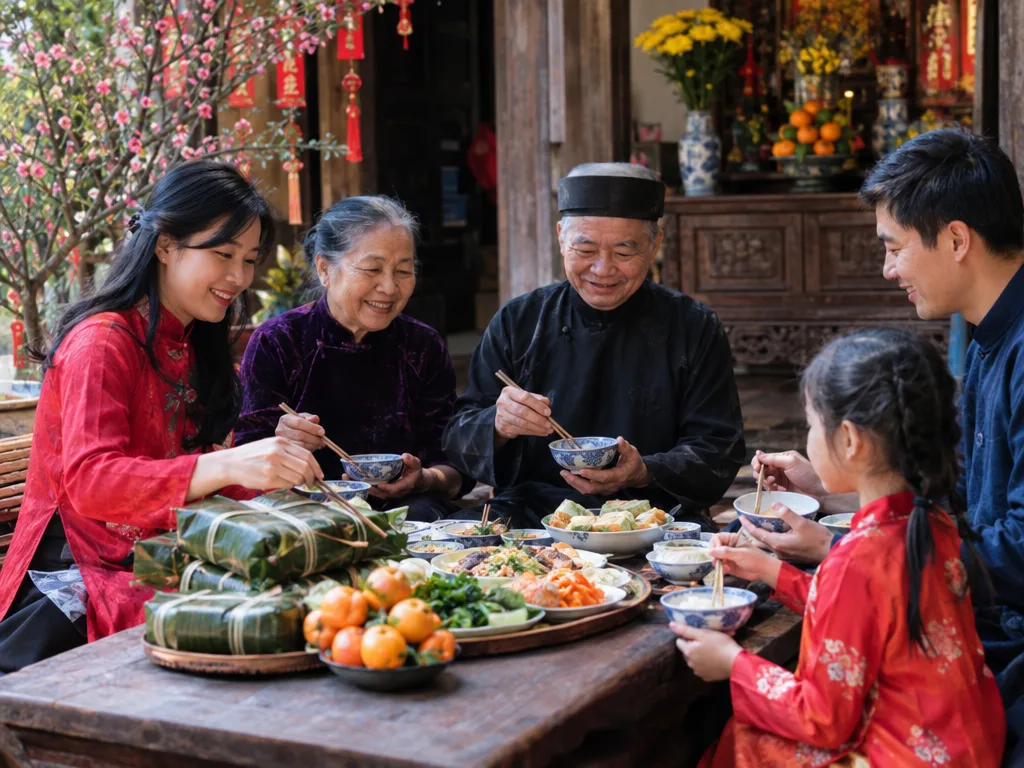
A traditional Vietnamese family meal commonly brings several dishes to the centre of the table. Diners take modest portions, combine rice with savoury food, and adjust each bite with soup, vegetables, herbs, or dipping sauce. This format encourages variety and conversation. It also explains why Vietnamese food is often discussed in terms of balance: salty, sweet, sour, bitter, fresh, rich, hot, and cooling elements can appear across a meal rather than inside one dish.
Not every Hanoi meal is a long family gathering. Breakfast may be eaten at a street stall, lunch may be quick, and a bowl of phở or bún can be a complete meal. The important cultural distinction is that speed does not necessarily mean carelessness. A small shop may specialise in one preparation, and regular customers often know exactly when to arrive and how they like it adjusted.
What visitors can observe
- Shared plates are usually taken in small amounts, leaving room for other diners.
- Fresh herbs and condiments are part of the eating experience, not merely decoration.
- Soup, rice, noodles, and vegetables may play different roles within the same meal.
- People often return to familiar stalls because consistency and relationships matter.
If you want a broader practical overview before exploring these details, the site’s guide to traditional Vietnamese dishes in Hanoi is a useful companion. Use it as a map, then let the context of the meal guide your choices.
Tet and the meaning of food for a new year
Tết, the Vietnamese Lunar New Year, is the clearest example of food carrying symbolic meaning. Preparations can include cleaning, shopping, cooking, visiting, and arranging offerings. Holiday foods are not only selected for flavour; they can represent family continuity, prosperity, remembrance, or the hope for a good beginning. Recipes and customs vary by region and household, so visitors should avoid assuming that one menu explains every Vietnamese family.
In northern Vietnam, square sticky rice cakes known as bánh chưng are strongly associated with Tết. The cake’s rice, mung bean, and pork filling is enclosed in leaves and prepared as part of a wider holiday tradition. Even when a traveller encounters bánh chưng outside the holiday period, its cultural importance remains connected to family work and seasonal celebration rather than to convenience food.
Tết also changes the city’s eating rhythm. Some businesses close or operate on different schedules, families may prioritise home meals, and markets can become especially busy before the holiday. Current opening arrangements vary by year, so check directly with a venue rather than relying on an old itinerary. The cultural lesson is more lasting: food at Tết is about preparing together and honouring relationships as much as it is about eating.
How to experience festival food respectfully
Ask what a dish means before treating it as a novelty. If you are invited to a home, wait for your host to indicate where to sit and how to begin. Try a small portion first, use serving utensils when provided, and show appreciation for the work involved. A polite question about ingredients or symbolism usually creates a better exchange than photographing every plate without context.
Festival foods beyond the holiday table
Hanoi’s wider cultural calendar also shows how food connects to place. Village festivals, temple visits, family anniversaries, and community gatherings may involve offerings, sweets, sticky rice, tea, or shared dishes. The exact foods depend on the event and locality. Some are prepared for worship, some for guests, and some simply because a gathering needs food that can be portioned and shared.
This is one reason visitors may see similar ingredients in very different settings. Sticky rice can be a breakfast, a festival food, an offering, or part of a special meal. Tea may close a conversation, welcome a visitor, or accompany sweets. The ingredient alone does not tell the whole story; setting and occasion add meaning.
The official Vietnam Tourism site presents the Red River Delta as a region of rich cultural traditions, craft villages, local arts, and night markets. That regional context helps explain why Hanoi’s food culture is connected to surrounding communities rather than existing only within the city centre. A meal in Hanoi can carry traces of northern agricultural life, family customs, and the movement of people and products through the delta.
To explore food in a more active way, browse the site’s Food Markets & Night Markets category. Markets are useful places to see ingredients, snacks, household goods, and social habits side by side, even when you do not know the name of everything you pass.
Tea, coffee, and the social life around eating
Food culture does not end when the main dish is cleared. Tea can create a pause after a meal and give guests a reason to linger. In Hanoi, coffee culture adds another layer: cafés are places to sit, talk, read, meet, or watch the street. The drink matters, but the ritual of taking time matters too.
Egg coffee, strong Vietnamese coffee, tea, and simple iced drinks are often discussed as specialities, yet their cultural value is also situational. A local may choose a café because it is convenient, familiar, quiet, or connected to a personal routine. Visitors can learn more by observing how people use the space than by asking which drink is “the most authentic.”
The site’s Hanoi Coffee Culture category offers a natural next step if you want to focus on drinks and café customs. Pairing a market visit with a slow coffee stop can reveal two sides of the city: the practical energy of buying ingredients and the social pleasure of staying put.
How to read a Hanoi menu through tradition
Menus can look confusing when dishes are translated into short English descriptions. Instead of searching only for famous names, look for clues about preparation and eating style. Words referring to broth, grilling, steaming, stir-frying, rice, noodles, herbs, or dipping sauce tell you how the dish fits into a meal.
Consider these questions before ordering:
- Is this intended as a single bowl, a shared plate, a snack, or a side?
- Does the dish normally arrive with herbs, pickles, lime, chilli, or sauce?
- Would locals usually eat it for breakfast, lunch, dinner, or at a gathering?
- Is the serving designed for one person or for the centre of the table?
- Can the kitchen explain ingredients if you have allergies or dietary restrictions?
Do not assume that “traditional” means unchanged or formal. Hanoi cooks adapt to urban life, available ingredients, restaurant formats, and customer preferences. A family recipe may appear in a modern café, while an old street-food style may be served quickly to office workers. Tradition survives partly because it can fit real routines.
Practical ways to experience Hanoi food traditions
Choose more than one setting
Combine a market, a specialised street stall, a neighbourhood restaurant, and a café or tea stop. Each setting answers a different question. Markets show ingredients and commerce; stalls show specialisation and speed; restaurants reveal shared dishes; cafés show how eating and drinking become social time.
Go with curiosity, not a checklist
Order one familiar item and one dish you cannot immediately classify. Ask the vendor or server how it is usually eaten. If communication is difficult, a photo or translation app can help, but keep the request simple. You do not need a long interview to learn whether a dish is seasonal, festive, regional, or everyday.
Respect household and religious contexts
Offerings and ceremonial foods are not samples. Avoid touching plates or objects at temples and family ceremonies unless invited. At a restaurant, follow the table’s lead on serving and sharing. Small gestures—waiting, observing, and saying thank you—make participation more respectful.
Plan around appetite and weather
Hanoi is easier to explore when you do not schedule a heavy meal after every stop. Leave space for small tastings, warm drinks, fruit, and an unplanned bowl. On hot or humid days, take breaks and drink water; on cooler days, make time for broths and grilled foods if they appeal to you. The best food itinerary follows the city’s pace rather than forcing it.
For a day organised around walking and tasting, the site’s practical guide to planning a Hanoi food walk can help you connect neighbourhood movement with meal timing.
Common mistakes when learning Hanoi food culture
The first mistake is treating one dish as a complete symbol of Hanoi. The second is assuming that a tourist-facing performance is the same as an everyday custom. The third is judging a food tradition only by ingredients while overlooking who prepares it, when it is served, and who shares it.
Another common mistake is expecting certainty where variation is normal. Families season differently. Regions use different ingredients. Festivals change menus. Restaurants adapt recipes. Asking “How is this usually eaten here?” is more useful than asking whether a dish is the one correct version.
Finally, avoid turning “local” into a demand for discomfort. Small stools, busy counters, and unfamiliar textures can be part of the experience, but you can still choose clean, comfortable, accessible places and communicate your needs. Respect for food culture includes respect for your own health and limits.
Turning a meal into a deeper Hanoi memory
The most memorable Hanoi food experiences often come from noticing relationships: a vendor who recognises regulars, herbs added at the table, relatives preparing festival food, or friends lingering over coffee after lunch. These details show why cuisine is culture rather than a catalogue of recipes.
Approach the city’s meals with patience. Learn a few useful words, ask before photographing people or ceremonial food, and accept that some customs will make more sense after you have seen them repeated. When you connect dishes with season, setting, and social purpose, Hanoi food traditions become easier to read—and much harder to forget.
JOIN THE CONVERSATION
Comments (0)
No comments yet. Be the first to share a thought.