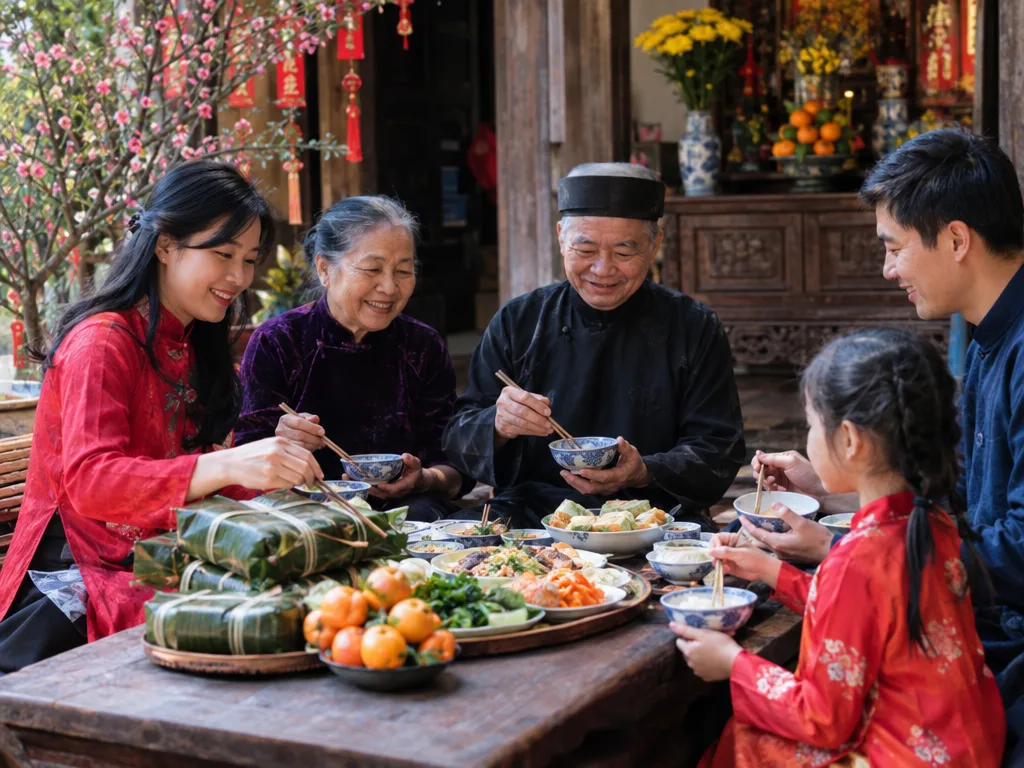
To understand Hanoi food culture, look beyond the famous bowls of phở and bún chả. During Tết, Vietnam’s Lunar New Year, food becomes a way to welcome guests, honour ancestors, mark a fresh beginning, and spend unhurried time together. A Hanoi Tết table is not simply a list of special dishes. It is a small expression of family memory, seasonal abundance, hospitality, and respect.
This guide explains the traditions behind Tết food in Hanoi, what visitors may encounter, how dishes fit together, and how to take part thoughtfully. Recipes and household customs vary, so treat these patterns as cultural context rather than a fixed menu for every family.
Why Tết food matters in Hanoi
Tết is the most important annual celebration for many Vietnamese families. Food helps make the holiday visible and tangible: ingredients are prepared in advance, dishes are arranged carefully, and trays are shared over several days. The meal can feel more generous than an ordinary weekday table, but its meaning is not only about quantity. It is about preparing for reunion and making sure that family members and visitors are received warmly.
Vietnamese food culture often places people around shared dishes rather than giving each diner an entirely separate course. A typical everyday pattern may combine rice with a main dish, vegetables, and soup. At Tết, that familiar structure becomes more ceremonial. Foods with long keeping qualities, bright colours, or associations with prosperity are especially noticeable, while tea, sweets, and conversation extend the welcome beyond the main meal.
The core dishes on a Hanoi Tết table
Bánh chưng and sticky rice
Bánh chưng is a square steamed cake made with glutinous rice, mung beans, and pork, wrapped in green leaves. Its square form is traditionally associated with the earth, and it is one of the foods most strongly connected with Tết in northern Vietnam. In the south, bánh tét is the more familiar cylindrical counterpart, so a Hanoi food experience will more often introduce bánh chưng.
Sticky rice also appears in other forms. Xôi gấc, coloured a vivid red by the gac fruit, is often associated with luck and prosperity. Other versions may include mung bean or peanuts. When you see sticky rice served beside savoury foods, notice how texture and colour are doing cultural work as well as adding flavour.
Gio, cha, and boiled chicken
Gio and cha are broad terms for Vietnamese meat preparations that can be served during the holiday. Gio lua, a smooth pork sausage wrapped in leaves, is commonly sliced into neat rounds. Cha may refer to a fried preparation, depending on the recipe and region. These foods are practical for a festive period because they can be prepared ahead and served in small portions alongside rice, pickles, or other dishes.
Ga luoc, or boiled chicken, has a place in many Tết offerings and family meals. It may be presented whole or cut into pieces, with lemon leaves and a salt-and-pepper dip. In a home or ceremonial setting, the whole bird can signal completeness and respect. In a restaurant, you may encounter the flavours without seeing the same household ritual, so avoid assuming that every serving carries identical meaning.
Pickles, herbs, sweets, and the balance of flavours
Rich holiday foods are often balanced by something crisp, sour, or fresh. Hanh muoi, Vietnamese pickled onions, is a classic example. Its sharpness can refresh the palate beside sticky rice, meat, or bánh chưng. Depending on the household, other pickled vegetables may appear too. These small accompaniments are easy to overlook, yet they help a meal feel complete.
Fresh herbs and greens continue to matter at a festive table. Vietnamese meals frequently invite diners to adjust each bite with herbs, leaves, dipping sauces, or pickles. Rather than searching for one “correct” combination, follow the table’s rhythm: take a modest portion, taste it with the available accompaniments, and ask if you are unsure how something is served.
After the main meal, Tết hospitality often moves to a tray of mứt Tết, candied or dried fruit, seeds, nuts, biscuits, and tea. The tray is designed for visiting and conversation rather than a formal dessert course. Watermelon seeds, pumpkin seeds, sunflower seeds, cashews, and pistachios are among the snacks associated with Tết gatherings. Shelled and unshelled snacks can turn eating into a slow social activity, with hosts and guests talking while they open, share, and refill the tray.
What happens before the meal
The festive feeling begins before anyone sits down. Families may shop for ingredients, clean and arrange the home, prepare fillings, wrap cakes, boil food, and set aside dishes for visiting relatives. This preparation is part of the experience: several people can contribute different tasks, and recipes may be remembered through doing rather than written measurements. A dish that looks simple on the plate may represent hours of planning, waiting, and shared work.
For travellers, this explains why a Tết food stop cannot always be judged like an ordinary restaurant visit. Some businesses change their hours, menus, or pace during the holiday, while home cooking becomes especially important. Do not assume that every favourite eatery will operate normally or that a dish will be available every day. If you are invited to a family meal, flexibility is more respectful than asking for a perfect itinerary. The most meaningful parts may be the preparation, the greetings, and the time spent around the table rather than a particular restaurant.
What food symbolises during the holiday
Symbolism is one reason Tết dishes remain memorable even when modern families adapt their menus. Red foods such as xôi gấc are often connected with good fortune. Sticky rice suggests cohesion and abundance. A carefully wrapped cake shows time, labour, and preparation. Pickles bring balance, while a full table communicates that guests should feel welcome.
These meanings are not a strict code that every person interprets in exactly the same way. They are better understood as a cultural vocabulary. Families may keep a traditional dish because it recalls a grandparent, because it is convenient for several days of visits, or simply because everyone enjoys it. Ask about the story behind a dish and you may learn more than by memorising a list of ingredients.
How a Tết meal is shared
A holiday meal may involve several generations and a steady movement between eating, serving, greeting, and talking. Shared dishes are usually placed within reach, and diners take smaller portions as the meal continues. Older relatives or hosts may encourage guests to try something, while younger people help arrange food, pour drinks, or clear plates.
Ancestor veneration is also important in many Vietnamese households. Some foods may be prepared for an offering before the family meal, and the timing or arrangement can be meaningful. Visitors should not photograph an altar, reach toward an offering, or treat a ceremonial tray as ordinary buffet food without permission. If you are invited into a home, follow the host’s lead and wait to be shown where to sit and what to taste.
How visitors can experience Hanoi Tết food respectfully
- Ask what a dish is before taking a serving, especially when food has been placed near an altar or arranged separately from the shared meal.
- Take a small portion first. This leaves room for other guests and lets the host offer more without creating waste.
- Use serving utensils when provided. If none are visible, watch what the family does or ask politely.
- Accept that recipes vary. A northern bánh chưng, a restaurant version of gio, and a family recipe may look or taste different while all being legitimate.
- Try the accompaniments. Pickles, herbs, dipping sauces, and tea often explain how a dish is meant to be enjoyed.
- Do not turn a family ritual into a performance. Ask before taking close-up photographs or recording people.
For travellers who are not visiting during Tết, Hanoi’s food culture still offers ways to learn about these traditions. Look for bánh chưng, sticky rice, pickled onions, boiled chicken, or Tết-style sweets in shops and restaurants, then ask whether the preparation is seasonal, regional, or adapted for everyday service. A cooking class or market walk can also help you recognise ingredients without suggesting that one short visit represents every Vietnamese household.
A simple way to explore the tradition in Hanoi
Build a tasting around contrast rather than trying to eat every festive dish at once. Start with a savoury item such as bánh chưng or a slice of gio. Add a bright or sour accompaniment, then try a sticky-rice preparation if it is available. Finish with tea and a small selection of mứt or roasted seeds. This sequence mirrors the broader Tết idea of balance: richness with freshness, ceremony with conversation, and familiar staples with seasonal treats.
When choosing where to eat, favour places that explain what they serve and keep the menu manageable. A local eatery may offer only one or two relevant dishes, while a market stall may present snacks rather than a complete meal. Neither is automatically more “authentic.” The better experience is the one that gives you time to notice preparation, ask a respectful question, and eat without rushing.
Questions travellers often ask
Is Tết food spicy?
Not necessarily. Vietnamese food uses fresh herbs, pickles, aromatics, fish sauce, and dipping sauces in many combinations. Chilli may be available at the table, but ask before adding it if you prefer a milder meal.
Can vegetarians try Tết dishes?
Some festive dishes can be adapted, but traditional recipes may contain pork, chicken, or fish sauce. Explain your diet clearly and ask about fillings, broths, sauces, and shared cooking surfaces rather than relying on the dish name alone.
What should I say if I am offered food?
A warm thank-you and a small taste are usually appreciated when you are comfortable eating the dish. If you cannot eat something, give a simple, honest explanation and compliment what you have tried. Hospitality is easier when you show interest without pretending to know more than you do.
Let the table tell the story
Hanoi Tết food traditions are best understood through relationships: who prepared the dish, who is being welcomed, what is reserved for an offering, and which flavours make a family member think of home. The most rewarding approach is curious and unhurried. Taste the food, notice the balance, ask about the story, and remember that a holiday table is a living tradition rather than a museum display.
JOIN THE CONVERSATION
Comments (0)
No comments yet. Be the first to share a thought.