Seasonal food in Hanoi is less about a fixed list of dishes than a way of paying attention. The city’s cooks respond to weather, available ingredients, family occasions, and the time of day. A steaming bowl feels right on a cool morning, while fresh herbs, sour broths, and chilled sweets become especially welcome when the air is hot. Festivals and memorial meals add another layer, turning familiar ingredients into food with symbolic meaning.
For visitors, this makes Hanoi food culture rewarding to explore slowly. Instead of trying to “finish” the city’s cuisine in one meal, notice how breakfast differs from a late-night snack, how a market changes with the seasons, and how a shared table encourages conversation. This guide explains the traditions behind seasonal eating and shows how to experience them with curiosity rather than treating local food as a checklist.
What seasonal eating means in Hanoi
Hanoi’s food traditions developed around practical cooking as well as social meaning. Rice, noodles, vegetables, herbs, seafood, pork, poultry, and fermented sauces can appear in many forms, but the balance changes with the season. Warm broths and soft rice dishes are comforting when the weather turns cool. In warmer months, diners often appreciate lighter textures, fresh greens, citrus, vinegar, and dishes that can be assembled quickly.
Seasonality also describes the rhythm of the day. Breakfast is often a serious meal rather than a coffee-and-pastry stop. Lunch may be built around rice, soup, vegetables, and a savoury dish. Afternoon brings small fried snacks or sweet soups, while evening encourages a longer meal with several dishes placed in the middle of the table. This is why a Hanoi food experience can feel different every few hours even within the same neighbourhood.
To place this everyday rhythm in context, compare it with the broader stories described in How Hanoi Food Traditions Turn Every Meal Into a Story. The key idea is simple: food carries information about weather, work, hospitality, and belonging.
Cool-weather comfort: broths, steamed rice, and slow cooking
Why hot bowls matter
When Hanoi feels cool, hot food becomes both nourishment and atmosphere. A bowl of pho is the best-known example, but the city’s winter-friendly repertoire is broader. Banh duc nong, a hot steamed rice cake served with savoury toppings, offers a soft and warming snack. Herbal chicken noodles bring a deeper, more aromatic profile, while snail noodle soup combines rice vermicelli with a tangy broth and herbs.
These dishes are not interchangeable versions of “comfort food.” Their textures and garnishes create different experiences. A clear broth invites you to notice fragrance and freshness. A thick rice cake is more about softness and warmth. A dish with herbs allows each bite to change as you add greens, chilli, or sauce. Visitors who slow down will understand why a short menu can still offer a wide range of sensations.
Cool-weather eating tips
- Look for dishes being served continuously, because high turnover usually means the food is prepared for the current meal period.
- Try a small portion first if a broth, herb, or fermented flavour is unfamiliar.
- Add herbs and sauces gradually rather than mixing everything at once.
- Notice whether a dish is intended as breakfast, a snack, or a full meal; the setting often explains the portion.
For a wider introduction to dishes beyond the most famous bowls, browse the site’s Traditional Vietnamese Dishes category. It is useful preparation for travellers who want to recognise familiar ingredients while still leaving room for discovery.
Hot-weather balance: herbs, sourness, and refreshing textures
Hanoi’s warmer months reward diners who pay attention to balance. Fresh herbs bring lift, while vinegar, lime, tamarind-like sourness, tomato, and pickled vegetables can make a dish feel brighter. Rice vermicelli dishes often provide a lighter alternative to a heavy bowl of soup, especially when combined with grilled ingredients, greens, peanuts, or a sweet-sour dressing.
This does not mean every summer dish is cold. A hot meal can still feel refreshing when it contains crisp vegetables, fragrant herbs, and a lively sauce. Vietnamese cooking often builds contrast into one bowl: soft noodles beside crunchy toppings, rich meat beside herbs, or savoury broth beside a sharp condiment. These contrasts are part of the cultural logic of the meal, not merely decoration.
Street food makes this especially visible. The official Vietnam Tourism guide to Hanoi lists dishes such as banh cuon, bun ca, banh tom, banh goi, and che alongside pho and bun cha, showing how varied the city’s everyday repertoire can be. Its descriptions also connect dishes with particular moments, from breakfast rice rolls to sweet desserts at the end of a food-focused day. You can explore this style of eating through the site’s Hanoi Street Food category.
Markets, ingredients, and the quiet work behind a meal
Seasonal food begins before cooking, in the market. A Hanoi market is not only a place to buy ingredients; it is where cooks judge freshness, compare textures, and notice what is abundant. Leafy greens, herbs, mushrooms, seafood, fruit, rice products, and prepared ingredients appear in changing combinations. Even when visitors do not know every Vietnamese name, they can learn by watching how local shoppers select, carry, and discuss food.
What to observe at a market
- Which ingredients are displayed in large quantities and which are treated as special.
- How herbs are grouped with dishes rather than sold as an afterthought.
- Whether shoppers buy ingredients for immediate cooking or for a family gathering.
- How vendors clean, portion, wrap, and arrange food for different customers.
Do not assume that the most photogenic stall is the most meaningful one. A small counter selling breakfast may reveal more about daily food culture than a dramatic display of rare ingredients. Ask before photographing people, keep walkways clear, and avoid handling food unless invited. Markets work best as places to observe the relationship between ingredients and domestic life.
If you want to connect market observation with a planned tasting route, the site’s Food Markets & Night Markets category offers a helpful next step. The aim is not to collect photographs; it is to understand how food moves from stall to kitchen to table.
Festival foods and the symbolism of sticky rice
Some foods are seasonal because they belong to a particular celebration. Sticky rice is especially important in Vietnamese food culture because it is filling, shareable, and adaptable to both savoury and sweet preparations. The official Vietnam Tourism article on five-colour sticky rice explains that xoi ngu sac is associated with northern mountainous communities and uses five colours to express ideas linked to the five elements. The colours are also given meanings such as good fortune, prosperity, hope, affection, and purity.
That symbolism helps explain why festive foods should not be reduced to ingredients alone. A dish may be prepared to express gratitude, hospitality, respect for ancestors, or hopes for a peaceful year. The preparation itself can create a communal atmosphere: steaming, arranging, carrying, presenting, and sharing all become part of the occasion.
In Hanoi, visitors may not encounter every ceremonial dish in an everyday restaurant, and that is part of the point. Ritual food belongs to a social context. If you are invited to try something prepared for a celebration, accept with appreciation, ask a gentle question about its meaning, and follow the host’s lead on when and how to eat it. Avoid demanding a “traditional” performance for the sake of content or assuming that one family’s practice represents every Vietnamese household.
The shared table: how to participate respectfully
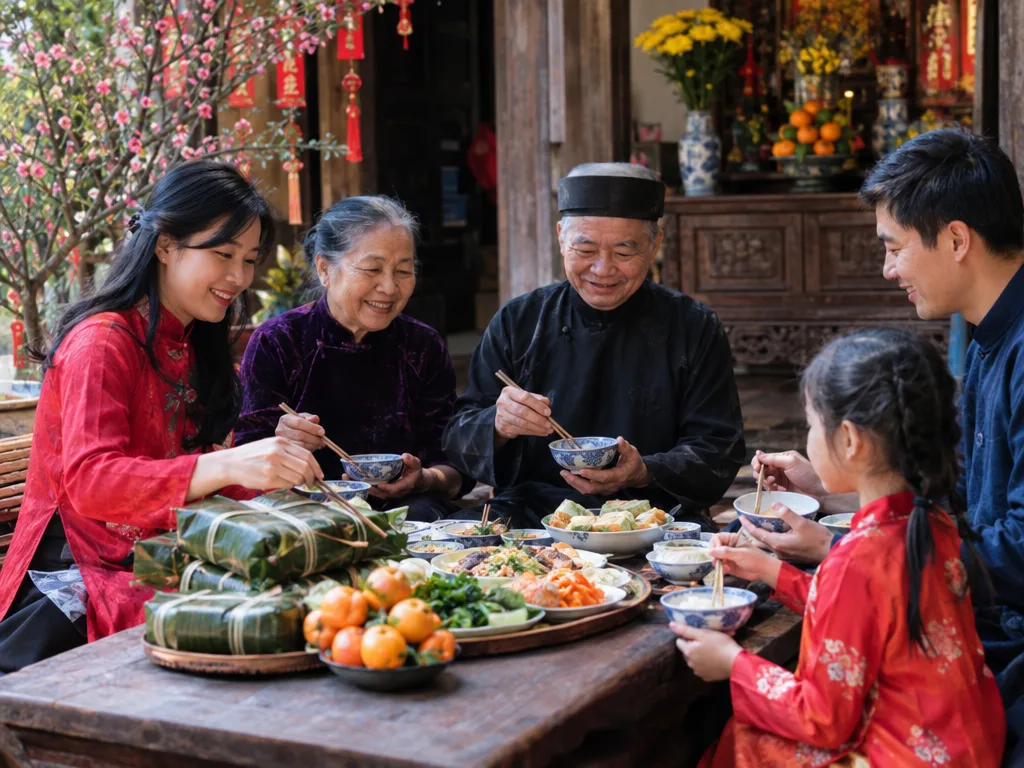
Hanoi food traditions are often easiest to understand when several people eat together. Shared dishes allow diners to build a meal bite by bite. Rice, vegetables, soup, grilled items, dipping sauces, and herbs may all occupy the table at once. The meal is not just a sequence of courses; it is a conversation in which people pass, offer, adjust, and recommend.
Useful habits are straightforward. Wait briefly to see how others begin. Use serving utensils when they are provided. If a dish is in the centre, take a modest portion and return for more. Keep your chopsticks from pointing directly at people, and do not leave them standing upright in a bowl. These actions are small, but they show awareness of the table as a shared space.
It is also fine to explain dietary needs clearly and early. “No meat,” “no seafood,” or “no fish sauce” may require different substitutions, so do not rely on a single vague gesture. A cooking class, guided food walk, or patient host can help you understand which sauces, broths, and toppings are integral to a dish and which can be left out.
For a deeper look at the social side of dining, read The Stories Behind a Shared Vietnamese Meal. It complements seasonal eating because both subjects show that Vietnamese food is shaped by relationships as much as recipes.
How to plan a seasonal food day in Hanoi
A simple tasting structure
- Start with breakfast. Choose a noodle soup, rice roll, or another dish being served during the morning rush. Focus on texture and broth before adding condiments.
- Visit a market between meals. Look for seasonal produce and prepared snacks, but treat the market as a working space rather than a museum.
- Make lunch the balanced meal. Try rice or vermicelli with vegetables, herbs, and a savoury element. Notice how the meal creates contrast.
- Reserve time for a snack. Fried cakes, sweet soup, fruit, or tea can reveal a different side of Hanoi’s food culture.
- Share dinner if possible. A table with several dishes makes the social traditions of eating easier to see.
Keep the schedule flexible. Weather, appetite, queues, and family-run kitchens all affect what is available. A useful food itinerary leaves space for an unplanned bowl or a recommendation from someone you meet. The best discoveries are often dishes you would not have chosen from a translated menu.
Common mistakes when exploring Hanoi food culture
The first mistake is treating “authentic” as a single standard. Hanoi has home cooking, street stalls, market breakfasts, formal restaurants, regional restaurants, and contemporary interpretations. All can be meaningful in different ways. The second is assuming that a dish tastes the same everywhere. Recipes vary by household, neighbourhood, season, and available ingredients.
Another mistake is focusing only on famous dishes. Pho and bun cha deserve attention, but they are entry points rather than the complete story. Banh cuon, bun oc, bun ca, banh tom, che, and many rice and vegetable preparations can reveal more about local habits when eaten in the right setting.
Finally, do not confuse speed with quality. Some meals are quick because the kitchen is organised, not because the food is careless. Watch how ingredients are prepared, how customers return, and how the dish fits into the day. That patient observation is one of the most rewarding ways to understand Hanoi.
Conclusion: taste the season, not just the dish
Seasonal food in Hanoi is a guide to the city’s wider culture. It shows how cooks respond to weather, how markets shape menus, how festivals give ingredients symbolic weight, and how shared meals turn eating into participation. Approach the city with an open schedule, try dishes in their natural setting, and let small details guide you: a handful of herbs, a sour note in the broth, a market ingredient, or a dish offered by a host.
That is how a food trip becomes more than a list of things to eat. It becomes a way to notice Hanoi’s pace, hospitality, and living traditions one meal at a time.
JOIN THE CONVERSATION
Comments (0)
No comments yet. Be the first to share a thought.