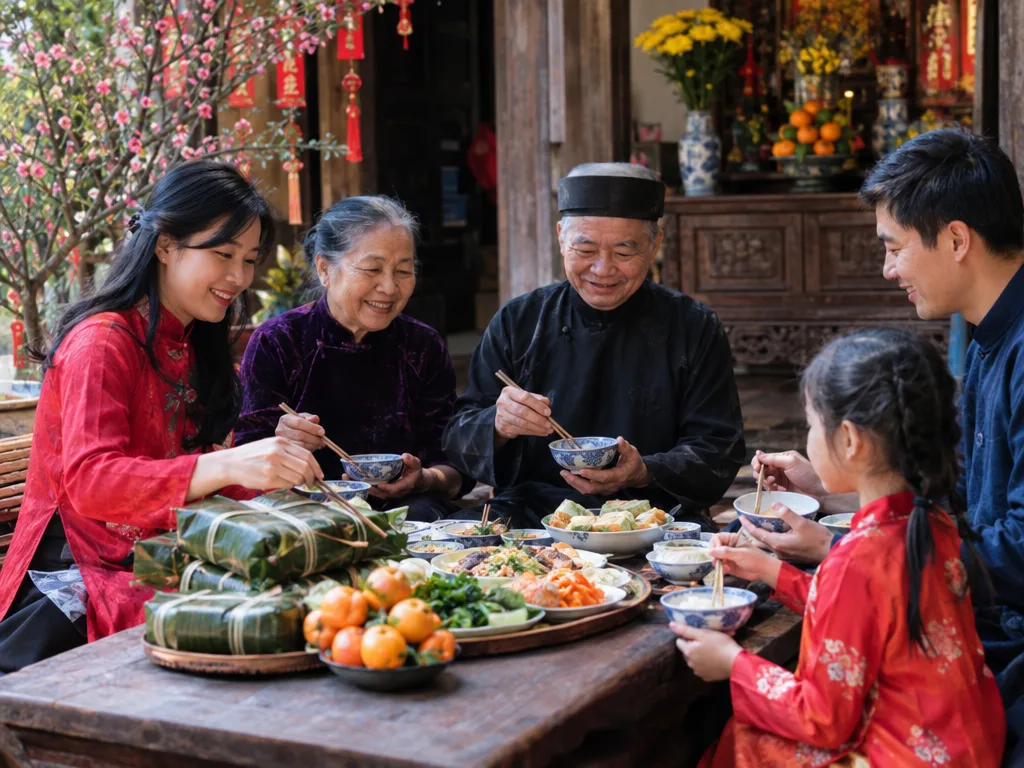
To understand Hanoi food culture, look beyond the famous bowls and recognise what happens around the table. A Vietnamese family meal is usually less about one person ordering one complete dish and more about several people sharing a balanced selection. Rice, soup, vegetables, a savoury dish, dipping sauces, and fresh herbs may all sit within easy reach, creating a meal that is social, flexible, and shaped by the people eating it. For visitors, learning how this arrangement works makes a meal in Hanoi feel more welcoming and helps avoid the small misunderstandings that can make a shared table awkward.
This guide explains the practical side of Vietnamese family meals in Hanoi: how dishes are shared, when to begin, how to use chopsticks politely, what to say when you are offered food, and how to adapt the customs when eating in a casual restaurant. It is not a test of perfect manners. The aim is to help you notice the rhythm of the meal and participate with curiosity.
What makes a Vietnamese family meal different?
The first thing to notice is the centre of the table. Instead of every diner receiving an individual main course, the meal often consists of communal dishes that everyone reaches for. Each person may have a small bowl for rice or soup and chopsticks for transferring food from shared plates. This format allows the group to combine different flavours and textures in one sitting rather than choosing between separate, fixed meals.
A typical arrangement can include steamed rice, a vegetable dish, a protein dish, a bowl of soup, and something fresh or pickled. The exact combination changes with the season, household, budget, and occasion. You should not treat one menu as a rigid national formula. The important tradition is the idea of balance and sharing: a meal is assembled from several modest elements and eaten together.
Why the table matters
In Hanoi, food culture is closely connected to conversation, hospitality, and family routine. The meal gives people a reason to sit down at the same time, exchange news, and notice whether someone has eaten enough. Offering a guest another piece of food can be a practical gesture, but it can also communicate welcome. That is why the social atmosphere may matter as much as the recipe.
Visitors sometimes focus on whether they are holding chopsticks correctly while missing the larger point. A relaxed greeting, a willingness to try a small portion, and a sincere thank-you usually communicate respect more effectively than memorising a long list of rules.
How shared dishes are eaten
When the food arrives, take a moment to see which dishes are communal and which are personal. Shared plates normally stay in the middle. Your rice bowl, soup bowl, and drinking glass belong to you. If a restaurant provides a small side plate, it may be used for herbs, pickles, or food you are cooling before eating.
Take modest portions first. You can return for more after tasting the dish, and this is often more comfortable than filling your bowl before you know what you like. Use the serving spoon or chopsticks when one is provided. If there is no serving utensil, use the clean end of your chopsticks rather than the end that has been in your mouth. In a busy local eatery, people may be less formal, but using the shared utensil when available is still a considerate habit.
- Keep shared dishes within reach of everyone rather than pulling one plate toward yourself.
- Choose a portion that leaves enough for the rest of the table.
- Place food neatly into your bowl before eating instead of waving chopsticks over several dishes.
- Ask before taking the last piece if the group is small or the dish is clearly being saved.
- Follow the pace of the table; meals are usually unhurried enough for conversation.
These habits apply whether you are eating in a home, joining a food experience, or sitting at a family-style restaurant. If you want to build confidence before trying this format, the site’s guide to the stories behind a shared Vietnamese meal offers useful context on why several dishes are placed together.
Vietnamese chopstick etiquette without the anxiety
Chopstick etiquette can sound intimidating, but most problems are easy to avoid. Do not leave chopsticks standing upright in a bowl of rice. The shape can be associated with incense offered to the dead, so it is better to rest them across the top of your bowl or on a chopstick rest. Also avoid pointing with chopsticks, tapping bowls, or using them to search through a dish.
When transferring food, move calmly and keep the motion short. Do not pass food from one pair of chopsticks directly to another. That action can resemble a funeral ritual. Instead, place the food into the other person’s bowl or onto a shared plate.
If you are still learning
It is completely acceptable to ask for a spoon. Many Vietnamese diners use a spoon alongside chopsticks, especially for soup, rice, noodles, or dishes with sauce. You can also hold your bowl closer to your mouth when eating rice, rather than leaning a long way over the table. Watch the local diners around you, but remember that customs vary between generations and households. A friendly explanation is more likely than criticism if you make an honest mistake.
Keep your chopsticks still while listening. In a lively conversation, place them down rather than gesturing with them. This small action makes you look more comfortable and prevents accidental contact with another diner’s bowl.
How to respond to hospitality
A guest may be encouraged to try a particular dish or offered another serving. The best response is honest but warm. If you want more, accept a small portion and say thank you. If you are full, smile and decline gently. You do not need to accept every offer to prove appreciation, and you do not need to finish food you cannot eat.
Useful phrases can be simple:
- “Cảm ơn” means thank you.
- “Ngon quá” means very delicious.
- “Tôi no rồi” means I am full already.
- “Một ít thôi” means just a little.
Pronunciation does not need to be perfect. A sincere attempt, followed by a smile, is usually enough to make the exchange pleasant. If you have allergies, dietary restrictions, or foods you cannot eat, explain them before the meal begins. Do not rely on a single phrase being understood in a noisy restaurant; use a translation note or show the relevant ingredient clearly.
What to expect in a Hanoi restaurant
Not every Hanoi meal follows the family-table format. A bowl of phở, a plate of bún, or a bánh mì is generally ordered as an individual serving. Other venues serve hotpot, grilled food, rice plates, or several dishes designed for sharing. Look at what nearby diners are doing before ordering. If people are pointing to several plates in the centre, the meal is probably meant to be communal.
In smaller restaurants, table space can be limited. Plates may arrive in stages, and the group may begin eating before every item is present. That is normal. Keep your personal bowl near you, make room for new dishes, and avoid treating the table like a formal place setting. For a broader introduction to ordering and navigating casual eateries, see How to Choose Restaurants in Hanoi: A Local Eating Guide.
It also helps to understand the difference between food culture and performance. You do not have to imitate every gesture or search for the most crowded table simply to look local. Choose a meal that fits your appetite and comfort level. The most useful cultural experience is one where you can pay attention to the people, flavours, and pace rather than worrying about appearing experienced.
Where street food fits
Hanoi street food often uses a more individual format, but the social principles remain familiar: eat close to others, keep your space tidy, and watch how condiments and herbs are handled. A bowl of noodles can still be a cultural lesson in timing, texture, and local preference. The site’s Hanoi Street Food category is a useful next step if you want to compare individual bowls with shared dishes.
Regional taste, seasonal ingredients, and household variation
Vietnamese food is not a single, uniform tradition. Northern cooking, including Hanoi cooking, is often described through its balance and restrained seasoning, but individual households may prefer food that is sweeter, saltier, more aromatic, or more strongly spiced. Restaurant menus also reflect migration, modern lifestyles, and ingredients from other parts of the country.
Seasonality can shape what appears on the table. Fresh greens, herbs, soups, preserved foods, and particular fruits may change with the weather and market supply. This is one reason a visitor should be cautious about declaring one dish “the authentic Hanoi meal.” A better question is: what is this household or restaurant trying to balance today?
Food also carries memory. A dish may be associated with a grandmother, a festival, a family gathering, a neighbourhood, or a particular time of year. If someone tells you why a food matters to them, listen before turning the story into a photograph or a review. That attention is part of experiencing food culture respectfully.
How to join a meal respectfully
You can make a strong impression with a few practical choices. Arrive with an appetite but do not assume you should eat immediately. Let the host indicate when the meal begins, especially if elders are present. Try a small amount of unfamiliar food, ask what it is, and mention your limits clearly. Keep conversation open, but do not interrogate people about every custom at the table.
- Ask before photographing people, private homes, or a particularly meaningful dish.
- Keep phones away during the first part of the meal so you can follow the rhythm.
- Compliment a flavour specifically rather than calling every dish “exotic.”
- Use a serving utensil when one is supplied.
- Leave enough food for others and avoid wasting food to create a dramatic tasting photo.
- Thank the host, cook, or server before leaving.
If you are planning a food-focused day, connect this meal experience with the site’s Hanoi Food Guides for practical planning, and then explore the related article on how Hanoi food traditions turn every meal into a story. Together, they help place etiquette within the wider context of neighbourhoods, ingredients, and everyday routines.
A simple first meal plan for visitors
For a low-pressure introduction, start with a meal where you can see the food clearly and ask questions. Choose a table with enough room for shared plates, order one familiar item and one new item, and ask whether the dishes are intended for sharing. Begin with a small serving of rice or noodles, add vegetables or herbs, and taste the savoury dish before adding more sauce.
During the meal, notice three things: how people place food into their bowls, when soup is eaten, and how the table responds when someone offers another serving. You do not need to copy every detail. Simply noticing these patterns will help you understand that Vietnamese dining etiquette is not separate from hospitality; it is the practical language through which the group shares food.
Common mistakes and easy fixes
The most common mistakes are usually unintentional. A visitor may use chopsticks to point, take a large portion, place a personal utensil into a shared bowl, or assume that declining one dish is rude. None of these requires panic. Put the chopsticks down, take a smaller serving next time, use the serving utensil, or say that you are full. A brief apology and a calm adjustment are enough.
Another mistake is treating “authenticity” as a performance. Hanoi food culture is lived by people with different habits, schedules, budgets, and tastes. A market breakfast, a family dinner, and a modern restaurant can all be part of the city’s food culture. Approach each setting on its own terms, and you will learn more than by searching for one perfect rulebook.
Final thoughts
Vietnamese family meals in Hanoi are best understood as a shared rhythm: several dishes, many small choices, and a table shaped by hospitality. Start with modest portions, use shared utensils when available, rest chopsticks properly, and accept or decline food with warmth. Most importantly, pay attention to the people who are eating with you. When you do, etiquette stops feeling like a list of prohibitions and becomes what it is meant to be: a way of making room for everyone at the table.
JOIN THE CONVERSATION
Comments (0)
No comments yet. Be the first to share a thought.