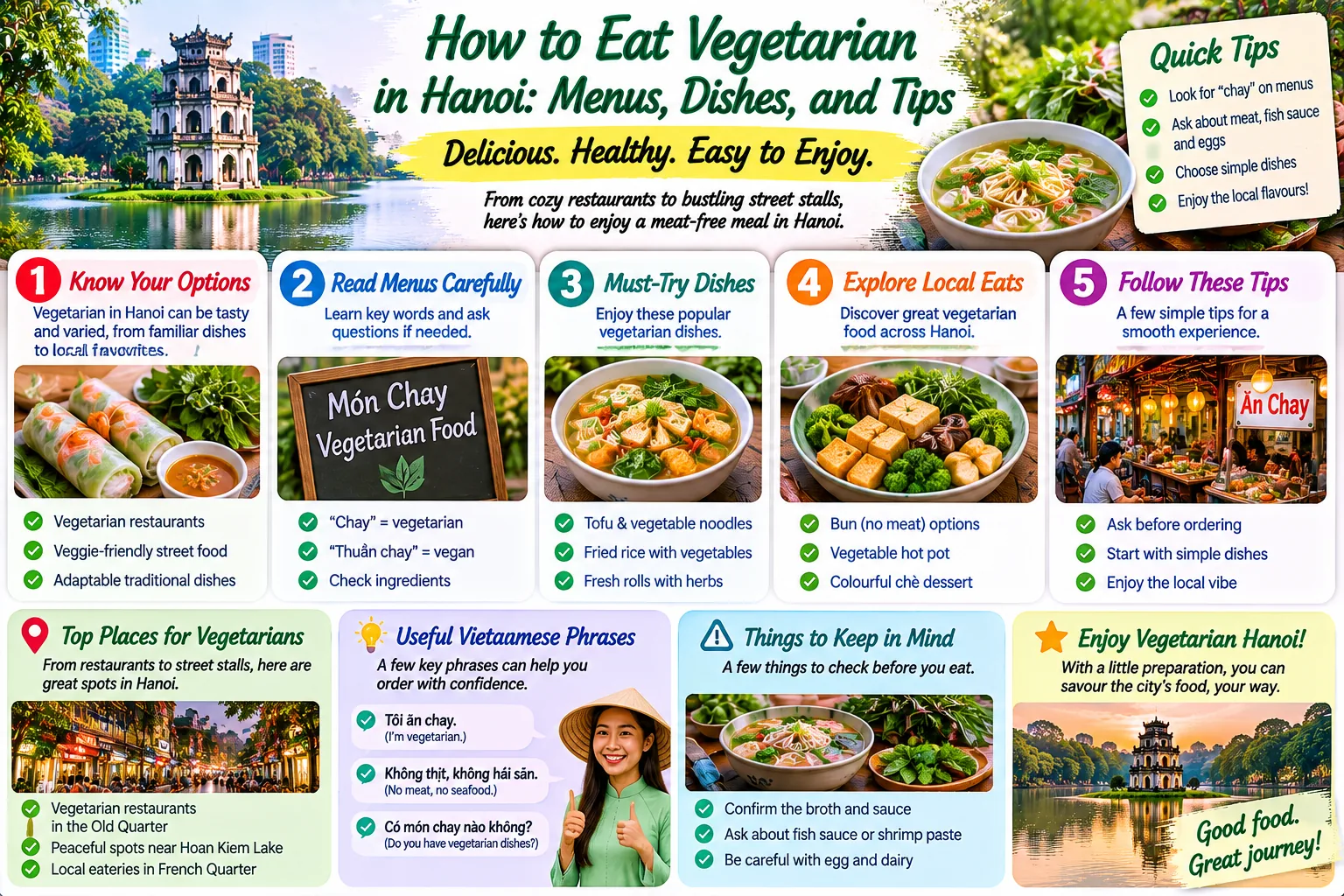
Eating vegetarian in Hanoi is less about finding a single “vegetarian district” and more about learning how the city’s everyday food works. A short Vietnamese word, a careful question, and a willingness to look beyond the most famous meat dishes can open up breakfasts, noodle bowls, rice plates, hot pots, snacks, and desserts. This guide explains how to plan vegetarian and vegan meals in Hanoi, what to order, how to communicate dietary needs, and how to build a satisfying food day without relying on guesswork.
Start by choosing the level of vegetarian food you need
“Vegetarian” can mean different things to different travellers. Before choosing a restaurant or ordering from a street stall, decide whether you eat eggs, dairy, fish sauce, shrimp paste, or food cooked in the same pan as meat. A vegan diet excludes animal products; a stricter Buddhist-style vegetarian meal may also avoid particular aromatics, while another diner may simply want a meat-free dish.
Write your needs in one simple sentence and repeat it patiently. “Tôi ăn chay” means “I eat vegetarian food.” For vegan food, “Tôi ăn thuần chay” communicates that you want a fully plant-based meal. If you have an allergy, name the ingredient separately rather than assuming a vegetarian label covers it. Vegetarian does not automatically mean vegan, gluten-free, nut-free, or free from fish sauce.
Useful questions before you order
- Does this dish contain fish sauce, shrimp paste, meat stock, egg, or milk?
- Is the tofu or vegetable topping cooked in a shared meat broth?
- Can the kitchen leave out the animal ingredient rather than replacing it with an uncertain sauce?
- Can you show the ingredients or recommend a dish that is already vegetarian?
When the answer is unclear, choose a dedicated chay restaurant or a clearly marked plant-based menu. This is usually easier than asking a busy vendor to redesign a complicated bowl.
Understand “chay” and the menu language
The word chay is the most useful starting point on a Hanoi food hunt. You will see it in restaurant names, signs, menus, and delivery listings. “Cơm chay” generally refers to vegetarian rice meals, while “bún chay” points to vegetarian rice vermicelli. “Phở chay” is a meat-free interpretation of phở, but you should still ask whether the broth is made from vegetables or from a meat base.
Other helpful words include đậu phụ for tofu, nấm for mushrooms, rau for vegetables, cơm for rice, bún for rice vermicelli, and canh for soup. A menu may use “vegan” in English, but a Vietnamese description can reveal more about the actual dish. Learn to recognise ingredients visually as well: fried tofu, mushrooms, greens, peanuts, rice paper, and herbs appear across many meat-free meals.
For broader food context, the site’s guide to traditional Vietnamese dishes in Hanoi helps explain how soups, noodles, herbs, rice, and dipping sauces fit into the local table. That background makes it easier to identify what needs checking when you adapt a familiar dish to a vegetarian diet.
What to eat: reliable vegetarian building blocks
Vegetarian eating in Hanoi is most rewarding when you think in components rather than chasing exact copies of meat dishes. Rice and noodles provide the base; tofu, mushrooms, beans, greens, herbs, peanuts, and seasonal vegetables add texture; fried shallots, chilli, lime, or a separate dipping sauce bring contrast. A dedicated chay kitchen may also use wheat gluten or soy-based mock meats, so ask if you prefer whole vegetables and tofu.
Breakfast and noodle bowls
Look for vegetarian phở, bún, noodle soups, or rice porridge where the broth is explicitly vegetable-based. The key question is not whether the bowl contains visible meat; it is what went into the stock. A dry noodle dish can be easier to verify because the noodles, vegetables, tofu, herbs, and sauce are assembled separately, but sauces still need checking.
Vegetarian bánh cuốn, steamed rice rolls, can appear with mushroom, tofu, or vegetable fillings. Because the traditional dish often comes with fish sauce and fried shallots, request a plant-based dipping sauce and confirm the topping. Rice paper rolls, tofu salads, and mixed vermicelli bowls are also useful choices when the kitchen can identify every sauce.
Lunch and dinner plates
A vegetarian cơm plate is one of the simplest ways to build a complete meal. Choose rice with two or three vegetable sides, tofu, mushrooms, and soup. The format is flexible, filling, and often easier to explain than a signature dish with a long ingredient list. Vegetarian hot pot can work well for groups: a vegetable broth, greens, mushrooms, tofu, noodles, and herbs allow everyone to cook at the table, provided the pot is not shared with meat or seafood.
Do not overlook everyday vegetable dishes. Morning glory, cabbage, pumpkin, eggplant, bitter melon, green beans, and mushrooms may be stir-fried, steamed, braised, or served in soup. Ask whether the seasoning includes oyster sauce or fish sauce. Plain steamed rice with several vegetable dishes may be a better choice than a badly adapted version of a famous meat dish.
Snacks and dessert
Street food requires the most care because ingredients are assembled quickly and sauces may be shared. Fried tofu, sweet potatoes, corn, grilled rice paper, and some rice cakes can be suitable, but the cooking oil, seasoning, and toppings vary. Chè, Vietnam’s sweet dessert soup, may contain beans, coconut milk, fruit, jelly, or glutinous rice. Ask about condensed milk, dairy, and toppings if you are vegan.
The official Vietnam Tourism guide to Hanoi street food shows how broad the city’s food culture is, from steamed rice rolls and noodles to hot pots and sweet soups. It also makes clear why a vegetarian traveller should inspect each dish rather than assume that a vegetable garnish makes the whole plate meat-free: many traditional preparations use fish sauce, meat, seafood, or meat-based fillings.
Where to look in Hanoi
Dedicated vegetarian restaurants are the easiest starting point, especially for your first meal or for anyone with allergies. Search maps using “chay,” “thuần chay,” or “vegan,” then read the current menu and recent reviews before walking over. Menus and opening details change, so treat a listing as a lead rather than a guarantee. If you are staying in the Old Quarter, use the site’s Restaurants & Local Eateries category for broader advice on choosing neighbourhood tables, then verify the current menu directly.
Markets and ordinary local eateries can be rewarding, but they demand more communication. A stall may sell one vegetarian item alongside meat dishes, and the same ladle, grill, or fryer may be used for both. If shared equipment matters to you, say so clearly. You can also plan one dedicated restaurant meal each day and use markets for fruit, drinks, plain rice, or snacks that you can confidently identify.
For planning around a walk, the site’s Hanoi Food Guides category can help you fit meals into neighbourhood explorations rather than crossing the city for every dish. The aim is not to visit every recommended address; it is to create a few dependable options near where you will already be.
How to order safely and politely
Show your dietary sentence before the food is prepared. Point to the ingredient you cannot eat, ask about broth and sauces, and repeat the request when the dish arrives. A translation card can help with allergies, but it should be specific: list the ingredient, the Vietnamese term if known, and whether trace contact is dangerous. Keep a screenshot offline in case your connection is poor.
Use visual confirmation as a second layer, not the only layer. A bowl that looks like vegetables may contain fish sauce; tofu may be cooked in a shared broth; a “vegetarian” sauce may contain oyster sauce. If communication fails, choose a simpler dish or another restaurant. Being flexible is not the same as accepting an avoidable risk.
At a busy street stall, order during a quieter moment and avoid long explanations while the queue is moving. In a restaurant, ask the server to recommend dishes rather than modifying every item. If the kitchen cannot answer confidently, thank them and choose a place with a clearer menu. This is more respectful and usually produces a better meal.
Build a practical one-day vegetarian food plan
Start with a known vegetarian breakfast: a vegetable-based noodle soup, rice rolls with mushroom filling, or a rice dish from a dedicated chay restaurant. For lunch, choose a cơm plate or a dry vermicelli bowl with tofu, mushrooms, herbs, and vegetables. In the afternoon, try fruit, coconut-based chè, or a simple snack after checking toppings and sauces. Finish with hot pot or a shared rice meal so you can order several dishes and compare textures.
Keep one backup option in your notes for each neighbourhood. Write the restaurant name, address, opening information, and a screenshot of the menu, but check those details on the day because businesses change. Carry a small snack if you have strict medical needs or are travelling between meals. Hanoi is full of food, but abundance does not guarantee that the next bowl will meet your requirements.
For visitors who want to understand the city through movement as well as meals, the site’s guide to planning a Hanoi food walk offers a useful framework. Keep your route short, leave time for communication, and plan the most important meal before you are tired or very hungry.
Common mistakes to avoid
- Assuming “vegetarian” always means vegan.
- Forgetting to ask about fish sauce, shrimp paste, oyster sauce, or stock.
- Ordering a famous Hanoi dish and asking for the meat to be removed without checking the base.
- Relying on an old review for current menus or opening hours.
- Choosing a crowded stall when you need a detailed allergy conversation.
- Confusing a vegetable side dish with a complete meat-free meal.
It is also easy to over-plan. Hanoi’s food culture is regional, informal, and constantly changing; the official tourism authority describes the capital’s northern flavours, herbs, small shops, and street-facing meals as central to the experience. Leave room for a simple meal that works, a new vegetable dish, or a conversation that leads you somewhere unexpected.
Final tips for enjoying Hanoi on a special diet
Vegetarian and vegan travellers can eat very well in Hanoi by combining preparation with curiosity. Learn the word chay, define your boundaries, verify broth and sauces, favour dedicated kitchens when the stakes are high, and keep a backup meal nearby. Use food guides for cultural context, categories for route planning, and current menus for final decisions. The best meal may be a carefully explained noodle bowl, a tray of tofu and greens, or a sweet soup shared after a long walk—not necessarily a meat-free imitation of Hanoi’s most famous dish.
JOIN THE CONVERSATION
Comments (0)
No comments yet. Be the first to share a thought.