Eating vegetarian in Hanoi is less about finding a separate tourist scene and more about learning how to ask for familiar food in a clear, friendly way. The city is known for its lively street-food culture, historic Old Quarter, cafés, markets, and deeply regional cooking. That variety gives vegetarian travellers plenty of possibilities, but menus and kitchen habits can change from one place to the next.
This guide explains how to plan vegetarian food in Hanoi without relying on guesswork. You will find useful Vietnamese words, dishes to look for, questions to ask, ways to handle vegan or gluten-free needs, and a simple strategy for building meals across the city. For wider context, pair it with our thoughtful guide to vegetarian eating in Hanoi, then use this article as your practical ordering companion.
Start by defining what “vegetarian” means for you
Vegetarian eating can mean different things. Some travellers avoid meat but eat eggs and dairy. Others also avoid fish, seafood, fish sauce, shrimp paste, oyster sauce, or broths made with animal ingredients. Vegan diners usually need the clearest explanation because a dish that looks vegetable-based may still contain fish sauce, egg, butter, or a meat stock.
Before choosing a restaurant, decide which of these descriptions matches your needs:
- Vegetarian: no meat or seafood, with eggs or dairy allowed if you eat them.
- Vegan: no meat, seafood, eggs, dairy, or other animal products.
- Strict dietary avoidance: an allergy or medical restriction that requires separate utensils, careful ingredient checks, or avoidance of cross-contact.
That distinction changes how you order. If you are vegan, say so directly rather than simply asking for “vegetarian.” If you have an allergy, show the Vietnamese ingredient name in writing as well as explaining it verbally. Restaurants vary in how much they can adapt a recipe, so a calm question before ordering is safer than trying to correct a dish after it arrives.
Know the Vietnamese words that make ordering easier
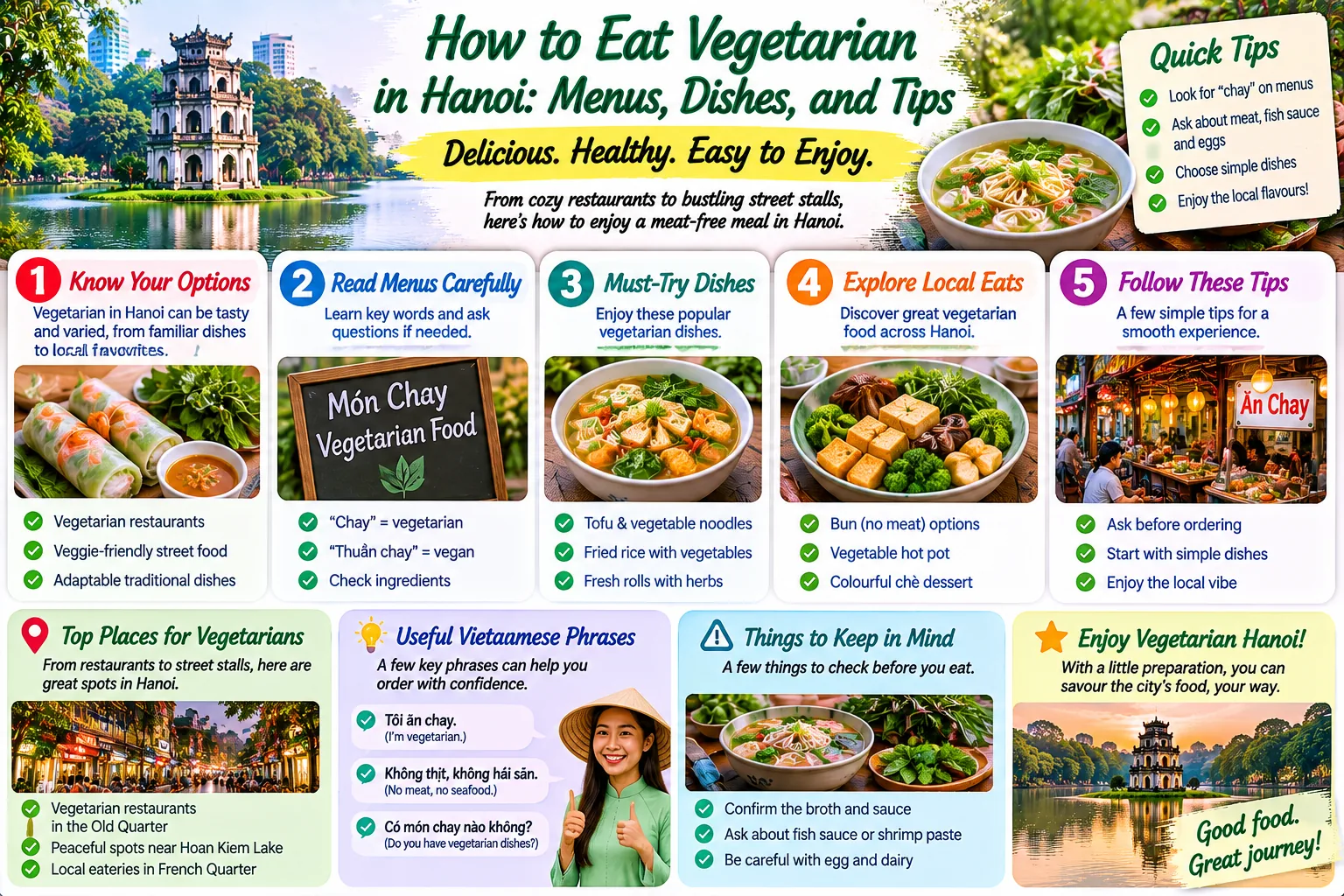
The most useful word for vegetarian food is chay. You may see it in a restaurant name, on a sign, or beside a dish on a menu. “Món chay” means vegetarian food, while “quán chay” commonly refers to a vegetarian restaurant or eatery. The word is useful, but it should not replace checking what the kitchen means by vegetarian.
Simple phrases to save on your phone
- Tôi ăn chay. — I am vegetarian.
- Tôi ăn thuần chay. — I am vegan.
- Không thịt, không cá. — No meat, no fish.
- Không nước mắm, không mắm tôm. — No fish sauce, no shrimp paste.
- Có trứng hoặc sữa không? — Does it contain egg or milk?
- Có nước dùng từ thịt không? — Is the broth made from meat?
Pronunciation does not need to be perfect. Speak slowly, point to the words, and confirm the answer. A translation card with your exact restrictions is especially helpful when you are ordering at a busy counter or from a short menu. You can also ask a hotel, cooking teacher, or local guide to check the wording before you head out.
Look for these vegetarian-friendly Vietnamese dishes
Hanoi’s food culture includes noodles, rice, breads, pancakes, fresh herbs, tofu, mushrooms, beans, and seasonal vegetables. The exact preparation matters more than the dish name, so treat the following as ideas to investigate rather than automatic guarantees.
Noodles and rice
Ask whether a noodle soup can be made with a vegetable or mushroom broth. Rice vermicelli bowls may work with tofu, fried spring rolls, herbs, pickles, and roasted peanuts, but check the dipping sauce or dressing. Steamed rice with sautéed greens, tofu, mushrooms, or braised vegetables is often a flexible meal when a kitchen is willing to adapt.
Tofu, mushrooms, and vegetables
Tofu is one of the most useful ingredients for vegetarian travellers because it can be fried, braised, stuffed, or served with vegetables. Mushroom dishes can be substantial, especially when combined with rice or noodles. Look for plates of morning glory or other greens, stir-fried seasonal vegetables, pumpkin, eggplant, corn, or mixed vegetable dishes, and ask what sauce is used.
Bánh mì and savoury snacks
A vegetarian bánh mì may be filled with tofu, mushrooms, egg, avocado, cucumber, herbs, or pickled vegetables. Ask whether the bread or spread contains butter, pâté, or another animal ingredient. Vegetarian fried spring rolls, fresh rolls, and savoury pancakes can also be possibilities, but fillings and dipping sauces need checking.
For a broader introduction to Hanoi’s classic dishes and food vocabulary, read our guide to traditional Vietnamese dishes in Hanoi. It helps you recognise the wider menu even when you are looking for a meat-free variation.
Choose the right kind of place for your comfort level
A dedicated vegetarian restaurant is usually the easiest starting point for vegan diners, first-time visitors, or anyone who wants a relaxed explanation of ingredients. Menus may use “chay” throughout, and staff are more likely to understand questions about substitutions. That does not remove the need to check, but it reduces the amount of translation required.
Mixed restaurants can work well when they have a clearly marked vegetarian section or staff who are comfortable answering questions. They are useful for groups with different preferences. Ask whether the vegetarian dishes share a broth, frying oil, grill, or preparation surface with meat. Some diners are comfortable with shared equipment; others are not.
Street stalls and small family-run eateries can be rewarding, but they require more active communication. A dish may be assembled quickly, and sauces may be added automatically. Point to the ingredients you can eat, repeat the restriction, and watch the preparation when practical. If communication is unclear, choose a simpler item or move to another stall rather than taking a risk.
For a general approach to comparing eateries, seating, menus, and local atmosphere, see how to choose restaurants in Hanoi. The same habits—observing the menu, asking clear questions, and choosing a place that suits your pace—are especially valuable for special diets.
Plan vegetarian food around Hanoi’s neighbourhoods
Hanoi is a city for wandering, and food planning works best when you group meals around the areas you already want to explore. The official Vietnam Tourism destination guide describes the Old Quarter, Hoàn Kiếm Lake, historic sites, cafés, markets, and street food as central parts of the city experience. That makes the historic centre a practical base for a first vegetarian food walk, provided you leave room for pauses and flexible choices.
A simple one-day pattern
- Breakfast: choose a dedicated chay restaurant or a café that can explain its egg, dairy, and broth options.
- Lunch: look for a rice or noodle meal with tofu, mushrooms, vegetables, and a sauce you have confirmed.
- Afternoon: have fruit, tea, coffee, or a clearly labelled snack while you explore.
- Dinner: book or arrive early at a place where you can read the menu calmly and ask about substitutions.
Do not make every meal an experiment. One dependable meal gives you a comfortable base; the other meals can be smaller discoveries. If you are travelling with a group, choose a restaurant with enough variety that everyone can order without making the kitchen recreate the entire menu.
Food markets and night markets are enjoyable for browsing, but they are not always the easiest places for strict dietary needs. Use them for fruit, drinks, simple snacks, and atmosphere unless you can communicate confidently about the ingredients. Our Hanoi food markets and night markets category offers useful context for deciding when a market visit fits your itinerary.
Ask better questions about hidden ingredients
The most common problem is not an obviously meaty topping; it is a sauce or broth that was added earlier. Ask about the whole dish, not just the visible ingredients. Useful questions include:
- Is the soup stock made from vegetables, mushrooms, meat, chicken, or bones?
- Does the sauce contain fish sauce, shrimp paste, oyster sauce, or meat seasoning?
- Are the noodles or spring-roll wrappers made with egg?
- Is the dish cooked with butter, lard, or another animal fat?
- Are vegetarian and meat dishes cooked in the same oil?
For gluten-free travellers, ask about soy sauce, wheat-based mock meats, seitan, fried coatings, and shared fryers. “Vegetarian” does not mean gluten-free, and “vegan” does not mean safe for every allergy. If a restriction is medical, carry a written explanation and a backup snack for long excursions.
Use local context without assuming every meal is the same
Vegetarian food in Hanoi can connect with Buddhist practice, modern wellness, ethical choices, environmental concerns, or simple preference. You do not need to explain your philosophy at length. A polite, specific request is usually more useful than a broad statement about diet.
It also helps to remember that vegetarian menus may include Vietnamese-style versions of familiar comfort foods rather than only salads. Expect herbs, pickles, rice, noodles, tofu, mushrooms, beans, coconut, sesame, peanuts, and aromatic sauces. If you enjoy texture, ask how tofu or mushrooms are prepared; the difference between steamed, fried, braised, and grilled can turn a simple plate into a satisfying meal.
For travellers who want to understand how dishes fit into a wider eating route, browse the Hanoi food guides category and our practical Hanoi food itinerary. These resources can help you balance restaurants, cafés, markets, and walking time instead of treating vegetarian eating as a separate mission.
Make transport and timing part of the food plan
Hanoi is walkable in some central areas, but heat, traffic, rain, and crowded streets can change how far you want to travel between meals. Vietnam Tourism’s transport guidance notes that cities offer taxis, buses, and cyclos alongside other ways of getting around. For a food-focused day, keep the route compact, allow extra time for crossings, and use a reputable ride option when a restaurant is outside your walking comfort zone.
Timing matters too. Arriving a little before a busy meal period gives you more space to ask questions. It is easier to explain “no fish sauce” before a kitchen is rushed. If a restaurant cannot meet your needs at one meal, do not let that derail the day: move to a dependable chay option, eat a simple snack, and try again later.
A confident vegetarian food strategy for Hanoi
The best approach is simple: begin with one dedicated vegetarian meal, save a short translation note, learn the word chay, and ask about broths and sauces every time the answer is unclear. Then explore gradually through tofu, mushrooms, vegetables, rice, noodles, breads, snacks, and seasonal dishes.
Vegetarian food in Hanoi is most rewarding when you combine preparation with curiosity. Check ingredients without embarrassment, accept that not every stall will be suitable, and leave room for the city’s own rhythm. With a few phrases and a flexible route, eating well becomes part of the experience rather than a problem to solve.
JOIN THE CONVERSATION
Comments (0)
No comments yet. Be the first to share a thought.