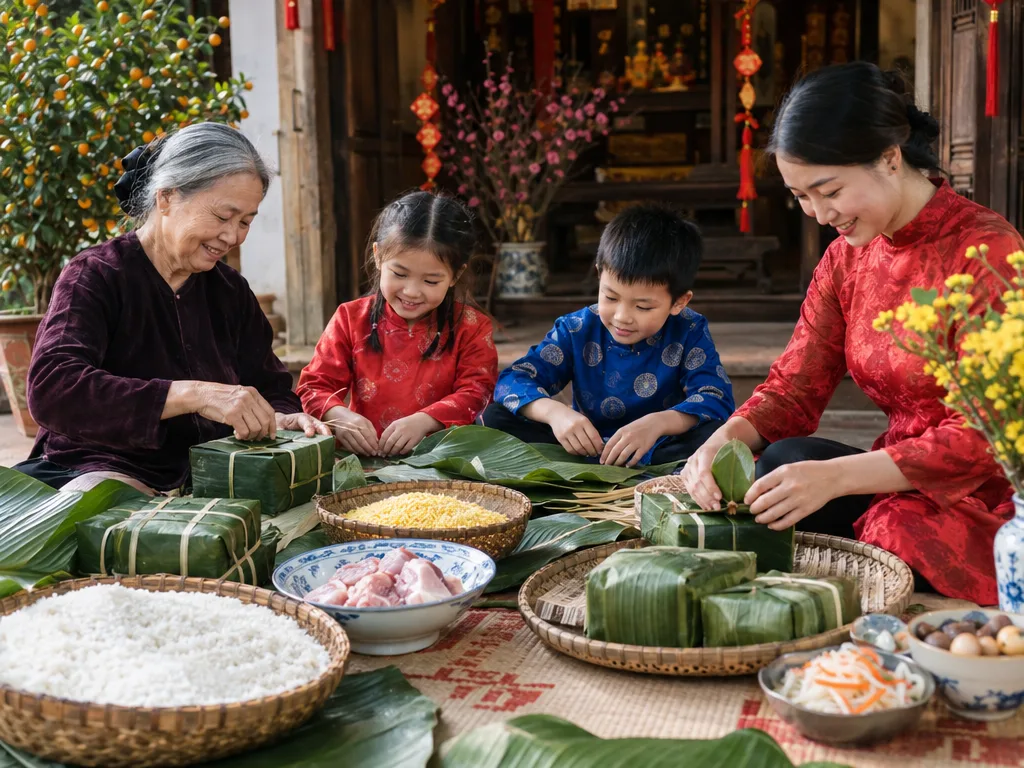
To understand Hanoi food culture, look beyond the famous bowl or plate and notice the calendar. During Tết, Vietnam’s Lunar New Year, food becomes part of the welcome, the family gathering, and the hope for a good year. A Hanoi table may hold dishes prepared in advance, fresh herbs and pickles that brighten rich flavours, and small sweets offered with tea. The point is not simply to eat more. It is to share foods with memory, symbolism, and a sense of occasion.
This guide explains what to expect from Tết food in Hanoi, how holiday dishes fit together, and how visitors can taste the traditions respectfully. Recipes and family customs vary, so treat the examples below as a useful cultural map rather than a fixed menu.
Why Tết food matters in Hanoi
Tết Nguyên Đán marks the first day of the first month in the Vietnamese lunisolar calendar and is widely described as the country’s most important celebration. It is associated with spring, family reunions, visits, ancestor remembrance, and wishes for a fortunate year. Food connects all of these ideas: preparing it can be a family activity, presenting it can show respect, and eating it together can make a home feel ready for a new beginning.
Hanoi’s food traditions also reflect the character of northern Vietnamese cooking. Seasonal produce, rice, fresh herbs, clear contrasts of texture, and carefully balanced savoury flavours are important. A festive meal may feel generous without being designed as a restaurant tasting menu. Dishes arrive for the table to share, and diners take a little of several things rather than ordering one complete plate each.
Traditional Tết foods visitors may encounter
Bánh chưng and sticky rice
Bánh chưng is a square sticky-rice cake associated with Tết in northern Vietnam. Its layers traditionally include glutinous rice, mung bean, and pork wrapped in leaves. The compact shape makes it practical for preparation ahead of the holiday, while its place on a Tết tray connects the meal to ideas of ancestry, land, and family continuity. In Hanoi, you may see it served in slices, often alongside pickled vegetables or other savoury foods that cut through its richness.
Sticky rice also appears in other festive preparations. Xôi can be served as a warm, filling accompaniment or shaped and coloured for special occasions. If you are trying it as a visitor, pay attention to texture: the appeal is soft, fragrant, and satisfyingly chewy rather than light and fluffy like steamed white rice.
Pickles and fresh accompaniments
Pickled onions and other crisp, sour accompaniments are a familiar part of the holiday table. Their sharpness gives balance to sticky rice, braised meats, and other dishes prepared for sharing. Fresh herbs, cucumber, greens, and dipping sauces play a similar role in everyday Vietnamese meals, helping each bite change as it moves around the table.
These side dishes are easy to overlook because they may arrive in small bowls. Try them deliberately. They show how Vietnamese cooking builds contrast across a meal instead of asking one main dish to provide every flavour at once.
Chicken, pork, and braised dishes
Boiled chicken, pork preparations, and braised dishes are common examples of foods that can suit a family gathering. Their exact seasoning and presentation differ from household to household. The important point for a traveller is that a holiday spread often values food that can be prepared carefully, shared widely, and served with rice, pickles, herbs, or a dipping sauce.
Do not assume every Tết dish will be available in every Hanoi restaurant during the holiday. Some family-run businesses close so owners can return home, while others offer special menus or focus on foods that are quick to serve. If you have a particular dish in mind, ask before building your whole day around it.
How a Hanoi Tết meal is usually experienced
A festive meal is less about a strict course order than about a shared centre of gravity. Several dishes may be placed on the table, with rice and soup appearing as part of the meal rather than as separate stages. Diners use their own bowls and chopsticks to take small portions, then return for more of what they enjoy.
- Start with a small portion so you can try several dishes.
- Use serving utensils when they are provided; otherwise follow the table’s lead.
- Keep rice in your bowl and take shared food from the centre rather than reaching across another diner.
- Expect conversation, pauses, and repeated offers of food to be part of hospitality.
- Leave room for fruit, sweets, tea, or a final coffee rather than treating the savoury dishes as the entire experience.
At a home, the host may encourage you to eat more as a sign of welcome. A warm refusal can sound more abrupt than a small second helping, so accepting a little and explaining that you would like to taste carefully is often a comfortable approach.
New Year foods, ancestor tables, and symbolism
Tết food can have a ceremonial dimension as well as a culinary one. Families may prepare food for an ancestor altar or arrange a festive tray before the main gathering. This does not mean every dish has one universal meaning, and customs differ by region, religion, and household. It does mean that food may be connected to remembrance and respect, not only appetite.
Visitors should observe before taking photographs or touching an arranged offering. If you are invited into a home, ask politely whether a particular display is for viewing, sharing, or ceremony. A simple question shows more cultural awareness than pretending to understand a custom you have not encountered before.
Fruit, sweets, tea, and seeds may also appear during visits. These foods help hosts welcome relatives and friends who come and go through the holiday. The rhythm can feel different from a single restaurant reservation: people may sit, talk, snack, visit another home, and return later for another cup of tea.
Where to taste Tết food in Hanoi
The best setting depends on what you want to learn. A traditional restaurant may offer a convenient introduction to northern dishes, while a market can help you see ingredients, preserved foods, flowers, and holiday shopping side by side. A cooking workshop may be useful if you want to understand preparation techniques, but its menu and schedule should be checked in advance during the holiday period.
Neighbourhood eateries are another possibility outside the busiest holiday days. Look for places where the menu matches the time of day and where diners are ordering steadily. During Tết itself, opening hours can vary, so treat a suggested route as flexible. Carry a backup plan, eat when you find a good opportunity, and do not judge Hanoi’s food culture by the number of closed shutters on one holiday morning.
For a more immersive experience, ask a reputable local guide whether a family meal or seasonal tasting is genuinely available. The invitation should be clear, the price and inclusions should be explained before you agree, and you should be told what kind of participation is expected. Cultural food experiences work best when the host’s home life is respected rather than treated as a performance.
How to eat respectfully during Tết
Good manners are mostly practical. Dress neatly for a home visit, wait to see where the host sits, and avoid rushing to the most prized-looking dish. If you have allergies, vegetarian requirements, or religious restrictions, explain them before the meal in simple language. Do not assume that removing meat from a finished dish makes it vegetarian, because sauces, broths, and cooking utensils may still contain animal ingredients.
Ask before photographing people, altars, or close-up food preparation. Keep your voice and phone use considerate, especially during a family ceremony. If someone offers a food you cannot eat, thank them and give a short explanation rather than making a dramatic reaction. A small gift of fruit, tea, or a packaged treat can be thoughtful when visiting a home, but it is best to ask your host what is appropriate if you are unsure.
A simple Tết food plan for visitors
You can explore the holiday without trying to recreate a family celebration. Begin with a morning walk through an open market or neighbourhood street where seasonal ingredients and prepared foods are visible. Choose one substantial dish rather than grazing continuously. Later, try a sweet, tea, or coffee in a quieter café if businesses are open. Leave time for a second meal, because the pleasure of Tết food often comes from comparing textures and settings rather than ticking off a long list.
- Choose one northern festive food, such as a slice of bánh chưng, and ask how it is served.
- Add a sour or fresh accompaniment to notice the meal’s balance.
- Share a table when appropriate, but follow the restaurant’s ordering system.
- Keep plans flexible around holiday closures and family visits.
- Write down the Vietnamese name of a dish you enjoyed so you can ask about it again.
Questions visitors often ask about Tết food
Is Tết food always heavy?
Not necessarily. Some festive dishes are rich or filling because they are prepared for sharing and ahead of time, but pickles, herbs, vegetables, fruit, tea, and soup create contrast. A visitor can build a lighter meal by taking smaller portions and choosing fresh accompaniments alongside a traditional centrepiece.
Can travellers buy Tết foods in Hanoi?
Often, yes, but availability depends on the date and the neighbourhood. Markets, bakeries, restaurants, and food shops may each follow different holiday schedules. Ask what is freshly made, how a food is normally served, and whether it is intended for a family altar or for eating. Those questions help you understand the food rather than treating it as a souvenir alone.
What should I do if I am invited to a home?
Confirm the time, dress neatly, and mention dietary needs in advance. Follow the host’s lead around greetings, seating, photographs, and serving. A small, useful gift is usually safer than an elaborate one, and sincere thanks matter more than perfect knowledge of every custom.
What makes Tết food memorable
Tết food in Hanoi is memorable because it carries time as well as flavour. A square cake may represent preparation that began before the holiday. A bowl of pickles may be there because a rich table needs brightness. Tea and sweets may mark the arrival of a guest. The meal can be humble or elaborate, but its meaning grows from the people, occasions, and memories around it.
Approach the season with curiosity rather than a checklist. Taste slowly, ask considerate questions, and accept that the most authentic experience may be a small shared moment instead of a famous dish. That is one of the most rewarding ways to understand Hanoi food culture.
JOIN THE CONVERSATION
Comments (0)
No comments yet. Be the first to share a thought.