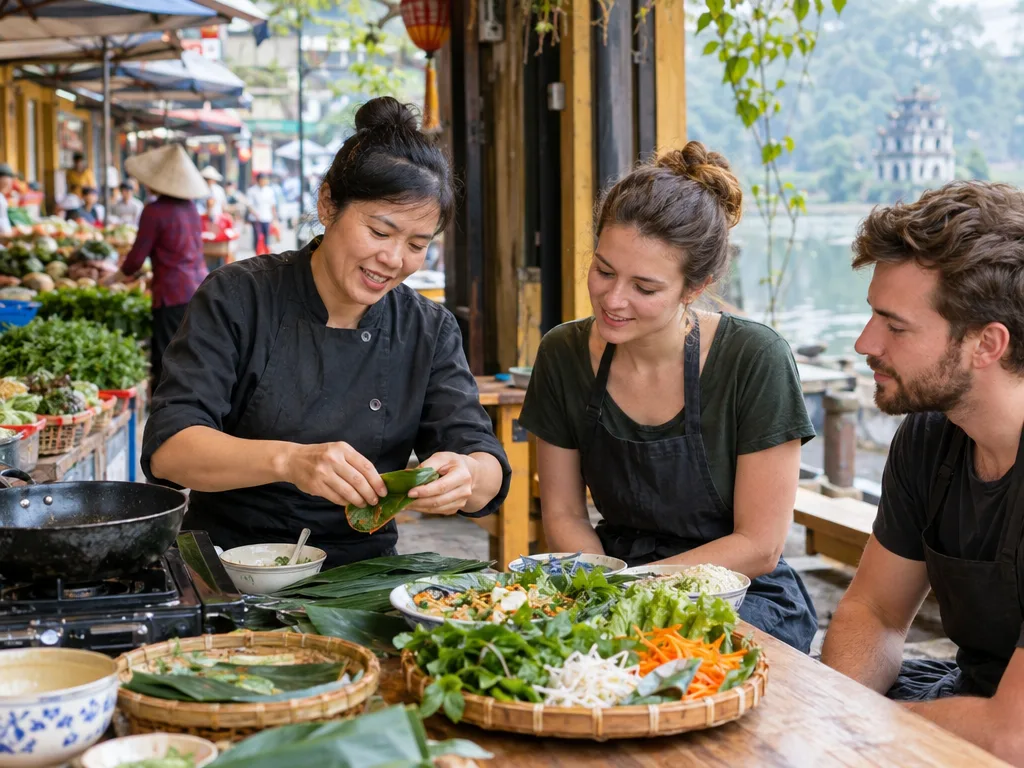
A vegetarian cooking class in Hanoi can be more than a recipe lesson. It can be a practical way to understand the city’s ingredients, market vocabulary, shared-table habits, and generous use of herbs. The key is choosing a workshop that treats your diet as part of the experience rather than an afterthought. This guide explains what to look for, what to ask before booking, and how to make a plant-based class genuinely useful for your time in Vietnam.
What a vegetarian Hanoi cooking class should help you do
The best class for a vegetarian traveller should leave you with three things: food you can safely eat, techniques you can repeat at home, and a clearer sense of how Hanoi cooks. A menu might include rice-paper rolls, fresh herb salads, vegetable-filled bánh cuốn, tofu dishes, mushroom preparations, or a vegetable hot pot. The exact dishes matter less than the teaching: you should understand which ingredients create savoury depth, how textures are balanced, and how a dish can be adapted without losing its character.
Hanoi food is highly regional, and the city’s culinary identity includes both familiar staples and less obvious local dishes. The official Vietnam Tourism food guide describes Hanoi cooking through dishes such as bánh cuốn, hot pot, noodles, fresh herbs, and sweet soups. That variety is useful for vegetarian visitors because it shows why a class should not be judged only by whether it offers one meat-free substitute. A thoughtful workshop can introduce several different ways to build a satisfying meal.
Choose the right definition of “vegetarian”
Before comparing classes, decide what you mean by vegetarian. Some travellers eat eggs and dairy but avoid meat and seafood. Others also avoid fish sauce, shrimp paste, oyster sauce, animal stock, or shared cooking utensils. A vegan menu has a different set of requirements again. In Vietnam, a dish described casually as “vegetarian” may still need clarification, so never rely on the label alone.
- Ask whether the class can provide a fully vegetarian or vegan menu.
- Confirm whether broths, dipping sauces, marinades, and seasoning pastes contain fish or seafood.
- Check whether eggs, dairy, honey, or fermented products are included.
- Explain allergies separately; a vegetarian preference and a serious allergy require different precautions.
- Ask whether ingredients are prepared separately or simply removed at the last minute.
Write your requirements in a short message before booking. “I do not eat meat or seafood” is clearer than “I prefer light food.” If you avoid fish sauce or shared pans, say so directly. A responsive organiser should be able to tell you what can be changed, what cannot, and whether the class is suitable for your needs.
Look for a market visit that teaches ingredients
A market visit can be the most valuable part of a vegetarian cooking class when it is more than a quick photo stop. Look for a guide who can explain how to recognise herbs, tofu, mushrooms, leafy greens, rice products, noodles, fruit, and seasonings. You should also learn which ingredients are central to the chosen menu and which are flexible substitutions.
Ask whether the market visit is included in the class time and whether the menu is decided before or after shopping. A class that chooses ingredients on the day may feel more connected to Hanoi, but it also needs a clear plan for dietary requirements. If the menu is fixed, ask for the vegetarian version in advance. If it is flexible, ask how the teacher keeps the meal balanced when a key ingredient is unavailable.
Use the market portion to build vocabulary. Learn the Vietnamese words for tofu, vegetables, herbs, rice paper, noodles, chilli, garlic, ginger, and common sauces. You do not need to memorise everything. A small list that helps you shop or order later is a practical souvenir from the workshop.
Compare menus by technique, not just dish names
Two classes can advertise similar dishes but offer very different learning value. Read the menu for techniques: soaking, rolling, steaming, stir-frying, marinating, making a dipping sauce, balancing acidity, and controlling heat. A menu with several preparations may teach more than one built around a single impressive dish.
Useful techniques for a plant-based menu
- Steaming: helpful for rice rolls, dumplings, vegetables, and soft textures.
- Rolling: useful for fresh rice-paper dishes and portioning herbs attractively.
- Stir-frying: teaches heat management, timing, and how to keep vegetables lively.
- Broth building: shows how mushrooms, roasted aromatics, seaweed, or fermented ingredients can add depth without meat.
- Sauce balancing: helps you work with sour, sweet, salty, hot, and herbal flavours.
Ask how much of the work you will do yourself. “Hands-on” should mean more than watching a chef demonstrate and then assembling a finished plate. Find out whether participants chop, season, cook, taste, adjust, and sit down to eat what they prepared. If you are a beginner, patient instruction and small groups may matter more than a long menu.
Questions to ask before booking
A short pre-booking checklist can prevent most disappointments. Send the same questions to each organiser so you can compare answers rather than marketing language.
- Can you accommodate my exact vegetarian or vegan requirements?
- Which dishes will be prepared, and what substitutions are possible?
- Does the menu contain fish sauce, shrimp paste, oyster sauce, meat stock, eggs, dairy, or honey?
- Is there a market visit, and will it focus on ingredients used in the class?
- How much of the cooking is hands-on?
- Is the class suitable for a first-time cook?
- Can the teacher explain the recipes and ingredient names in a language I understand?
- Are allergies or cross-contact concerns discussed before the class?
These questions also reveal the teaching style. A detailed answer suggests preparation and flexibility. A vague promise to “make something vegetarian” may mean the menu has not been adapted carefully. For a wider comparison of formats, timing, and neighbourhood choices, see this guide to compare Hanoi cooking classes.
Plan around the rhythm of the class
Cooking classes are easier to enjoy when you leave room around them. A market-led morning workshop may involve walking, standing, carrying ingredients, and eating a substantial meal afterward. An afternoon class may suit travellers who want a slower start, while an evening session can pair naturally with a neighbourhood stroll. The right choice depends on your energy, heat tolerance, and appetite rather than on a universal “best” time.
Wear comfortable clothes and shoes that you do not mind wearing in a busy kitchen. Bring water, keep your phone available for ingredient notes, and tell the teacher early if you need a break. If you are travelling with children or older relatives, ask about walking distance, seating, knife work, and whether participants can share tasks. A good workshop can be social without requiring everyone to move at the same pace.
Do not schedule a tightly timed attraction immediately afterward. Market visits and shared meals often take longer than a simple demonstration, especially when the group pauses to taste, ask questions, or repeat a technique. Treat the class as a main activity, not a short stop between bookings.
Make the vegetarian menu feel like Hanoi
A useful adaptation should preserve the spirit of the dish while respecting your diet. Fresh herbs, rice noodles, tofu, mushrooms, vegetables, peanuts, sesame, chilli, lime, ginger, garlic, and fermented flavours can create contrast and depth. The goal is not to make every dish taste like a generic international vegetarian meal.
Ask the teacher to explain what makes each recipe recognisably Hanoi. Is it the herb combination, the dipping sauce, the noodle texture, the way ingredients are steamed, or the balance between richness and acidity? The official Hanoi food guide highlights the city’s range of noodles, rice-based snacks, hot pot, herbs, and sweet soups. That range can inspire a class menu that is varied even when meat and seafood are excluded.
Be open to dishes that are naturally adaptable rather than dishes designed only as substitutes. A vegetable hot pot, tofu and mushroom preparation, fresh roll, herb salad, or rice-based snack may teach more about local cooking than a meat dish with its protein simply removed. At the same time, do not assume a dish is suitable because it contains vegetables; sauces and stocks still need checking.
What to take home from the workshop
Recipes are useful, but your notes should capture decisions. Record the order in which ingredients are cooked, how the teacher judges doneness, what can be substituted, and how the seasoning changes after tasting. Vietnamese recipes often work best as frameworks rather than rigid formulas, especially when herbs and vegetables vary by season or market.
- Write down ingredient names in both English and Vietnamese.
- Note visual clues for doneness, such as colour, softness, crispness, or fragrance.
- Record the sauce separately from the main dish so you can adapt it later.
- Ask which ingredients can be found outside Vietnam and which have no perfect substitute.
- Photograph your handwritten notes only after asking permission.
After class, keep exploring at your own pace. The site’s guide to vegetarian eating in Hanoi can help you think about communication and plant-forward meals beyond the workshop. You can also browse more Hanoi cooking classes and workshops when comparing different teaching formats.
A simple decision checklist
Choose the class that gives the clearest answers, not necessarily the longest menu. Before you book, check five points: the dietary definition is understood; the menu includes dishes you genuinely want to learn; the market visit has a clear ingredient purpose; the class is sufficiently hands-on; and the schedule leaves you time to enjoy the meal without rushing.
If two options seem equal, choose the one that teaches transferable skills. A workshop that explains flavour balance, substitutions, sauces, and market vocabulary will continue helping you after you leave Hanoi. For more ideas related to dietary planning, browse vegetarian and special-diet food ideas.
The best class is one that respects curiosity
A vegetarian Hanoi cooking class should make it easier to ask questions, taste thoughtfully, and understand how local ingredients work together. You do not need to know every dish before you arrive. You do need a clear conversation about what you eat and enough time to participate. Choose a workshop that treats those details seriously, then let the market, the herbs, and the shared table do the rest.
JOIN THE CONVERSATION
Comments (0)
No comments yet. Be the first to share a thought.